

Best Cat Arch Scratchers for Stretch‑Loving Cats (And How to Pick One Your Kitty Will Actually Use)
If your cat treats your couch like a personal scratching post and leaves tumbleweeds of fur across every surface, a cat arch scratcher might be the simplest upgrade you make all year. This guide breaks down the best options, what actually matters when you buy one, and how to get even the pickiest kitty to use it.
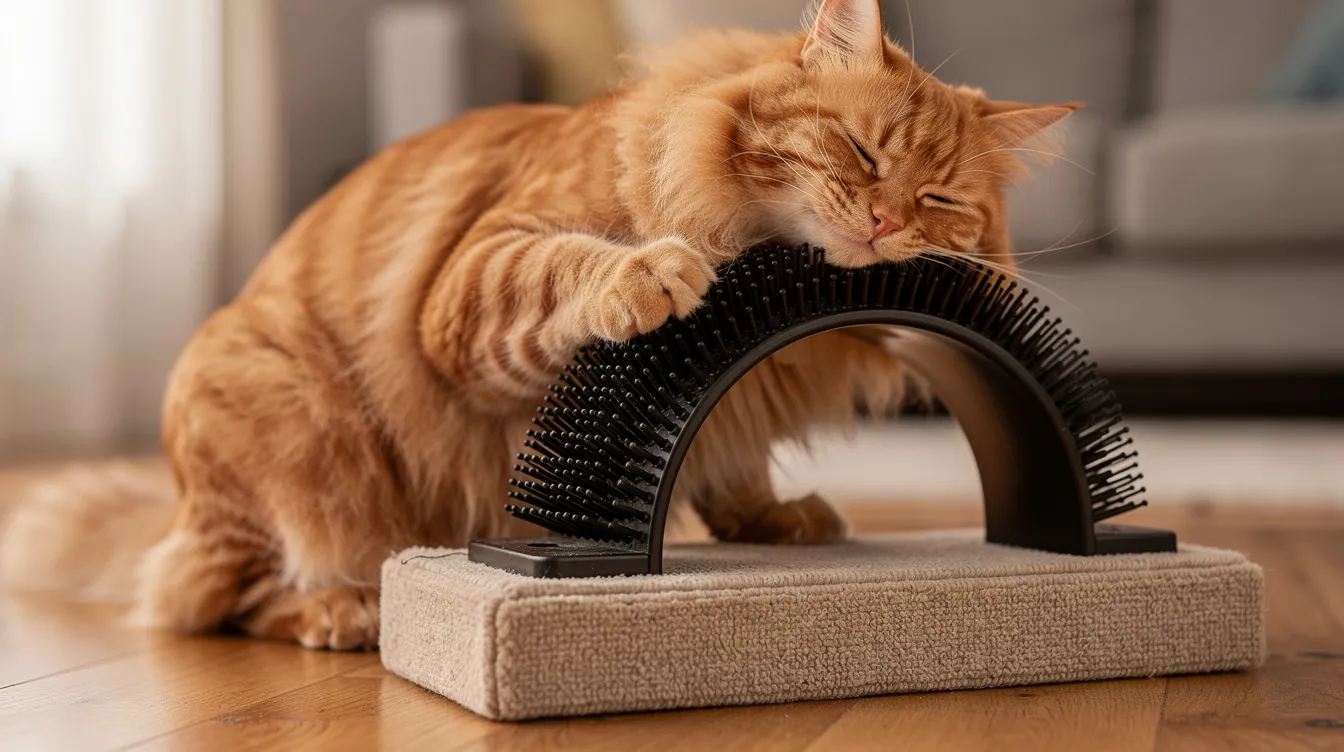
Quick Picks: Best Cat Arch Scratchers in 2026
Here's the "too long, didn't read" version for busy cat parents who just want to add something to their cart and move on.
- Best Overall - Cidero Self Grooming Cat Arch Toy. Combines a self grooming arch with a scratch base, helps control shedding by catching loose hair, doubles as a groomer cat massager, and encourages healthy stretching. The Cat Arch Self-Groomer costs $39.99.
- Best for Heavy Shedders - Look for arches with long, stiff bristles and dense brush coverage that grab undercoat fur on every pass.
- Best for Playful Kittens - Arches with attached toy balls, dangling mice, or built-in catnip compartments to entertain and engage.
- Best for Senior Cats - Lower-profile grooming arch designs with softer bristles for gentle rubbing.
The Cat Arch Self Groomer has a 3.8-star rating across major review platforms, which is solid for this category.
What Is a Cat Arch Scratcher (And Why Do Cats Go Nuts for Them)?
A cat arch scratcher is a curved grooming tool lined with bristles, mounted on a flat scratch pad base. Your cat walks under or alongside it, rubs their face, neck, and body against the arch, and scratches the base - all without you lifting a finger.
A cat arch scratcher combines grooming and claw maintenance functionality in one compact unit. The bristles work like a cat brush, pulling away loose hair and dander as the cat rubs through. The base - usually sisal, carpet, or cardboard - gives claws something satisfying to dig into. Scratching helps shed dead nail sheaths and keeps claws sharp, which is why cats instinctively scratch right after waking up.
Compared to traditional pet supplies like handheld brushes and vertical scratching posts, a grooming arch is hands-free. That's a big deal for indoor cats who need to groom and stretch on their own schedule - not yours.
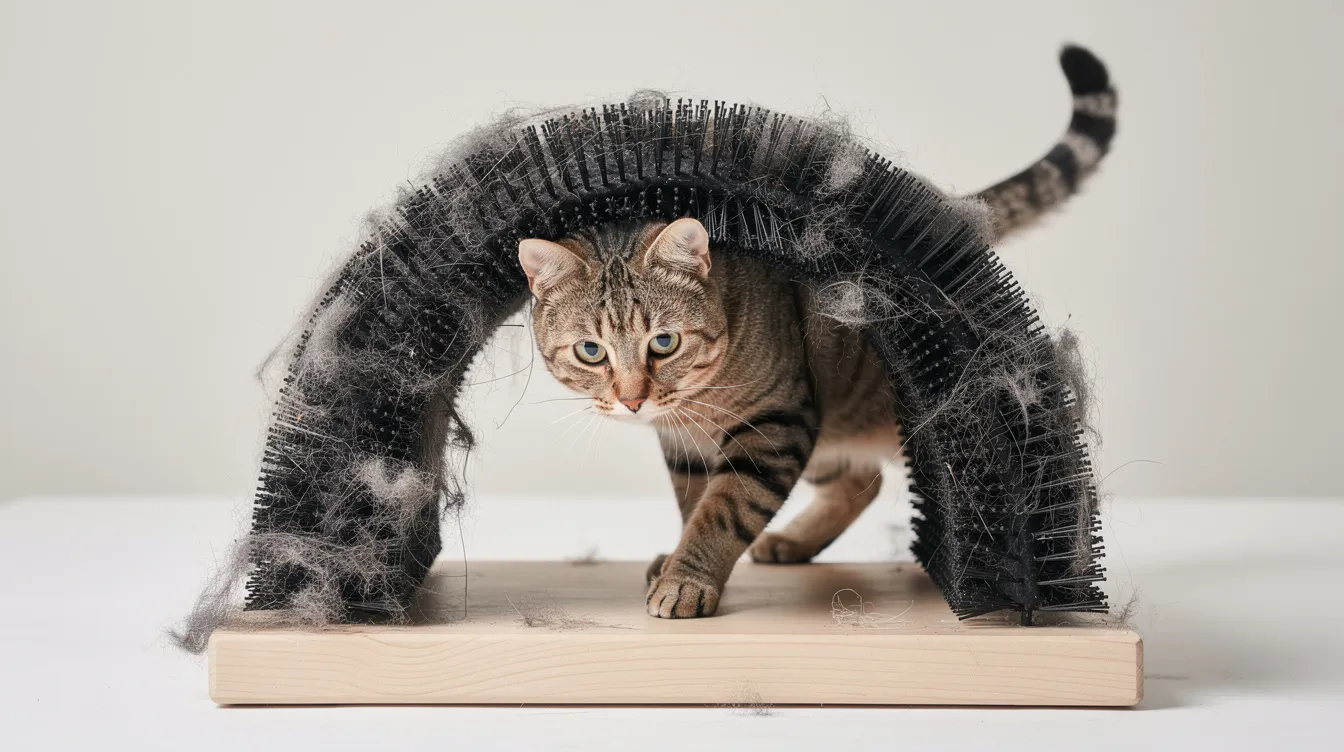
Benefits of Cat Arch Scratchers for You and Your Cat
A good cat arch is more than a cute toy. It's a grooming tool, a stress reliever, and a piece of furniture protection rolled into one.
Coat and skin health. The bristles remove loose hair, dirt, grease, and skin flakes every time your cat rubs through. Self-groomers can help nourish and revitalize a cat's coat by distributing natural skin oils across the fur. Self-grooming also stimulates blood circulation, which supports healthier skin underneath. Research shows cats spend roughly 8% of their waking hours grooming - an arch lets them do it more effectively.
Self-care without human help. The arch acts as a groomer massager for the cat face, cheeks, and spine. Cat arch scratchers act as soothing back massagers while providing a scratching area. No wrestling your cat into a brush session.
Mental and physical enrichment. Arch scratchers often provide mental stimulation and prevent boredom in indoor cats. Stretching through the arch mimics natural rubbing and scratching behaviors, reducing pent-up energy. Rubbing against an arch also lets cats mark territory with their scent through facial glands.
Household perks. Less cat hair on sofas, fewer fur tumbleweeds, and providing an appropriate scratching surface helps redirect scratching away from furniture.
Senior cat support. Self-groomers assist older cats with mobility issues by letting them reach spots that are hard to lick - hips, shoulders, and the base of the tail.
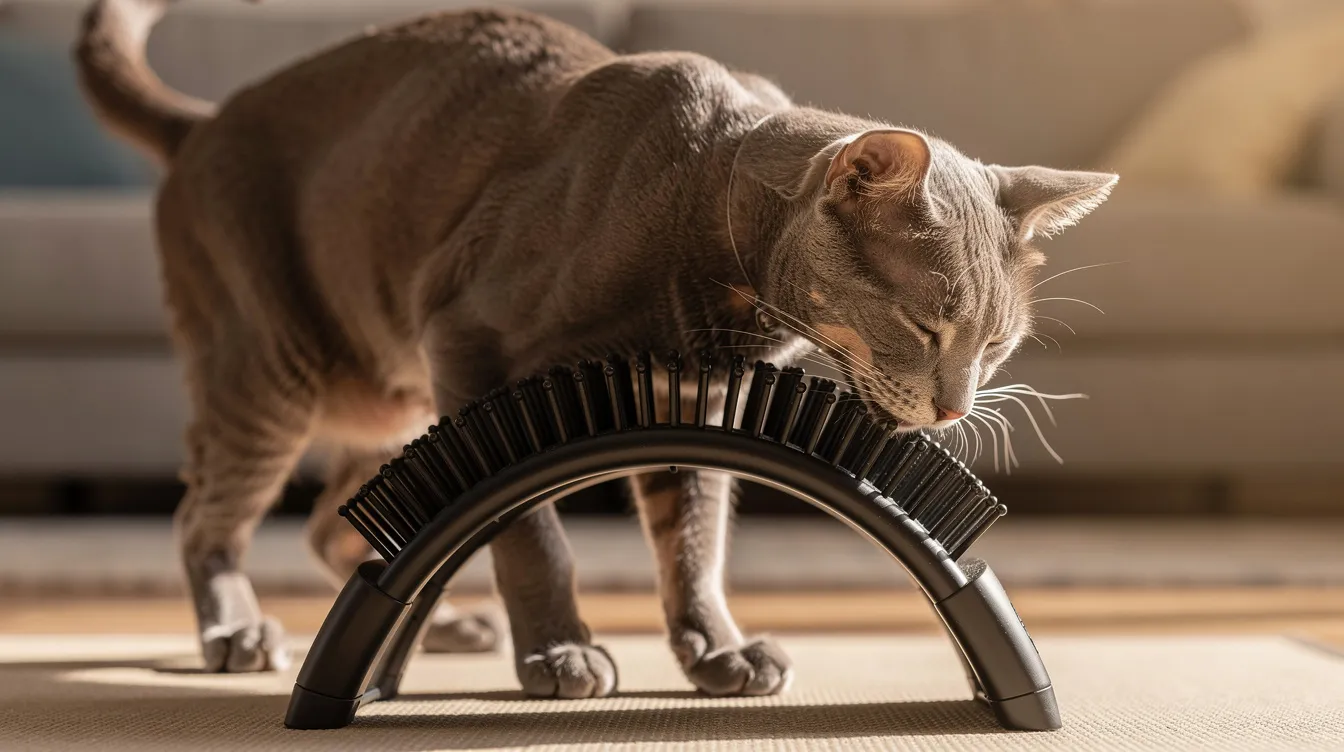
Key Features to Look For in a Cat Arch Self Groomer
Before you purchase, here's what actually matters:
Bristle firmness and material. Look for durable plastic bristles that are firm enough to catch loose hair but flexible enough not to scratch the skin. Some cats prefer silicone bristles over natural hair bristles, while others may prefer softer, more flexible bristles for grooming. Test what your cat responds to.
Base weight and stability. A stable base helps prevent tipping during vigorous play. Scratchers under 8 lbs tend to slide around; products weighing 10–12 lbs or more perform significantly better. Anti-slip rubber feet are important on hardwood or tile.
Scratch surface texture. Offering various textures in scratchers can appeal to different cat preferences. Sisal rope or fabric lasts 2–3 years under heavy use; cardboard is cheaper but wears out faster. Cats generally prefer rough, nubby textures for claw purchase. Carpet feels nice but can cause "carpet confusion" with your actual floors.
Arch height and width. Taller, wider arches suit big adult cats; smaller arches work for a kitten or compact spaces. The cat should be able to walk through and rub its full body without squeezing.
Multi-function features. Scratch pad plus grooming arch plus built-in catnip compartment or toy balls - these add engagement. The core purpose is the arch and scratch surface, but toys help with initial buy-in.
Ease of assembly and cleaning. Screw-in arches that don't wobble, bristles you can wipe down, and bases you can vacuum or spot clean. Avoid plastic nuts that crack under pressure.
Spotlight: Cidero Self Grooming Cat Arch Toy
This is our top pick for a reason. The Cidero Self Grooming Cat Arch Toy is designed to check every box a cat self groomer needs to hit: dense bristle coverage for shedding control, a sturdy base that stays put, and a simple design cats actually use.
What you get:
- Self grooming functionality - cats rub their face, head, neck, and body to remove loose hair on their own
- Some self-groomers include catnip for added attraction, and this one is designed to work with catnip to keep your cat coming back
- Encourages healthy stretching, scratching, and massage throughout the day
- Keeps cats busy while owners are at work - a real solution for indoor cats
Who it's best for: Households trying to protect furniture from claws, multi-cat homes where sharing a single grooming tool reduces brushing time, and any cat that sheds a lot.
The product is priced at $39.99. Check the product page for current stock and return policy details. If you're new to cat self groomers, this is a simple spot to start.

Different Types of Grooming Arches (And Which One Your Cat Will Like)
Not all cat arches are built the same. Here's how they break down:
- Classic arch + scratch pad combos. A bristle arch mounted on a flat sisal or cardboard base. Straightforward, effective, easy to clean. Best match for heavy scratchers and cats that love a good stretch.
- Grooming stations with toys. Plush bases with attached wool balls, mouse toys, or dangling elements that turn grooming into play. Great for a playful kitten that needs extra motivation to engage.
- Ring-style brush toys. Cats step through a full circle of bristles that massage all sides of the body at once. These are more immersive but take up slightly more space.
- Wall-mounted brushes. Attach directly to a wall or doorframe corner. Compact and great for small apartments, though they skip the scratching base entirely.
Personality match: Shy cats do best with passive arches in quiet corners. Kittens love toys and catnip add-ons. Senior cats benefit from lower arches with gentle bristles. Heavy scratchers need a durable, weighted base.
How to Train Your Cat to Use a Cat Self Groomer
Some cats walk up to a grooming arch and immediately rub their face all over it. Others lay nearby and stare at it suspiciously for a week. Both are normal.
Placement matters. Put the arch where your cat already hangs out - near a favorite bed, a window perch, or along their regular walk path.
Use catnip. Sprinkling catnip on bristles encourages cats to use self-groomers. A pinch on the arch and scratch base is usually enough to attract curious sniffs and cheek rubs.
Treats build trust. Using treats helps build positive associations with self-groomers. Guide your cat under the grooming arch with treats placed just beyond or underneath it.
Don't force it. Never push your cat's head or body into the bristles. Keep first sessions short and positive.
Give it time. Adjust the bristle angle or arch position if the cat seems unsure. Cats often warm up gradually over a few days.
Grooming Tips: Controlling Cat Hair and Shedding With an Arch
A self groomer is one of the easiest tools you can add to your shedding-control routine - especially if your cat won't sit still for a handheld brush.
Combine methods. Use the arch daily alongside regular brushing sessions with a handheld cat brush during heavy shedding seasons (spring and fall). Grooming arches can help cats shed loose fur effectively between manual brush sessions.
Leave it out. Keep the grooming arch in a permanent spot so cats can self groom multiple times a day. Frequency matters more than duration.
Clean regularly. Shake out or vacuum the base weekly. Wipe down the durable plastic bristles and remove clumps of hair to keep the grooming tool effective.
Monitor results. Self-groomers can help remove excess hair from cats, which means fewer hairballs - especially for long-haired indoor cats. If your cat's coat looks shinier and you're finding less fur on your furniture, it's working.
Watch the skin. Monitor your cat's skin for irritation. If the skin looks red or sensitive, choose softer bristles or let your pet groom less frequently.
Safety and Maintenance: Keeping Your Grooming Arch in Top Shape
Cat arch scratchers are generally safe when well-built and checked regularly. Here's how to ensure yours stays that way:
Weekly hardware check. Inspect screws, bolts, and connections to make sure the arch doesn't wobble, tilt, or collapse under the cat's weight. This is important for cats of all ages.
Bristle inspection. Every few weeks, check for sharp or broken tips that could irritate the cat's face or body. Replace the arch if damage is significant.
Sanitize the bristles. Wipe plastic bristles with a damp cloth and mild pet-safe cleaner. Let fully dry before your cat uses it again.
Clean the base. Keep the anti-slip base free of dust so it grips the floor properly. Wipe rubber feet or adhesive stickers as needed.
Replace worn materials. Swap out heavily worn scratch pads or bases every 6–12 months, depending on how aggressively your cat scratches. Sisal lasts longer than cardboard - plan your care schedule accordingly.
When to Upgrade or Add a Second Grooming Arch
As cats grow - or as you add more cats to the family - one arch might not cut it.
Signs it's time to upgrade:
- The arch leans, the base warps, or the bristles are flattened beyond usefulness
- Your cat stops using a once-loved arch (the structure may have shifted or no longer fits their body comfortably)
- A kitten has grown into an adult and needs a wider, taller arch to match their size
Multi-cat households: Add a second cat arch in another room to reduce competition and spread out grooming and scratching activity. Resource sharing matters a lot when you have more than one pet under the same roof.
If your cat clearly loves self-groomers and uses them daily, consider upgrading to a more feature-rich product like the Cidero Self Grooming Cat Arch Toy for better bristle density, a sturdier base, and longer durability.
The bottom line: less loose hair on your couch, happier indoor cats, and furniture that stays intact. That's the purpose of a solid cat arch scratcher - and now you know exactly how to pick one, use it, and keep it working. Browse our store for grooming arches and other pet supplies, and give your cat the stretch-and-scratch experience it deserves.


