

Why Do Cats Bunny Kick Toys? The Real Reason Behind This Wild Move
Your cat grabs a plush toy, rolls onto their side, and unleashes a flurry of rapid-fire kicks with their back legs. It looks chaotic, maybe even a little unhinged. But this move-known as the bunny kick-is one of the most purposeful things your cat does all day.
Here's what's actually happening, why it matters, and how the right cat toy can turn this wild instinct into healthy, satisfying play.
Quick Answer: Why Cats Bunny Kick Toys
Bunny kicking is not random play and it's not boredom. It's a hardwired hunting and self-defense move. When your cat wraps their front paws around a toy, rolls to their side, and hammers it with their hind legs, they're executing a prey-subduing technique that wild cats use to finish off a catch or fend off a threat. Those rapid kicks are designed to immobilize prey while protecting the cat's vulnerable belly and throat.
When cats play with a kicker toy or plush toy at home, they're safely practicing this instinct. The toy becomes a stand-in for prey-something to grab, bite, and kick without consequence. It's one of the healthiest outlets an indoor cat can have, and it's why purpose-built kicker toys exist. At Cidero & Co., we designed the Jumbo Goldfish Kicker Plush for Cats specifically to give cats a safe, satisfying target for this exact behavior.
What Is a Bunny Kick? (And What It Looks Like When Cats Play)
The bunny kick follows a recognizable pattern. Your cat rolls onto their side or back, locks their front paws around the target, and delivers rapid alternating kicks with their back legs. The body coils, the paws grip, and the hind legs thump against whatever they're holding.
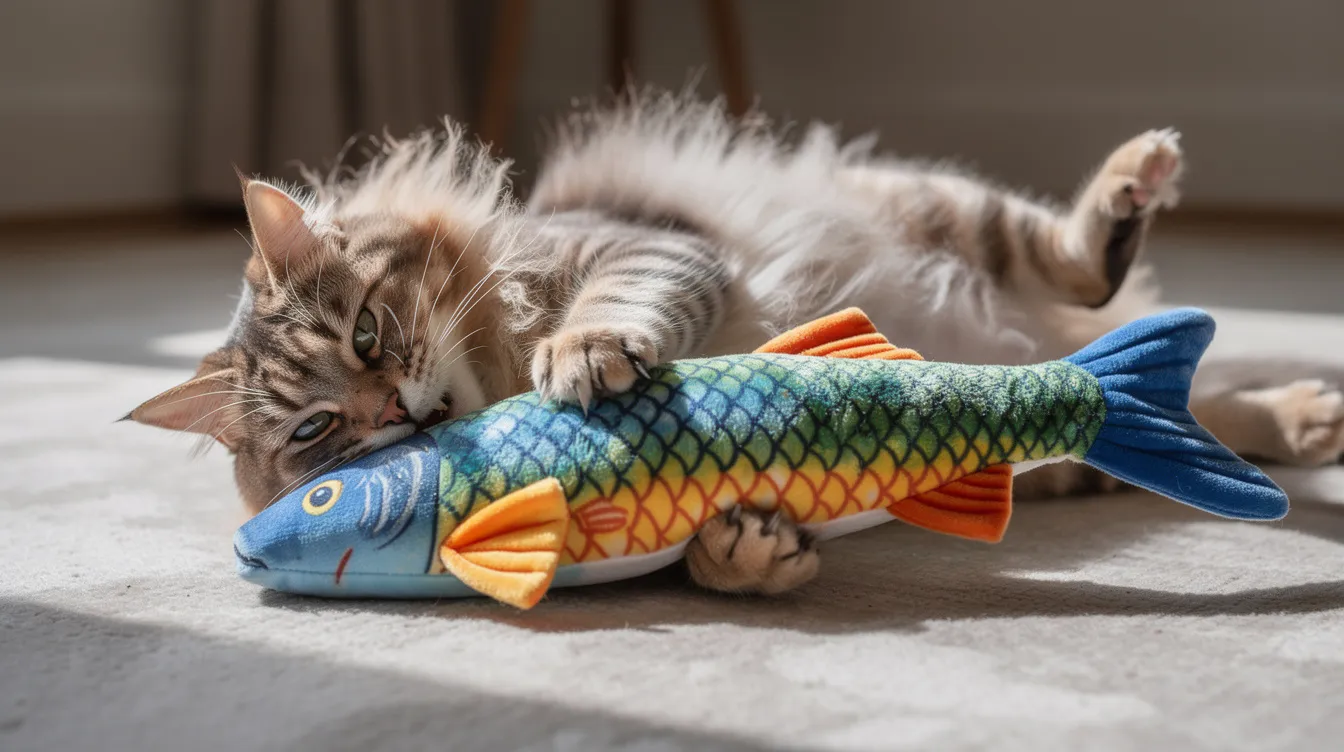
Cats bunny kick stuffed animals, cat stuffed animals, fish-shaped kicker toys, and yes-human hands if they get overstimulated. The intensity tells you a lot. Playful kicking looks loose: soft body, gently swishing tail, relaxed face. Intense kicking is different-ears flatten, the body goes rigid, and claws fully extend. You can hear it too: the sounds of claws gripping fabric, the thumping of a plush toy against the floor, the crinkle of material compressing under force.
The Evolutionary Reason Cats Bunny Kick
In the wild, cats use the bunny kick to pin and finish off prey like rodents and rabbits. The front paws hold the animal in place while the powerful hind legs deliver rapid strikes to the body. This same posture also serves as a last-resort defense-if a cat is grabbed or pinned by a larger predator, kicking upward protects the throat and belly while inflicting damage.
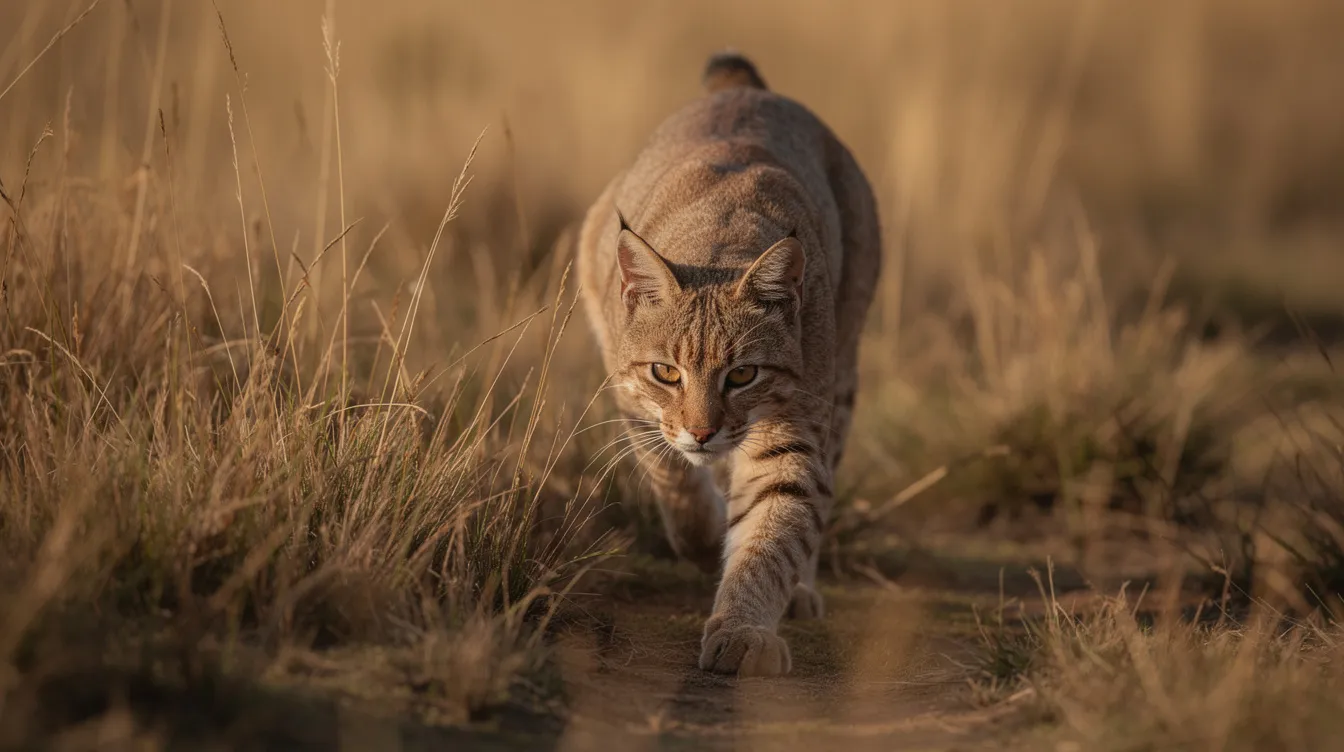
Domestic cats descended from solitary hunters, and research confirms they still prefer toys that resemble prey in size and shape. When your cat grabs a goldfish stuffed animal and kicks it across the living room, they're running the same neural software their ancestors used on real animals. Indoor cats never catch actual prey, but they tend to redirect these instincts toward toys, pillows, or anything they can grab. Cats enjoy toys that tap into their natural instincts to stalk and pounce, and the bunny kick is the final act of that sequence.
Play vs. Aggression: How to Tell the Difference
Not all bunny kicks are the same. Knowing whether your cat is having fun or hitting a threshold matters.
During playful bunny kicking, the body stays loose. The tail is upright or gently swishing, eyes are soft or half-closed, and claws are usually retracted. Biting is light-more mouthing than puncturing. You might hear purrs or chirrups. This is joy in motion.
Aggressive or overstimulated bunny kicking looks different. Pupils dilate, ears flatten against the head, the tail lashes sharply, and you may hear growling or hissing. Claws come out fully. If your cat suddenly grabs your hand and kicks hard after a belly rub, that's overstimulation-not meanness. They crossed a sensory threshold, and the kick is a reflexive "stop" signal. A large survey of 1,591 cat guardians found that roughly 40.2% reported aggression during play, often linked to insufficient outlets for this kind of energy.
Why Cats Love Kicker Toys Specifically
A kicker toy is a long, soft cat toy-typically ranging from 6 to 15 inches in length-designed so cats can hug it with front paws and kick with back legs. The elongated shape mimics the body of real prey, inviting cats to grab, bite, and bunny kick in one fluid sequence.
What makes them work is the combination of features. Many kicker toys are filled with catnip or silvervine to spark interest. Kicker toys often feature engagement elements like ribbons and crinkly material that add sensory feedback. A durable burlap exterior withstands aggressive play on tougher models, while soft plush covers protect cats during gentler sessions. Catnip-filled toys encourage independent play and physical activity, which makes them ideal for cats left home during the day. The Cidero & Co. Jumbo Goldfish Kicker Plush is built on this same principle-an oversized, fish-shaped kicker that invites full-body play.
What's Going On in Your Cat's Brain During a Bunny Kick?
The bunny kick is the climax of a hardwired behavior chain: stalk, pounce, grab with front paws, bite, then kick with hind legs. Each stage builds arousal, and when your cat reaches the kicking phase, sensory cues-texture, resistance, movement-fire in rapid succession.
Successful completion of this sequence triggers a release of dopamine and endorphins. That neurochemical reward makes the behavior self-reinforcing. Your cat literally feels good doing it, which is why they come back to their favorite stuffed animal again and again.
This also explains fixation. Some cats carry a specific goldfish plush or cat stuffed animal around the house, returning to it for daily kicking sessions. The toy becomes a trusted prey stand-in-familiar, satisfying, and reliably fun. If you recently added new things to your cat's toy rotation, you may notice they still sort through the options and choose the same one.
Is Bunny Kicking Toys Safe for Your Cat?
Bunny kicking toys is almost always healthy behavior. It lets cats burn energy, express natural instincts, and engage muscles they'd otherwise rarely use indoors. Kicker toys and plush toys designed for pets are the safest targets.
The risks come from poor-quality products. Cheap stuffed animals with glued-on eyes, loose plastic parts, or weak seams can shed materials under forceful kicks, creating choking hazards. Look for cat-safe fabrics, non-toxic dyes, and durable stitching. Cidero & Co. designs its toys-including the Jumbo Goldfish Kicker Plush-with reinforced construction and pet-safe materials to withstand vigorous bunny kicking without compromising safety.
How to Encourage Healthy Bunny Kicking (Without Sacrificing Your Hands)
The number one rule: never use bare hands or feet as toys. This teaches cats that human skin is an acceptable kicking target, and it's a hard habit to break.
Instead, try these steps:
- When your cat starts to grab and kick your arm, immediately offer a long kicker toy as a substitute. The swap should be calm and consistent.
- Run short daily play sessions of 5 to 15 minutes. Start with a chase element-drag a toy across the floor-then let the cat catch it and transition into a full bunny-kick session.
- A simple routine: drag the Jumbo Goldfish Kicker Plush along the ground, let your cat stalk and pounce, then step back while they roll and kick. Share this process with everyone in the family so the cat gets consistent signals.
Providing multiple short play sessions daily enriches cat playtime far more than one long session.
Training Redirects: When Bunny Kicks Hurt
If your cat bunny kicks you with claws out and bites hard, don't jerk away-that mimics prey movement and escalates the situation. Instead, freeze. Go still and gently disengage once the cat loosens their grip.
Stand up slowly or place a pillow between you and the cat. Then immediately offer a kicker toy or stuffed animal to redirect. Cornell University's feline behavior guidelines emphasize that punishment increases fear and defensive aggression-positive reinforcement works. When your cat grabs the toy instead of your hand, acknowledge it with a treat or calm praise.
Consistency across the household matters. If one family member roughhouses with bare hands while another uses toys, mixed signals slow learning. Everyone should agree to stop hand play entirely.
Choosing the Right Kicker Toy for Your Cat
Kicker toys should be around 7 to 10 inches long for average cats, though kicker toys typically range from 6 to 15 inches depending on the cat's size. Larger cats over 12 pounds may prefer jumbo options-16 to 18 inches-so their hind legs can fully extend.
Texture matters. Ultra-soft plush toys are comforting for cuddling and light biting. Rugged fabrics like canvas or burlap suit heavy kickers. Natural braided cotton is gentle on teeth for cats who love to gnaw.
For filling, organic catnip is often used in pet toys to spark interest. Some refillable toys include both catnip and silvervine options. The Petlinks Jeepers Creepers toy, for example, has a refillable catnip pouch. Twin Critters toys feature a zippered pouch for refilling catnip. Refillable toys can maintain cats' interest over time, saving you from having to add new ones to your cart every few days.
Design shapes like a bright orange goldfish stuffed animal are easier for cats to grip and visually track than flat or tiny toys. The color contrast helps them find it across the room. When you filter through options on Amazon or other brands, look for these features before checking price or sale tags.
Spotlight: Cidero & Co.'s Jumbo Goldfish Kicker Plush for Cats

The Jumbo Goldfish Kicker Plush for Cats is an oversized, lifelike goldfish stuffed animal built specifically for bunny kicking. Its elongated body gives cats room to wrap their front paws around the face and fins while their hind legs deliver powerful kicks along the body.
This product is designed to satisfy the full predatory sequence-grab, kick-in a single toy. It's cute enough to leave on the floor without ruining your living room aesthetic, and durable enough to survive daily sessions. Shop it directly at cidero.net and add it to your cat's enrichment rotation.
Other Toy Types That Invite Bunny Kicks
Bunny kicking isn't limited to one style of toy. Elongated cat stuffed animals shaped like rabbits, fish, or cigar-shaped rolls all work because they mimic prey proportions.
Plush toys with tails, fins, or ribbons give cats something to latch onto before rolling into a kick. Electronic motion toys simulate the erratic movements of prey, which can trigger the pounce-to-kick transition. The Potaroma Electric Flopping Fish, for instance, is 10.5 inches long, and cats can play with this rechargeable flopping fish for over 40 minutes-making it a solid option for independent play.
Wand teasers are essential for interactive play between cats and humans, and once the "chase" ends, many cats transition straight into bunny kicking the lure. Tunnel toys like the Foldable Rainbow Starfish Cat Tunnel create ambush opportunities that naturally lead to grabbing and kicking.
Rotating toys keeps cats interested longer than using the same ones constantly. Think of it like a box of accessories you cycle through-the novelty keeps things fun across all ages.
When Bunny Kicking Might Signal a Problem
If your cat bunny kicks excessively-always directed at people or other pets, outside of any play context-it may signal frustration, anxiety, or pain. Warning signs include deep bites that break skin, persistent growling before every interaction, or sudden changes in how they approach toys.
A cat who recently shifted from playful kicking to defensive aggression may be dealing with something physical. Arthritis, abdominal discomfort, or dental issues can make a cat more reactive. If behavior changes suddenly, consult a veterinarian before assuming it's purely behavioral. A number of read cases point to pain as the underlying trigger for what looks like aggression.
How Often Should You Let Your Cat Bunny Kick?
Aim for at least one structured play session daily-ideally two shorter sessions of 5 to 15 minutes each-that end with your cat grabbing and kicking a toy. Research on 277 indoor cats found that owners who played for 5 or more minutes per session reported fewer behavioral problems than those with very short bouts.
Regular bunny kicking helps maintain muscle tone, supports a healthier weight, and reduces boredom-driven behaviors in indoor cats. Kittens may need more frequent but shorter bursts. Senior cats benefit from gentler, longer sessions. Continuing to use durable kicker toys like the Jumbo Goldfish Kicker Plush means the toy holds up across days and weeks of daily use without falling apart.
Pairing Kicker Toys with Other Enrichment
Bunny kicking is one piece of a broader enrichment routine. Combine kicker toys with chase toys, tunnels, and visual stimulation for a well-rounded indoor life. Interactive toys can help reduce boredom in indoor cats, and interactive track toys provide independent play for cats left alone during work hours.
A simple daily rotation might look like this: morning slow feeder or lick bowl, midday window watching with an Interactive Aquarium Cat Toy Lamp, evening kicker toy session, and short chase play before bed. Puzzle boards stimulate a cat's mind by requiring problem-solving to earn treats, adding mental enrichment alongside physical play.
Cidero & Co. offers an ecosystem of enrichment products designed to complement each other for modern indoor cats-from lamps to tunnels to plush toys.
Materials and Safety: What a Bunny-Kicking Toy Must Withstand
Bunny kicking puts intense, repeated pressure on seams, fabric, and fillings. Cheap toys often burst after a few sessions, leaving stuffing scattered and creating a choking hazard. Tightly woven fabric prevents nails from getting caught, which is critical during rapid kicking where claws extend and retract quickly.
Look for double stitching, reinforced seams, and fillings that stay contained. Avoid toys with glued-on eyes, beads, or dangling strings that can detach under forceful kicks. Put away toys with long strings when not supervising to reduce hazards. Regularly check toys for damage and replace them promptly-a fraying seam today becomes a swallowed thread tomorrow.
Helping Shy or Senior Cats Discover Bunny Kicking
Not every cat dives into kicking immediately. Shy cats may need slower introductions-drag a soft, lightweight plush toy along the floor at a gentle pace, or partially hide it under a blanket to spark curiosity without overwhelming them.
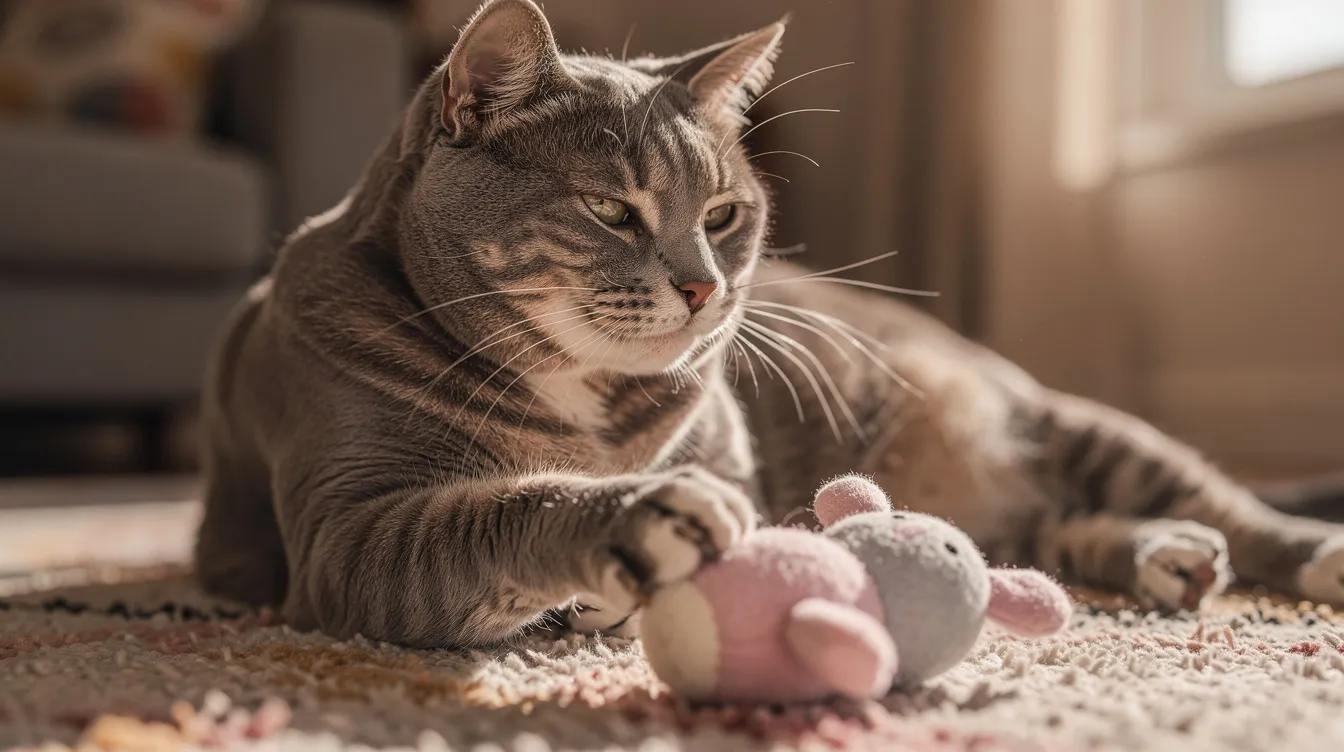
For senior cats, keep sessions short and low-impact. Let them grab and lightly kick without requiring jumping or twisting. A generously padded kicker toy like a goldfish plush can double as a comfort object-something they cuddle, groom, and occasionally kick. For more ideas on enrichment for older pets, see our guide on senior indoor cat enrichment. These gifts of gentle stimulation make a real difference for aging friends.
Myths About Bunny Kicking You Can Ignore
Some people believe that if a cat bunny kicks, they're being vicious. In reality, it's usually normal play or a defensive reflex-not spite. Cats don't test your patience on purpose. They're running instinct software.
Others think they should stop their cat from bunny kicking altogether. That's counterproductive. The goal is to redirect it toward appropriate toys, not suppress a natural drive. Trying to eliminate it entirely creates frustration and often makes things worse.
There's also a misconception that only aggressive cats bunny kick. Plenty of mellow, love-seeking cats bunny kick their favorite stuffed animal as a fun game before curling up for a nap. And finally, not just any plush toy from a dog aisle or gift shop is safe. Many human-grade or generic stuffed animals aren't built for claws and can be unsafe if shredded. Always choose toys made for cats, tested for durability, and stocked with pet-safe materials.
Bringing It All Together: Giving Your Cat a Safe Outlet for Their Wild Side
Bunny kicking is a deeply rooted hunting and self-defense behavior that every indoor cat needs a safe way to express. It's not a quirk to correct-it's a drive to channel. When you provide purpose-built kicker toys and cat stuffed animals that invite grabbing, biting, and kicking, you give your cat an outlet that satisfies instinct and protects your skin.
The simplest first step is a toy that does what cats need it to do: hold up under pressure, feel like prey, and reward the kick. The Jumbo Goldfish Kicker Plush for Cats from Cidero & Co. was designed for exactly this. Explore our full collection of enrichment products and find the right fit for your cat's wild side.


