

Cat Fish Tank Guide: Safe Setups, the Viral "Cat Aquarium" Trend & Safer Alternatives
If you've ever caught your cat sitting inches from a fish tank, pupils blown wide, tail twitching-you already know the obsession is real. The good news? Cats and fish tanks absolutely can coexist under the same roof. You just need to be smart about it. This guide covers everything from picking a fish safe setup to honest thoughts on viral "cat hole" aquariums, plus a safer enrichment alternative that sounds almost too cool to be true.
Quick Answers: Can You Safely Keep Cats and Fish Tanks Together?
Yes-but only if you're intentional about it. Here's the short version before we get into details:
- Always use a secure lid on any aquarium. Lidless tanks are not safe for homes with cats. Period.
- Avoid unstable bowls and tiny nano tanks on flimsy surfaces. A 20-gallon tank filled with water weighs around 170 pounds-that weight needs a proper stand.
- Keep cords tidy and out of reach to prevent cats from chewing, tugging, or unplugging equipment.
- Never rely on a "cat hole" fish tank design alone for safety. These viral setups look wild on social media but come with real risks for both you and your pets.
- Fish tanks enhance home decor while entertaining cats, but pairing a cat-proof aquarium with dedicated enrichment toys is the move. At Cidero & Co., we recommend products like our Interactive Aquarium Cat Toy Lamp to give your feline friend the visual stimulation they crave-without putting live fish at risk.
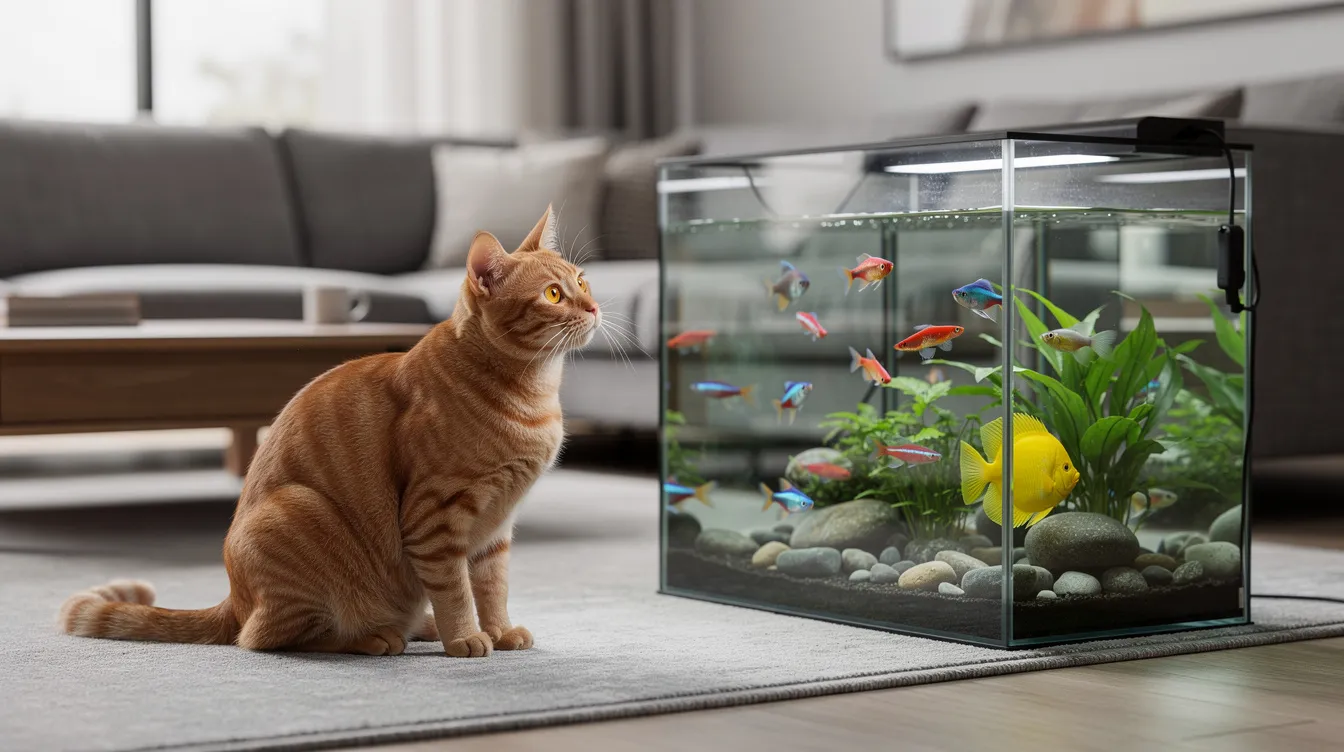
Understanding Your Cat's Obsession With the Fish Tank
Why does your cat go absolutely crazy over the aquarium? It comes down to biology.
Movement and warmth.
Cats are attracted to the movement and warmth of aquariums. Those darting shapes trigger a strong prey drive hardwired into every cat. The light, color, and motion create a hunting simulation your cat didn't ask for but can't resist.
Mental stimulation.
Aquariums provide mental stimulation for cats, and the calming movement of fish promotes relaxation in cats. Aquariums engage a cat's natural curiosity in ways a static toy never could. Watching fish actually reduces anxiety in cats-so that laser-focused stare isn't always stress. Sometimes it's meditation.
Boredom.
Indoor cats between ages 1–5 are most likely to bat at, paw, or jump on a tank. Without enough enrichment, they redirect hunting instincts toward "easy targets." If you've ever wondered how to entertain a cat when you're not home, this is why it matters.
Stress and change.
A new baby, a move, extra noise-cats dealing with disruption may fixate on the tank as a coping mechanism.
Hunger.
Irregular feeding times or underfeeding can spike hunting behaviors. If your cat is constantly circling the aquarium at dinner time, that's a clue.
Home-alone time.
Cats left unsupervised for long workdays may experiment with climbing the stand, tugging cords, or trying to open lids just because there's nothing better to do.
Picture a young tabby perched on a desk, intently stalking a betta's fin through the glass. That's not weird behavior-that's instincts at work.
Choosing a Cat-Safe Fish Tank (Avoid These Common Risks)
Let's be real: there's no truly "cat proof" fish tank. But some designs are far safer than others for homes with agile felines.
- Lidless tanks are trouble. Open tops give cats easy paw access, invite jumping, and let them drink tank water. Some owners hang plants like pothos above the waterline-these can be toxic to cats.
- Goldfish bowls are easily accessible and dangerous for fish. They're unstable, terrible for fish welfare, and one curious pounce away from a mess on your floor.
- Nano tanks under 10–15 gallons on flimsy shelves are asking for disaster. They're light enough for a determined cat to nudge, knock, or topple.
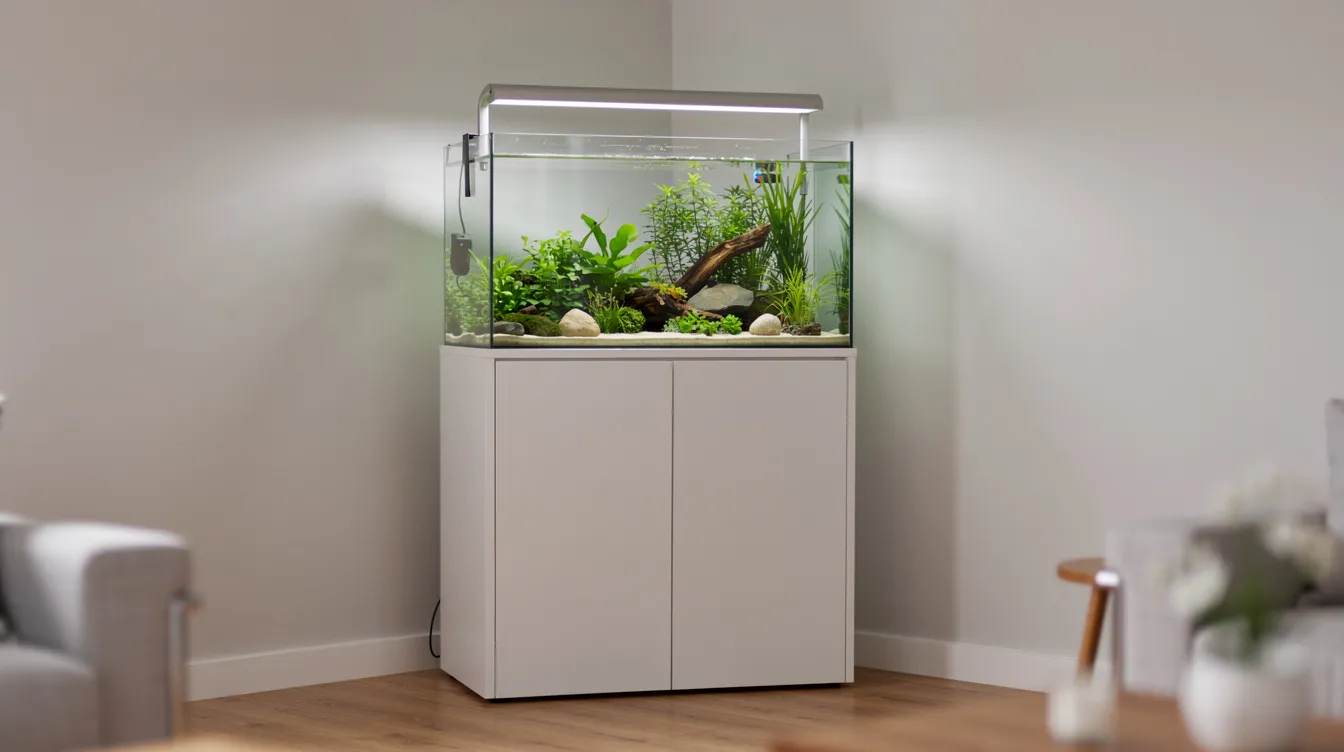
- Safer options: Go with a solid rectangular or hexagonal fish tank with a fitted lid, made from ultra clear glass, placed on a sturdy dedicated cabinet. A 20–40 gallon lidded aquarium on a proper stand rated for the weight is your best starting point. Cat fish tanks in this range can hold 20-29 gallons of water comfortably and keep both species safer.
Smart Placement: How to Pick a Good Location for a Fish Tank in a Cat Home
Where you place the tank often matters more than which tank you buy.
- Eliminate launch pads. Remove furniture nearby that cats can use as launching pads-sofas, bookcases, cat trees, or windowsills within jumping distance. Keep at least 2–3 feet of clearance around the tank edges.
- Wall or corner placement. Push the aquarium against a wall or into a corner so cats can't circle it from all sides or shove it from behind.
- Low-traffic, visible zones. A living room corner away from the litter box and food area works well. Avoid busy hallways where cats constantly pass by.
- Height matters. Place fish tanks on high surfaces to limit cat access. Stands with closed fronts (doors, not open shelves) discourage climbing. A 36-inch tall cabinet with solid sides is much harder to scale than a low shelf unit.
- Real-world example: In a studio apartment, tuck the tank into a corner opposite your sofa and cat tree. In a small home office, skip the wide desk-mount the aquarium on a dedicated stand against a wall instead.
Securing Your Tank: Lids, Wires, and Other Ways to Prevent Cats From Interfering
The goal here is simple: make the fish tank boring and hard to mess with so your cat loses interest.
Hard lid with clips.
Use a hard lid secured with clips to protect fish tanks. Avoid loose glass covers that a persistent cat can nudge, slide, or lift. Clip-on or clasped lids are the way to go.
Extra deterrents.
In the early days, double-sided tape and aluminum foil can deter cats from the tank area. You can also add a bit of weight on top of the lid (a flat piece of decor, a stone) to make it harder to shift.
Wire management.
Secure cords with child safety locks or tie them up to prevent chewing. Securely seal exposed wires to protect cats from chewing and injury. Use cable raceways or adhesive clips to keep everything flush against the stand. Don't forget drip loops so water can't travel along cords to outlets. Also secure cords to prevent cats from unplugging equipment-losing a heater or filter overnight is bad news for your fish.
Muffle the water sounds.
Quieting filter splash with sponge pre-filters or chutes reduces the "magnetically attracted to running water" effect. If it sounds like a stream, your cat will investigate.
Avoid aquarium water access.
Avoid letting cats access aquarium water as it can contain bacteria. Aquarium water can carry germs and should be handled carefully-by you and definitely not by your cat's tongue.
Cat water fountain.
Set up a dedicated cat fountain so your cat's desire for running water is satisfied away from the tank. This alone can cut down on tank-related curiosity dramatically.
Cat Fish Tank With a "Cat Hole": Viral Trend vs. Real Safety Concerns
You've probably seen them on TikTok or Reddit-those gorgeous cat aquariums with built-in openings for feline access. A cat lounges inside a viewing alcove while fish swim overhead or around them. It looks absolutely incredible. But let's talk about what's actually going on.
- What they are: Cat aquariums have built-in openings for feline access. These are typically large tanks (think 80×40×50 cm inner dimensions) with integrated tunnels, viewing boxes, or cat caves. The Orbit Tank features 360-degree viewing windows. The Internal Tunnel V3 allows cats to walk through the tank. Cat-friendly tanks are made from ultra clear tempered glass. These are cat view fish tank designs meant to let your cat sit right inside the structure and admire the fish up close.
- Why people love them: They create a seriously cool piece of furniture-part aquarium, part cat bed-that makes every customer who sees it want one immediately.
- Fish welfare issues: Here's where things get complicated. When a predator is constantly visible at close range, fish experience chronic stress-elevated cortisol, suppressed immunity, reduced feeding, and higher disease rates. Freedom from distress is a recognized fish welfare need, and a cat hole setup can undermine it.
- Practical risks: These tanks are heavy (38–40 kg before water), and the integrated cat section adds structural complexity. Leaks are harder to spot behind facades. Maintenance-cleaning the cat cell, accessing the filter-gets annoying fast.
- If you still want one: Treat it as a fish-first tank. Stock less stress-sensitive species, provide tons of hiding spots, keep the lid utterly secure, and limit or supervise cat access through the hole. Use visual barriers like dense plants or background images to reduce threat perception for fish.
If you're thinking about getting a fish tank for your cat, we'd encourage you to read that guide before you decide.
Safer Alternatives: Cat Enrichment That Feels Like a Fish Tank (Without Real Fish)
The best way to protect real fish? Separate "cat TV" from live animals entirely by choosing aquarium-style cat toys that are truly safe.
- The Interactive Aquarium Cat Toy Lamp: This is Cidero & Co.'s answer to the cat fish tank dilemma. It's a compact lamp with three realistic animated fish swimming inside, color-changing LEDs, and a soft ambient glow. Powered by USB or 3×AA batteries. No water changes, no feeding, no filters. Just plug in and let your cat watch, chase the light, and bat at the exterior.
- Enrichment benefits: Your cat gets the same visual and hunting stimulation without any risk to live fish. As we explain in our guide on why cats love watching fish and aquarium-style toys, this kind of visual prey simulation taps into natural instincts without putting real animals in danger. It's made from pet-safe ABS plastic with smooth edges-no glass, no toxic materials, no worry.
- Perfect for small spaces: It works as a night-light, a piece of decor, and a cat toy all in one. At around $39.99, it's a fraction of the money you'd spend on a real aquarium setup, especially compared with other fake fish tank options for cats.
- Limitations to keep it real: It satisfies visual and hunting instincts but doesn't replace tactile or olfactory play. Rotate it with other interactive cat toys and enrichment to keep things fresh. We've also compared fake fish tanks vs. cat TV if you want the full breakdown.

Engage Your Cat in Other Ways: Toys, Routines, and Enrichment Around the Tank
If you give your cat enough hunting outlets, the fish tank becomes background noise instead of an obsession.
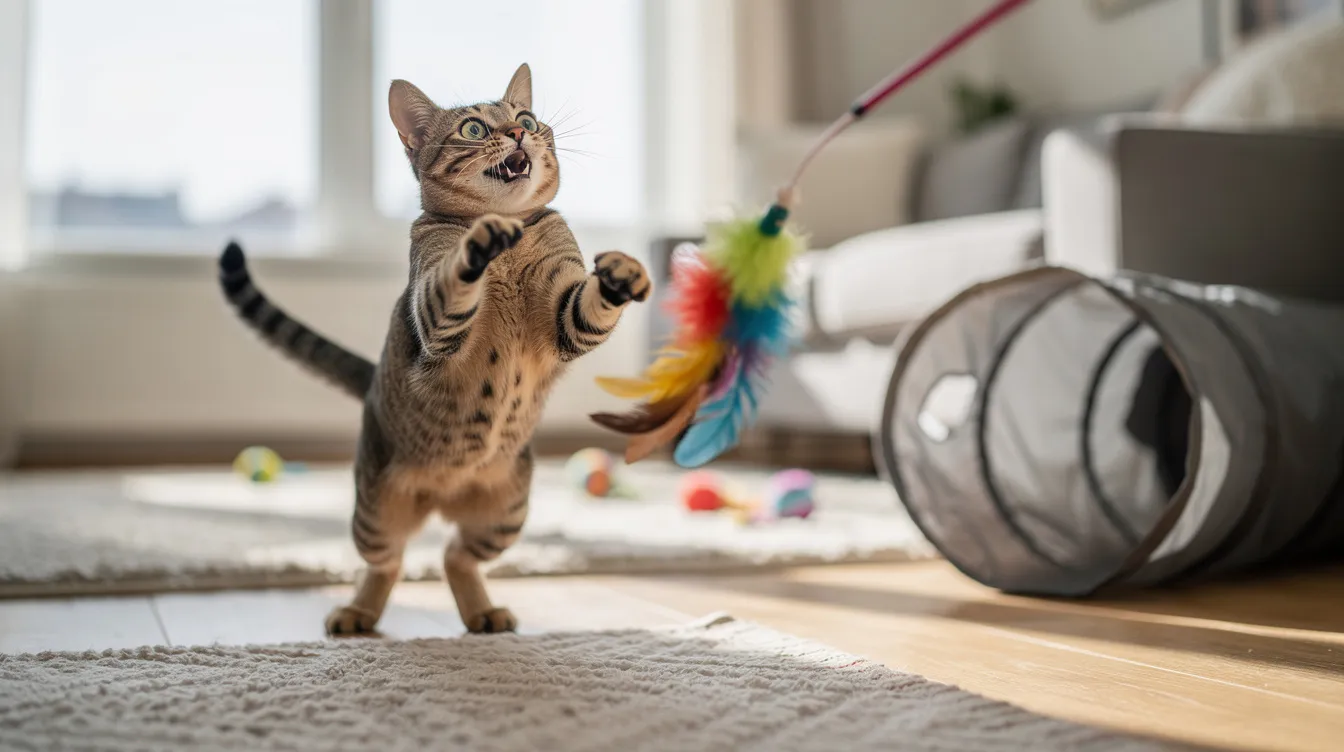
- Daily play sessions. Spend 10–20 minutes with wand toys, chase toys, or cat tunnels before the evening fish-tank-watching peak. Provide alternative entertainment for cats to reduce interest in the tank.
- Environmental enrichment. Set up cat trees away from the aquarium, use puzzle feeders, and try window perches for bird watching. If your indoor cat seems lazy or disengaged, enrichment is the fix.
- Digital enrichment. Safe cat TV videos of birds or fish on a tablet placed far from the real tank can redirect stalking behavior, and our breakdown of fake fish tanks vs. cat TV for keeping cats entertained can help you decide which visual option to lean on most.
- Lounging zone. Place a soft bed or cushion near-but not on-the tank stand so cats can sit within sight without being on top of the lid.
Setting Up and Maintaining a Cat-Friendly, Fish-Safe Aquarium
Choices you make on day one stick around for years. Here's how to keep things fish safe and cat-friendly long term.
- Dedicated cabinet. Use a closed-storage aquarium stand to hide filters, food, and equipment from curious paws. No open shelving.
- Cat-proof fish food storage. Keep food in sealed containers inside cabinets. Many fish foods include garlic or other additives that are toxic to cats if nibbled.
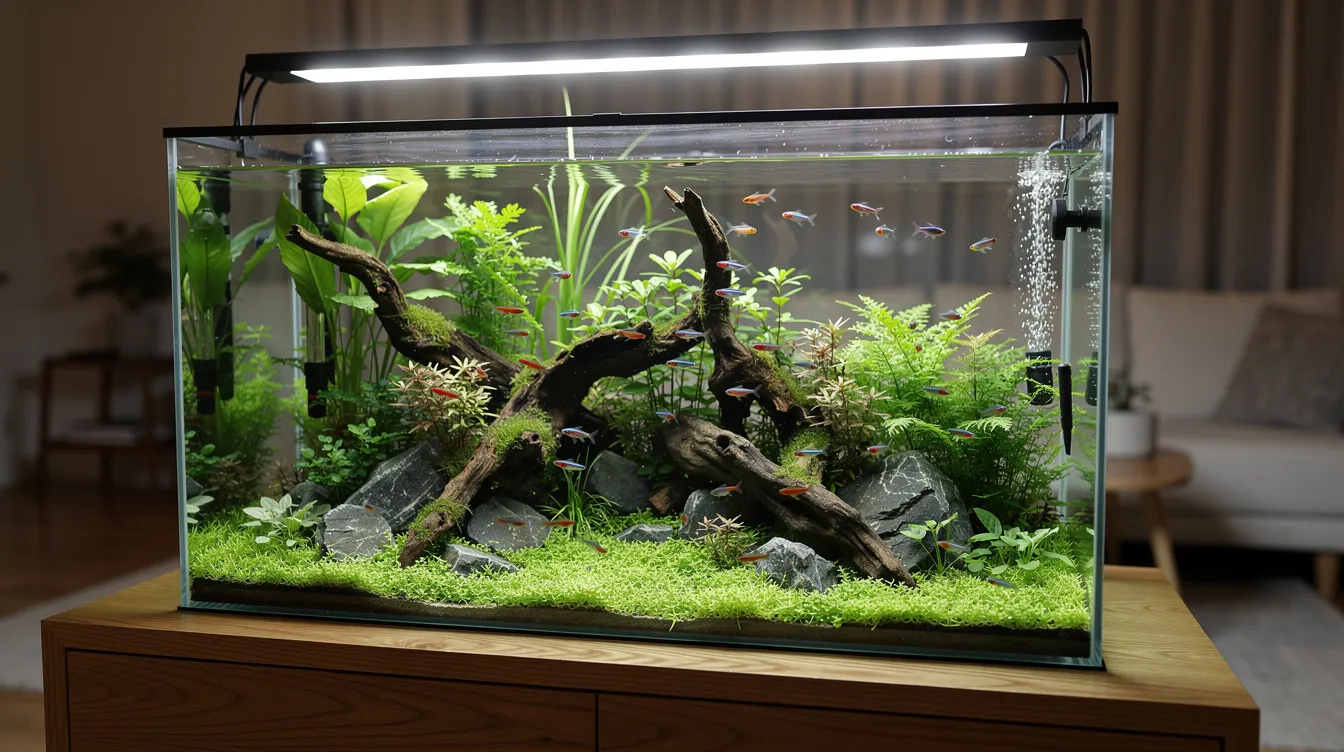
- Fish comfort. Place hiding spots and decorations in the aquarium for fish to retreat into-dense planting, caves, driftwood. This matters even more when a cat occasionally appears at the glass.
- Plant safety. If any plants emerge above the waterline, choose non-toxic species and keep them physically out of reach.
- Water prep. Thoroughly rinse aquarium materials with water before adding them to the tank. Treat tap water with a conditioner to remove harmful chemicals before adding it to the tank.
- Weekly checks. Inspect lids, clips, stands, and cords regularly-especially after you notice your cat has jumped nearby. Catch problems before they catch you.
How to Tell if Your Current Fish Tank Setup Is Safe Around Cats
Already have a tank? Run through this quick self-assessment:
- Does your tank have any open top? If yes, that's a problem immediately.
- Can your cat climb to the same height using nearby furniture? Remove those launch pads.
- Are wires exposed or dangling? If you can see them, your cat can reach them.
- Is the tank on a stable surface rated for the weight? A bowl on a coffee table, a nano tank on a flimsy shelf, or any aquarium next to a tall bookcase your cat already climbs are all red-flag setups.
Warning signs in cat behavior: Constant stalking, jumping on the lid, trying to get behind the tank, or chewing cords.
Next steps if things look risky: Move the tank, add a proper lid, secure all wires, or-if the setup just isn't workable-consider rehoming the fish to a safer room and focusing on faux-aquarium enrichment like the Interactive Aquarium Cat Toy Lamp. Sometimes figuring out the right call means admitting the current space isn't the right fit.
FAQs About Cats, Fish Tanks, and "Cat Aquariums"
Do all cats hunt fish? Not every cat will actively try to catch fish, but most cats have some level of prey interest. Animals with a strong prey drive-especially younger, more active felines-are more likely to escalate from watching to pawing. Assume curiosity will grow over time.
What if my cat spends all day by the fish tank? That usually signals under-stimulation. Increase play, rotate enrichment, and consider adding visual barriers or relocating the tank. Our guide on why cats ignore toys can help you find what actually works.
Is there any truly cat-proof fish tank? No design is 100% foolproof. But a lidded, well-placed aquarium on a proper stand-combined with keeping cats enriched-gets you very close.
Should I buy a cat fish tank with a built-in cat hole? While these viral cat aquariums look amazing, they can cause chronic fish stress and create maintenance headaches. If you're interested, read our honest look before spending the money.
What if I only want the aquarium effect for my cat, not actual fish? That's exactly what our Interactive Aquarium Cat Toy Lamp is built for. Zero water changes, no fish stress, easy setup-and it still gives your cat something mesmerizing to watch. You can also check out our best fake fish tank guide for a full quantity of options compared.
Bringing It All Together: A Calm Aquarium and a Content Indoor Cat
You don't have to choose between a beautiful fish tank and a happy indoor cat. It just takes a little planning.
- Core safety steps: Pick a stable, lidded fish tank. Place it in a good location away from launch pads. Secure lids and wires. Watch for signs of stress in both pets.
- Enrichment is the long game. Regular play, engaging toys, and dedicated "cat TV" options mean the aquarium isn't the only moving point of interest in the room.
- Explore what works. Browse Cidero & Co.'s range of indoor cat enrichment products-from the Interactive Aquarium Cat Toy Lamp to tunnels, chase toys, and slow feeders. Give your cat a house full of things worth chasing, and the fish tank becomes just another piece of the scenery.


