

Best Cat Tunnel Toys: Crinkle, Chase, Peekaboo, and Ambush Play
If your indoor cat stares at walls, ambush-attacks your ankles, or sleeps 20 hours a day, a cat tunnel toy might be the simplest upgrade you make all year. This article breaks down the best picks, what to look for, and how to actually get your cat to use one.
Why Cat Tunnel Toys Belong in Every Indoor Cat Home
For an even deeper dive into designs, layouts, and training tips, our ultimate guide to cat tunnels explains how tunnels fit into a complete enrichment plan for indoor and outdoor-style spaces.
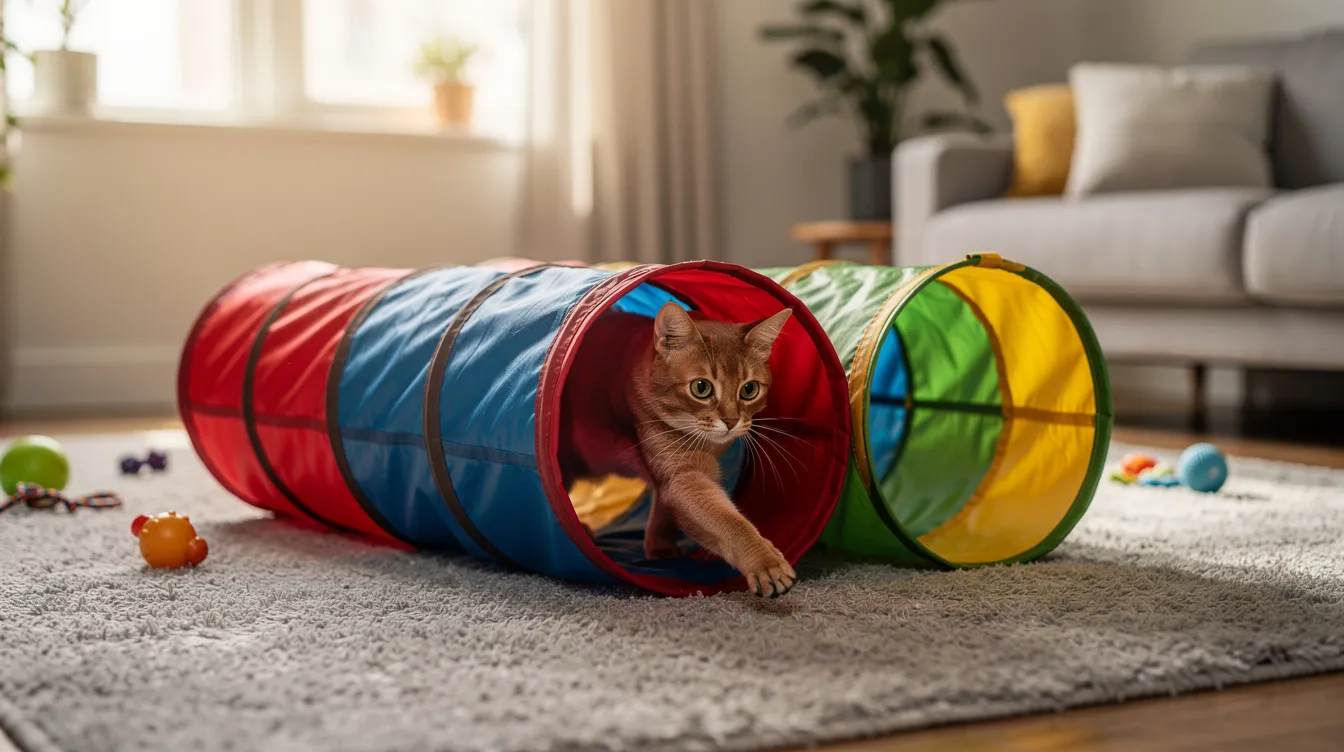
Indoor cats live their entire life inside four walls. Without intentional enrichment, that life can become monotonous. Cat tunnels address this directly by creating covered pathways that mimic the underbrush, burrows, and prey routes cats would naturally explore outdoors.
Cat tunnels satisfy a cat's natural hunting and hiding instincts.
Stalking through a tunnel, pausing at a peek-hole, and launching an ambush at the end mirrors how cats hunt prey in the wild.
Cats love tunnels for different ways
Confident cats use them for sprinting and chase games, while anxious or newly adopted cats treat them as secure hideaways. A systematic review of indoor cat wellbeing found that hiding spaces and environmental enrichment consistently reduce stress indicators in cats, echoing the broader principles in our guide on how to keep indoor cats entertained.
Day-to-day, a tunnel can turn a hallway into a play course
It creates alternate routes in a one-bedroom apartment, or offer a quiet retreat during noisy events like vacuuming or guests arriving.
Interactive elements in tunnels promote play and reduce boredom
This is why Cidero & Co. designs enrichment toys - tunnels, remote-control chase toys, interactive lamps - that work together to keep indoor cats mentally and physically stimulated.
How to Choose the Best Cat Tunnel for Your Cat and Home
Most cat tunnels share a basic formula: collapsible frame, fabric shell, one or more openings. But details like diameter, material, and sound level make a real difference in whether your cat actually uses it - or whether it sits folded in a closet.
Key evaluation factors:
- Tunnel size and diameter
- Fabric type and sound level (crinkle vs. quiet)
- Durability, cleaning, and safety
- Storage, portability, and home aesthetics
Size: Length, Diameter, and Layout
Most cat tunnels are around 9–10 inches in diameter, which works well for typical adult cats weighing 8–14 lb. Larger breed cats need larger tunnel openings - Maine Coons and Ragdolls are more comfortable with 11–12 inch openings that don't squeeze their shoulders.
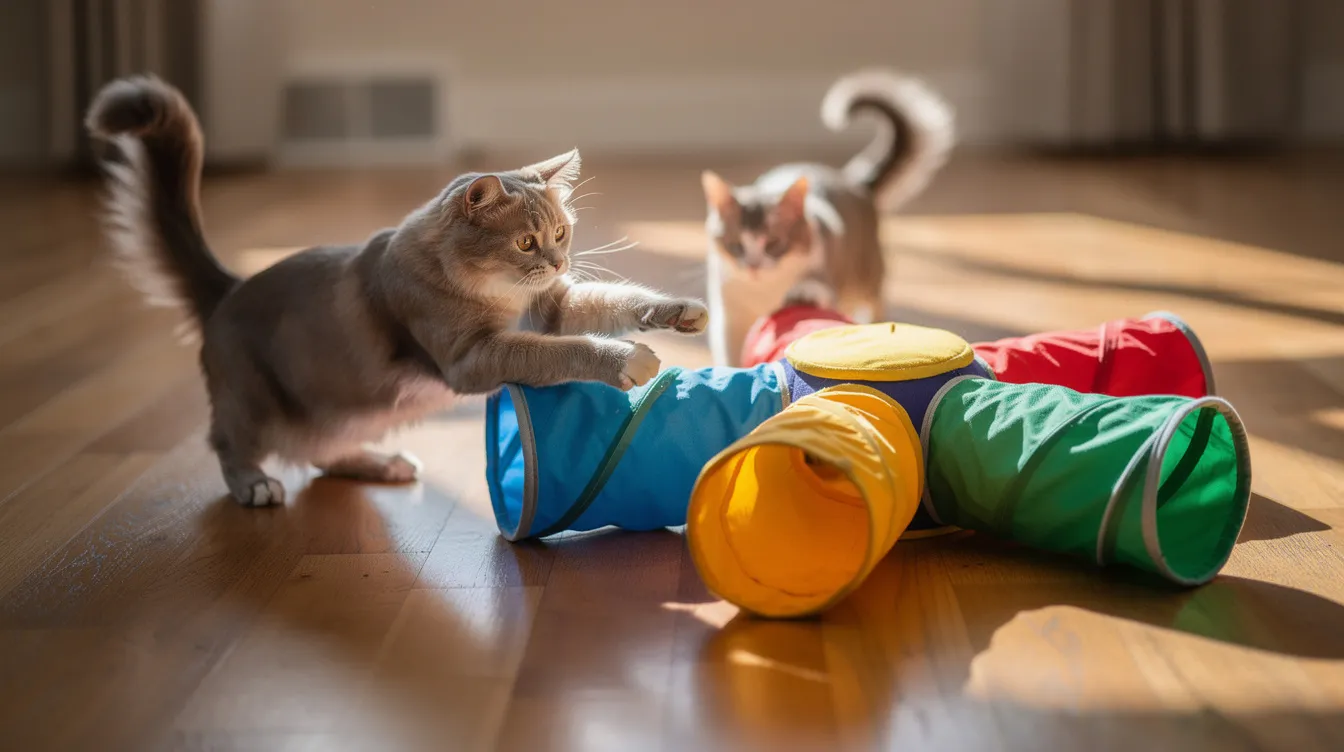
Tunnels can be straight or have multiple chutes for play. A single straight tunnel of 36–40 inches in length gives enough room for a good run, while three-way cat play tunnels with a center hub offer branching paths for more complex playtime scenarios. Many cats enjoy tunnels with multiple entry and exit points, since more holes mean more angles for pouncing and ambush games, especially if you choose from the best cat tunnels for bored indoor cats.
Before you purchase, measure your available space. A tunnel shouldn't block doorways or cut across main walking paths. Collapsible models that fold flat work well for evening play sessions and then disappear when company arrives.
Fabric Type and Sound Level
Tunnels can be made from nylon, polyester, or soft fabric, and the material you choose shapes the entire experience. Ripstop nylon and polyester lining are lightweight and easy to wipe clean. Plush or faux-fur lined tunnels feel cozy and work better as resting spots but need more maintenance - vacuuming fur, spot-cleaning, occasional washing, and you may want to compare whether a cat tunnel vs cat bed best matches your cat’s habits.
Many cat tunnels include features like built-in crinkle materials and peek-a-boo holes. Features like crinkle material can increase engagement for curious cats, but some tunnels have crinkle sounds that may scare noise-sensitive cats or annoy humans working from home. If your cat startles at the sound of a bag crinkling, skip crinkle liners entirely.
Some tunnels are made of mesh material, which can snag claws. Avoid mesh-only models for daily use and look for smooth, tightly woven fabrics instead. Think about when your cat plays most - if it's 3 a.m., a noisy tunnel is difficult to live with.
Durability, Cleaning, and Safety
The best cat tunnel uses a spring-steel wire frame (roughly 3.5 mm gauge) that holds its shape even when cats body-slam into it at full speed. Plastic-only hoops tend to collapse permanently after a few months of heavy use. For durability, look for 210T polyester or oxford cloth with reinforced stitch points at every opening and joint.
Cleaning varies by material. Smooth polyester interiors wipe clean after hairball incidents or litter-tracking. Plush tunnels may need vacuuming and spot-cleaning; removable inner pads that are machine-washable save time. A quality tunnel should last 24–36 months; budget models often tear or smell after 12–18 months under heavy use.
Safety matters: no long hanging strings, securely attached toys, no exposed sharp wires, and a frame that won't collapse unpredictably while your cat is inside. Cidero & Co. designs tunnels with pet-safe, tested materials and minimal entanglement hazards.
Storage, Portability, and Home Aesthetics
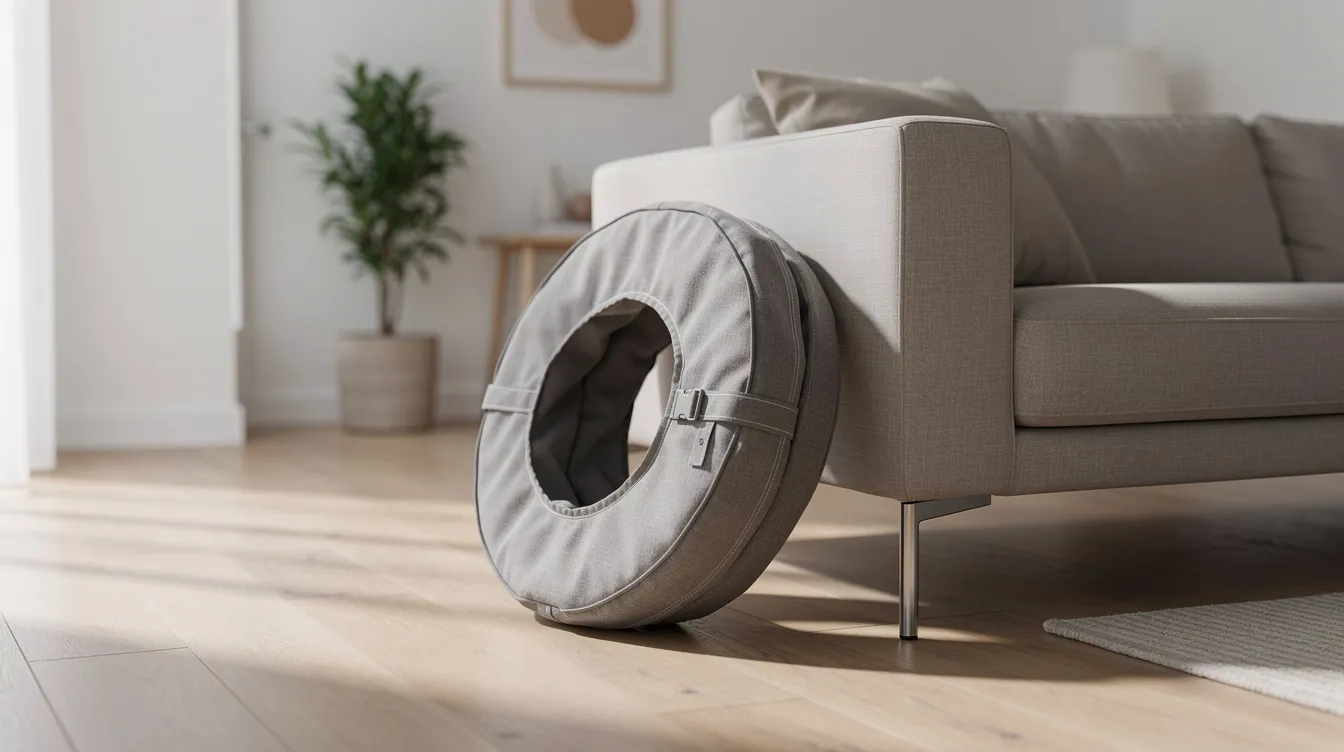
Most cat tunnels are collapsible for easy storage - they twist or fold flat and slide under a bed, onto a closet shelf, or behind a sofa. Some come with elastic straps or snap tabs to keep the folded tunnel from popping open in your closet, which is a small detail that makes a real difference.
Aesthetics matter if the tunnel lives in your living room. Neutral-toned fabrics and simple patterns blend with contemporary décor, while bright rainbow designs are more of a statement. Design-conscious buyers should look for cat tunnels and toys that complement their space - Cidero & Co.'s enrichment products are built with this in mind. Lightweight, foldable tunnels are also easy to pack for road trips, giving cats a familiar hiding place away from home. For more on foldable options, see our guide to the best foldable cat tunnel for indoor cats.
Benefits of Cat Tunnels for Indoor Cat Enrichment
Modern indoor cats often lack safe opportunities to hunt, hide, and explore. A simple cat tunnel can unlock multiple enrichment benefits across movement, mental stimulation, and emotional security. Cat tunnels encourage self-play for indoor cats, meaning your cat can entertain itself even when you leave for work, especially when paired with the best toys for bored indoor cats.
Cidero & Co. designs its tunnels to work alongside other enrichment products like slow feeders, remote-control chase toys, and interactive lamps to create a layered play environment.
Physical Exercise and Healthy Weight
Cats naturally enjoy short bursts of running and pouncing in tunnels, and tunnels encourage active cardio exercise through running, chasing, and pouncing. Cats that play in tunnels often engage in healthy cardiovascular activity that helps maintain a healthier weight.
Simple games to try: toss a small plush toy through both ends, have a friend dangle a wand toy at the exit, or pair the tunnel with a remote-control chase toy that zips in and out. Even 10–15 minutes of active play twice a day can meaningfully boost daily activity for otherwise sedentary cats. Tunnels also give older cats a low-jump way to stay active compared with tall cat trees that stress joints.
Hunting Instincts, Curiosity, and Mental Stimulation
Tunnels stimulate natural hunting instincts by simulating undercover travel and prey routes. Tunnels act as perfect hiding spots for playing hide-and-seek, and tunnels can be used to create engaging playtime scenarios with minimal effort.
- Hide small treats or catnip just inside the opening or midway through the tunnel to create a simple search-and-discover game.
- Rotate the location and orientation of the tunnel every few days - turn it sideways, curve it around furniture - to keep novelty high and help cats explore their environment in different ways.
- Pair tunnels with puzzle feeders or lick bowls nearby to turn one corner of your room into a full enrichment zone.
Security, Confidence, and Stress Relief
Tunnels provide a sense of security and can be a quiet retreat for cats. Enclosed tunnel spaces allow cats to retreat and decompress when stressed - during thunderstorms, fireworks, or when guests visit. Tunnels provide hiding spots for cats, enhancing their sense of safety. Research in shelter settings found that cats with hiding enrichment showed calmer behavior and were more likely to be adopted.
Gradually luring a timid cat inside with treats or a soft toy can build confidence over time. Tunnels with plush lining or an attached bed also become favorite napping spots - a comfortable, covered space that blocks visual stimuli from at least two sides.
Multi-Cat Homes: Alternate Routes and Reduced Tension
In multi-cat households, conflict often happens when one cat blocks another's path. Tunnels create paths and escape routes in multi-cat households, giving timid cats a way to bypass high-traffic zones without crossing open space watched by other cats. Using tunnels can reduce tension in multi-cat households when placed strategically.
Set up a tunnel as a side route between a litter area and living room. Interactive play sessions where two cats take turns chasing a toy through a three-way tunnel can redirect tension into cooperative play. If one cat uses the tunnel to ambush another in a stressful way, relocate that tunnel layout. For more advice, read our post on multi-cat households and toys that actually work.
Will Your Cat Actually Use a Cat Tunnel?
Not every cat falls in love with a new tunnel immediately. But careful introduction and placement dramatically improve your odds, and our detailed tutorial on how to get a shy cat to use a tunnel walks through a patient, step-by-step approach.
Common reasons cats ignore tunnels:
- Negative associations (scary crinkle noise, ambush from another cat)
- Poor placement (dark corner, next to a noisy appliance, drafty spot)
- Nothing interesting happening around the tunnel - no reason to explore
Gentle strategies: pair tunnels with catnip, silvervine, or favorite treats. Use soft toys instead of loud crinkly ones at first. Join play sessions yourself. Cidero & Co. designs tunnels with gradual entrances and cozy interiors to feel more inviting to cautious cats.
Encouraging Play: Step-by-Step Introduction
Place the new tunnel in a familiar room - living room or bedroom, not next to a litter box or washing machine.
Leave it fully open and stabilized, with a soft blanket at one opening to make it look like a cozy den.
Lay a trail of kibble or a favorite toy leading just inside the opening, then gradually deeper over several sessions.
Sit on the floor and play near the tunnel entrance with a wand toy, letting the cat decide when to enter.
Give your cat days, not minutes. Forcing a cat inside creates the exact negative association you want to avoid.
Troubleshooting: When Your Cat Ignores or Fears the Tunnel
Try a new location with better visibility or natural light. A tunnel shoved into a dark, cramped corner is easy to ignore.
Switch from a noisy crinkle tunnel to a quieter fabric model if the cat startles at sound. If you're unsure why your cat ignores toys, check our detailed breakdown.
Remove or cut any long attached strings or toys if the cat gets paws caught during early play.
Tunnels help maintain interest when rotated in and out of storage every couple of weeks to reset novelty, especially highly engaging designs like our Foldable Rainbow Starfish Cat Tunnel.
Some cats prefer using the tunnel as a partial hide - body inside, head out - watching the room. That's still valid enrichment, even if they never sprint through it. Don't comment or react negatively; let them enjoy it their way.

Safety Tips: Using Cat Tunnels Responsibly
Cat tunnels are generally safe, but thoughtful setup prevents rare issues like entanglement, tripping, or a blocked escape. Cidero & Co. prioritizes pet-safe materials, sturdy stitching, and minimal snag points across its tunnel designs.
Placement, Tripping Hazards, and Home Traffic
Place tunnels away from main walkways, door thresholds, and stair tops to prevent people from tripping - especially at night.
Use models with a flat center section or place tunnels against furniture or a wall to reduce rolling when cats barrel through at full speed.
Use small rugs or textured mats under lightweight tunnels on slick floors to keep them from sliding.
Check that every exit is clear - no heavy objects or tight corners at tunnel openings that could trap or frighten your cat.
Strings, Hanging Toys, and Supervision
Long hanging toys and strings attached to tunnels can create entanglement risks, especially during unsupervised playtime for kittens or highly active cats. Trim or remove overly long cords and favor short, securely attached toys or integrated openings instead. Supervise the first several sessions with any new tunnel. Cidero & Co. minimizes loose, dangling components and uses structural features like cutouts and textures to spark play.
Special Considerations for Kittens, Seniors, and Cats with Mobility Issues
Kittens may chew tunnel fabric - select sturdy, tear-resistant models without frayed edges.
Senior cats or cats with arthritis benefit from low-entry tunnels with wide openings and stable frames that don't require jumping.
For cats with visual impairments, keep the tunnel layout consistent and the area well-lit.
Consult a veterinarian if your cat has significant mobility or respiratory issues before introducing intense chase games inside tight tunnels.
How Cat Tunnels Fit into a Complete Enrichment Setup
A cat tunnel toy is one pillar in a broader enrichment plan. The most satisfied indoor cats usually have a mix of vertical space (cat trees, a climbing ladder), daytime entertainment (window perches, interactive lamps), and active play zones (tunnels, chase toys), all of which we cover across the Cat Enrichment Blog.
Sample layout for a small apartment:
- Tunnel running along the sofa for sprints and ambush play
- Interactive lamp near a wall for light-chase sessions
- Slow feeder or lick bowl at the far end of the tunnel as a reward station
- Rotate the tunnel's position weekly to keep things fresh on the market of your cat's attention
The goal is layered enrichment - each product supports the others so your cat's life stays rich and engaging without requiring a guarantee of constant human supervision.
Where to Buy Cat Tunnels and How to Start with Cidero & Co.
Cat tunnels remain among the easiest, highest-impact upgrades for any indoor cat home in 2026. Whether your cat needs a straight sprint track, a branching three-way system for multi-cat play, or a plush, quiet box-like retreat, the right tunnel matches your cat's size, energy level, and noise tolerance.
Explore Cidero & Co.'s curated collection of enrichment products - cat tunnels, interactive lamps, remote-control chase toys, plushes. As a brand and company built for modern indoor lifestyles, small spaces, and design-conscious homes, every Cidero & Co. product ships directly to pet parents who want to store less clutter and enjoy more real playtime with their cats.
Even one well-chosen cat tunnel can transform daily life for both you and your cat. Pick one that fits your space, introduce it gently, and watch your cat rediscover what play is supposed to feel like.


