

Best Cat Tunnels for Indoor Cats That Get Bored Fast
Cat tunnels offer physical exercise for indoor cats, but more importantly, they satisfy something deeper: the urge to hide, stalk, and ambush. After shipping over 10,000 cat tunnels and testing five tunnels with our own panel of house cats, I've learned that most cat tunnels look identical online-but the differences in diameter, material, and layout change everything about whether your cat actually uses one. This guide breaks down the five tunnels worth your money in 2026, with honest trade-offs for each.
Quick-Pick Comparison Table
Top-rated cat tunnels are categorized into interactive play tubes, plush tunnel beds, and multi-way labyrinths. Here's how the five tunnels we tested stack up:
|
Category |
Winner |
Diameter |
Length |
Material |
Key Feature |
Price Range |
|---|---|---|---|---|---|---|
|
Best Overall |
varies depending on entrance |
29.5 in |
Polyester fabric |
5 entry points + top peek hole |
$39.99 |
|
|
Best Foldable |
varies depending on entrance |
29.5 in |
Polyester fabric |
Wire coil snap-flat collapse + storage bag |
$39.99 |
|
|
Best for Multi-Cat |
varies depending on entrance |
29.5 in |
Polyester fabric |
Multi-branch layout prevents cornering |
$39.99 |
|
|
Best for Kittens |
Generic Crinkle Chute Tunnel |
9.5 in |
35 in |
Nylon with crinkle lining |
Crinkle sounds sized for small cats |
$12–$18 |
|
Best Budget |
Generic collapsible 3-way nylon tunnel |
~10 in |
~47 in |
Nylon |
Low cost, basic 3-way junction |
$8–$14 |
How We Tested Cat Tunnels & What Makes a Good One
We ran each tunnel through four weeks of daily use with three cats: a 14-lb domestic shorthair, a 7-lb rescue, and a 5-month-old kitten. We rotated all five tunnels through the same apartment so that each cat experienced each tunnel in the same space.
Interactive features and durability are key considerations when selecting cat tunnels, so we scored every tunnel across five criteria:
- Durability - seam integrity after daily scratching, claw resistance, wire frame stability
- Cat engagement - time spent inside, number of voluntary entries per session, play behaviors observed
- Foldability - seconds to collapse, collapsed footprint, whether the storage mechanism actually holds
- Safety - loose ties, exposed wire, ventilation, material toxicity
- Cleaning ease - wipe-clean vs machine wash, odor retention, hair removal difficulty
Cat tunnels provide mental stimulation through hunting and stalking behaviors. During testing, we consistently observed a pattern: cats approach a new tunnel cautiously, spending the first 12–24 hours sniffing the opening and circling. By day two, most cats were fully committed-darting through, reversing mid-tube, and staging ambushes from peek holes. Tunnels help fulfill cats' natural instincts for ambush hunting, exercise, and mental stimulation, and they fit neatly into a broader indoor cat enrichment routine built around varied toys, climbing, and puzzle feeders.
From our customer data across 10,000+ shipped units, the most common complaint we hear is some version of "the fabric started showing wear at the seams after a few weeks of aggressive scratching." That feedback directly shaped how we evaluate stitching durability-it's the first failure point in almost every tunnel on the market. For a deeper dive into what makes tunnels work as enrichment, see our ultimate guide to cat tunnels.
The 5 Best Cat Tunnels for Indoor Cats
1. Foldable Rainbow Starfish Cat Tunnel - Best Overall
This is our tunnel, so I'll be transparent about why it exists and where it falls short.
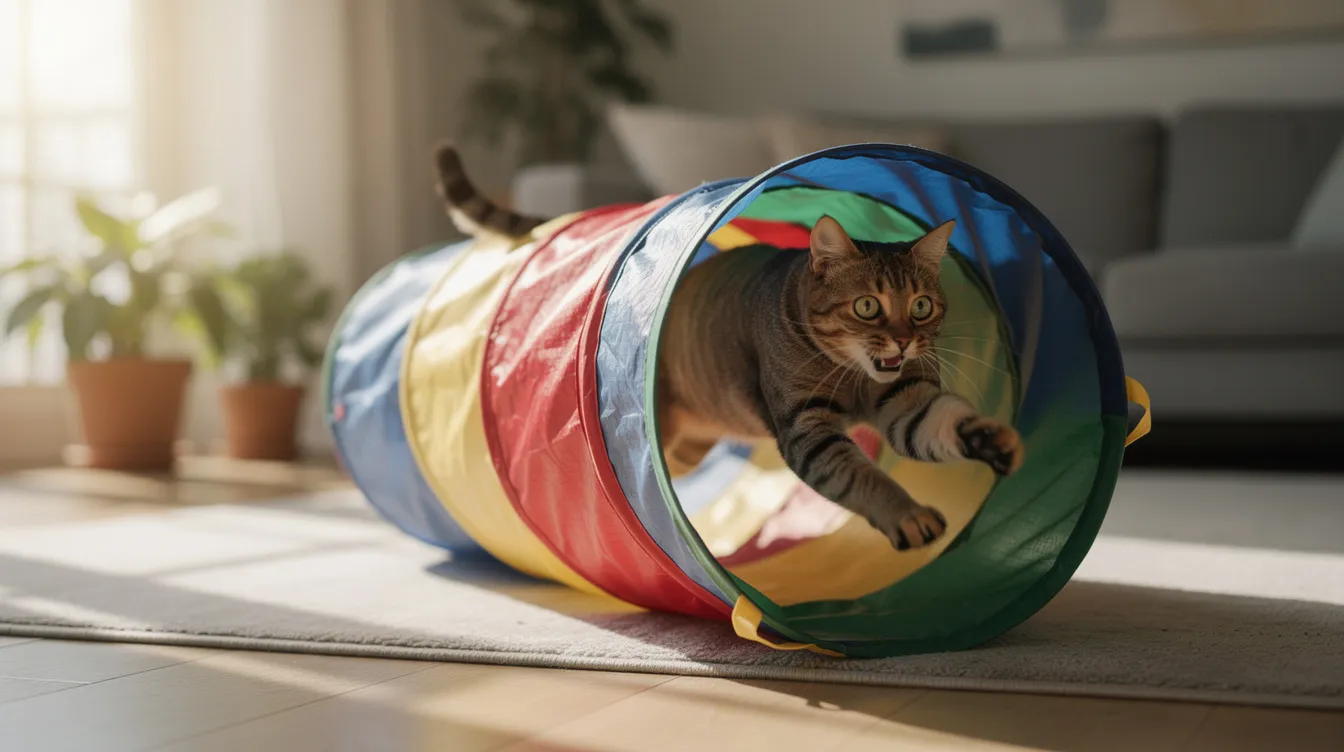
Why It Stands Out: Four entry points arranged in a starfish layout, plus a top peek hole, give cats different ways to enter, exit, and ambush. Multi-branch tunnels allow cats to chase each other without cornering-a real problem with straight tunnel designs. The polyester fabric is reinforced at every seam junction, and the wire coil frame snaps flat into a round disc that fits into the included storage bag, mirroring the build of our Foldable Rainbow Starfish Cat Tunnel.
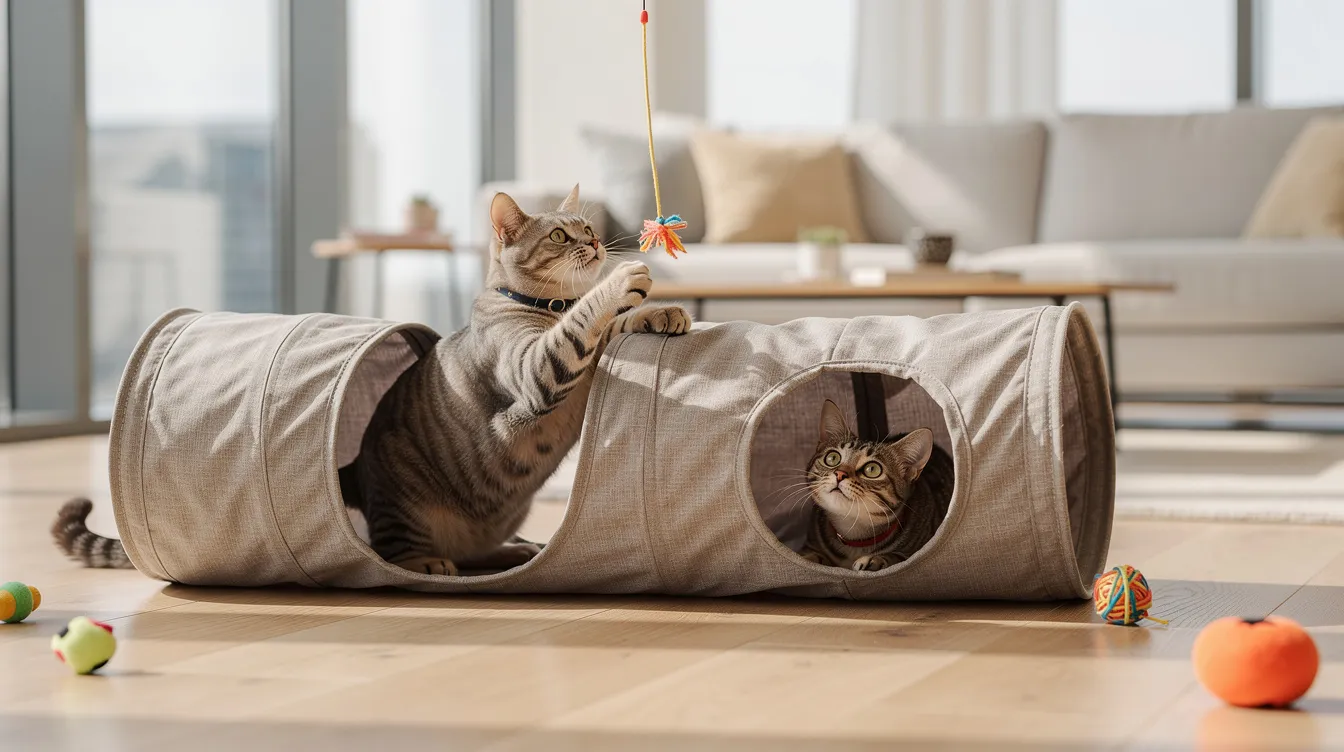
Best For: Multi-cat households and apartment dwellers who need easy storage. Multi-way tunnels encourage social play and chases among multiple cats in the home, and the starfish shape naturally accommodates this, especially if you're comparing cat tunnels for multiple cats and want to minimize cornering or doorway guarding. If you're managing toys for multiple cats, the multiple openings reduce territorial tension over a single entry point.
Key Strengths:
- Collapses in under 10 seconds; storage bag keeps it tidy
- Two peepholes and a top peek hole let cats play in different ways
- Polyester lining resists claw marks better than mesh
Possible Limitations: At $39.99, it costs more than basic nylon tubes. Some customers have told us the starfish shape takes a moment to pop open correctly the first time-though once you get the loop of the wire frame figured out, it's intuitive. This isn't the tunnel if you want crinkle sounds; it's a quiet design.

2. Generic Crinkle Chute Tunnel - Best for Kittens
This crinkle chute is a solid tunnel-and-bed combo for kittens who are motivated by sound. At 9.5 inches in diameter and 35 inches long, it's sized right for cats under 8 lbs.
Why It Stands Out: The entire tube is lined with crinkle material, which attracts many cats and increases engagement. Kittens in our test went wild for the rustling noise immediately-no warm-up period needed, especially when we followed basic cat tunnel guidelines for kittens and seniors on size and noise level. Cats may prefer tunnels with crinkle sounds for engagement, and this tunnel delivers on that front.
Best For: Kitten owners and smaller cat breeds. If your kitty is under six months, this is the right scale. A great tunnel for first-time play.
Key Strengths:
- Crinkle lining is genuinely engaging for sound-motivated cats
- Price point under $18 makes it low-risk
- Lightweight and easy to move from room to room
Possible Limitations: The 9.5-inch diameter means your cat will outgrow this quickly. Most cat tunnels are around 9-10 inches in diameter, but that's tight once your cat hits 10+ lbs. The ties used to hold the collapsed shape hang loose and become a chew hazard-we'd prefer Velcro. Durability is moderate; seams showed stress after two weeks of active kitten play. Not suited for larger cats at all.
3. Generic 2-in-1 Tunnel Bed - Premium Option
This 2-in-1 tunnel bed is a frequent pick on several review roundups, and the dual-mode concept is genuinely clever: zip it one way and it's a tunnel; zip it another way and it becomes a bed.
Why It Stands Out: A good cat tunnel provides a secure and cozy napping space, and this one does double duty, which makes it a strong contender if you're torn in the cat tunnel vs cat bed debate for a small apartment. The plush exterior fits modern home decor better than most nylon tubes. Choosing a cozy enclosed tunnel can benefit shy cats by providing a safe hideout, and this tunnel's bed mode creates exactly that kind of retreat when paired with strategies for getting a shy cat to use a tunnel.
Best For: Design-conscious cat parents who want one product that handles both play and rest. Also strong for cats who like to sleep inside their tunnels.
Key Strengths:
- Removable, washable padding in the bed section
- Soft fabric exterior looks clean in a living room
- Dual function saves space and money
Possible Limitations: The plush material traps cat hair and is harder to clean than smooth polyester. It's bulkier than a pure tunnel and doesn't collapse as flat. At ~$30–$35, you're paying for the bed function-if your cat only wants to chase, this won't outperform a simple tube. The diameter isn't published clearly, but it fits average-sized cats; it may feel cramped for a Maine Coon.
4. Generic Collapsible 3-Way Nylon Tunnel - Budget Pick
This is the tunnel you'll find in dozens of Amazon listings under various no-name brands, usually in gray or blue nylon with a dangling toy at one end. Three-way tunnels provide multiple entry and exit points, which is the main selling point here.
Why It Stands Out: At $8–$14, it's the cheapest way to test whether your cat even likes tunnels before investing more. Three-way tunnels allow for more exploration options, and the basic Y-junction does provide that. Tunnels can be straight or have multiple openings, and this one gives you three.
Best For: First-time tunnel buyers on a budget, or as a secondary tunnel if you want multiple tunnels to prevent cats from crowding each other.
Key Strengths:
- Affordable best budget entry point
- Most tunnels are collapsible for easy storage, and this is no exception-snaps flat
- Hanging ball toy at the center junction adds mild interest
- Available in round, s shape, and straight configurations
Possible Limitations: You get what you pay for. The nylon is thin, and we saw a small tear near one seam after just 10 days. The plush ball attached at the middle detached within a week. Wire frame poked through the fabric at one end after repeated folding. This is a disposable tunnel-useful for testing the concept, but not built to last. Mesh tunnels can snag cats' claws easily, and budget nylon tunnels share this problem at the seam edges.
5. Generic Crinkle Tube Tunnel
Another common Amazon find: a straight tunnel lined with crinkle material, usually about 40 inches long with two holes (one at each end) and sometimes a peek-hole in the middle.
Why It Stands Out: Crinkle sounds and dangling toys can keep cats engaged in play, and this is purely a sound-driven cat toy. Some tunnels include crinkle sounds to attract cats, and this one is crinkle from end to end. Our cats loved the noise-every step inside produced a satisfying rustle.
Best For: Sound-motivated cats and interactive cat play sessions where you're dragging a wand toy through one end.
Key Strengths:
- Extremely engaging for cats that respond to sound
- Simple straight tunnel design-no assembly confusion
- Usually includes a small dangling toy at one opening
- Lightweight for moving around the house
Possible Limitations: A straight tunnel with two holes limits escape routes, which can frustrate other cats in multi-cat homes. The crinkle noise is louder than most humans expect-fine during playtime, less fun at 3 AM. Not a quiet option for the bedroom. The tube diameter is typically 9–10 inches, which is tight for cats over 12 lbs. Many tunnels of this type show fabric wear quickly; tunnels with tear-resistant fabric are ideal for active cats, and generic crinkle tubes rarely qualify.
Cat Tunnel Buyer's Guide: What to Consider Before Buying
Size Considerations
Most cat tunnels are around 9-10 inches in diameter, but that doesn't mean it's right for your cat. A tunnel's size should allow cats to turn around comfortably and avoid feeling cramped. Here's a sizing framework:
|
Cat Size |
Recommended Diameter |
Recommended Length |
|---|---|---|
|
Kittens (under 4 months) |
~10 in |
36–48 in |
|
Adult domestic shorthair |
11–12 in |
48–60 in |
|
Large breeds (Maine Coon, Ragdoll) |
14+ in |
60–84 in |
Larger cats may prefer wider tunnels or sturdier designs for comfort. High-energy cats may benefit from longer or multi-way tunnels for play. If you live in an apartment, length matters for storage-measure your closet before buying a 70-inch tube. For more apartment-specific advice, check our guide on foldable cat tunnels for small spaces.
Material Quality
Polyester is the most common fabric used in cat tunnels, and most cat tunnels are made from polyester or nylon. Durable materials for cat tunnels include strong polyester, nylon, canvas, and Oxford fabric. Here's how they compare:
- Nylon/Polyester: Durable, easy to wipe clean, lightweight. Most play tunnels use this. Resists claws better than cotton.
- Oxford fabric: Thicker weave, higher claw resistance. Found in premium options. Heavier.
- Plush/Cotton blends: Soft, cozy, better for cats who sleep in tunnels. But they trap hair and smell over time.
- Mesh panels: Good for ventilation but mesh tunnels can snag cats' claws easily. Best as peek windows, not primary material.
Tunnels with tear-resistant fabric are ideal for active cats. Always check that materials are non-toxic and free of chemical finishes that could irritate sensitive cats.
Crinkle vs Quiet Options
Crinkle material attracts many cats and increases engagement with tunnels. The rustling mimics prey sounds, triggering stalking and pouncing behaviors. But some cats-and many humans-find it overwhelming.
Choose crinkle if your cat responds to sound-based stimulation. Choose quiet (smooth polyester or plush) if you have a noise-sensitive household or a cat that startles easily at unfamiliar sounds. For more on sound-driven play, see our guide to cat tunnel toys.
Foldability and Storage
Most tunnels are collapsible for easy storage, typically using a wire coil that snaps flat. The real question is how the collapsed tunnel stays collapsed:
- Ties: Common but they dangle loose and become chew targets
- Velcro wraps: Cleaner, faster, safer
- Elastic bands: Functional but can lose tension
- Storage bag: The gold standard for easy storage-keeps collapsed tunnel dust-free and out of sight
If you store and retrieve your tunnel daily, the mechanism matters more than the tunnel itself. Look for a bag or built-in wrap.
Cleaning and Maintenance
Cotton tunnels are easier to wash but retain odors-a real problem if your cat uses the tunnel for rest as well as play. Smooth polyester wipes clean with a damp cloth. Removable bed pads (like on the Lesure 2-in-1) are machine washable, but the tunnel body usually needs spot cleaning.
Many tunnels have metal frames that can rust if not dried properly after cleaning. Inspect seams regularly for exposed wire, especially on budget models. If your cat uses catnip inside the tunnel, expect to clean more often-the smell absorbs into soft fabric fast. For tips on keeping indoor cats entertained between cleanings, rotate tunnels with other toys to maintain interest.
Who Should NOT Buy a Cat Tunnel
Honesty builds trust, so here's when I'd tell you to skip the tunnel and spend your money elsewhere:
- Senior cats with mobility issues: If your cat has arthritis or trouble stepping over edges, most tunnels will go unused. Low-entry, padded options exist, but a flat heated bed may serve them better. Our enrichment guide for senior indoor cats covers alternatives.
- Aggressive multi-cat dynamics: If your cats are already fighting over territory, a tunnel can become a flash point-one cat guards the opening, the other gets cornered. Solve the territorial issue first.
- Extremely small spaces: If you can't lay out at least 4 feet of floor space, a full tunnel becomes a tripping hazard for humans and an obstacle rather than enrichment.
- Cats with severe anxiety or noise phobias: Crinkle tunnels and pop-open designs can terrify noise-sensitive cats. A box with a blanket may be the better starting point.
- Small pets that aren't cats: Cat play tunnels are sized and designed for cats. While some dogs enjoy them, ferrets and rabbits need species-appropriate alternatives-don't assume one tunnel fits all small pets.
Frequently Asked Questions
Are cat tunnels worth it for indoor cats?
Yes. Environmental enrichment research shows that providing hiding places and tunnels reduces stress behaviors and promotes natural activity in indoor cats. Cats appreciate tunnels that provide opportunities for hiding, stalking, and exploring-behaviors they'd perform outdoors but can't without enrichment. A tunnel is one of the most cost-effective ways to banish indoor cat boredom.
Are cat tunnels safe for unsupervised play?
It depends on the design. Tunnels without loose ties, detachable small parts, or exposed wire are generally safe for unsupervised use. Avoid tunnels with long dangling strings that could be swallowed. Check seams monthly for wire poking through. Cats often enjoy tunnels with mesh peek windows and dangling toys, but make sure the dangling toy is securely attached.
How big should a cat tunnel be for my cat?
A tunnel's size should allow your cat to turn around comfortably. For adult domestic shorthairs, aim for 11–12 inches in diameter and 48–60 inches in length. Kittens do fine at 10 inches. Large breeds need 14 inches or wider.
Are cat tunnels good for kittens under 6 months?
Absolutely. Kittens build coordination and confidence through tunnel play. Choose a shorter tunnel (36–48 inches) with a soft interior. Crinkle sounds are especially engaging for kittens. Just know they'll outgrow a small-diameter tunnel within a few months.
Are cat tunnels beneficial for senior cats?
They can be, with caveats. Senior cats benefit from low-entry, padded tunnels that serve as a safe explore zone or resting spot. Avoid complex junctions or tall entry thresholds. A good tunnel for a senior cat doubles as a cozy bed with a gentle opening.
How do I introduce my cat to a new tunnel?
Place the tunnel in a quiet area and let your cat approach on its own terms. Use cat treats to entice your cat into the tunnel, or trail a wand toy through one end. Don't force entry. Most cats begin using a tunnel within 24–48 hours. Place the tunnel in a new location periodically to spark curiosity. Sprinkling catnip inside also helps.
Are cat tunnels machine washable?
Most tunnels are not fully machine washable. Removable bed pads or cushion inserts often are. The tunnel body-especially those with wire frames-should be spot cleaned or hand washed. Smooth polyester fabric dries fastest. Plush fabrics absorb and hold smell longer.
Do all cat tunnels fold for storage?
Most modern cat tunnels fold flat via wire coil designs, but not all. Bed-tunnel hybrids and premium plush models may be bulkier. Check whether a tunnel comes with a storage bag or secure wrap. Many tunnels fold to a flat disc under 15 inches wide, which fits behind a couch or inside a closet. If foldability matters, it should be a primary buying criterion-not an afterthought.
Final Verdict: Which Cat Tunnel Should You Choose?
After testing all five tunnels across four weeks with three very different cats, here's the simple decision framework:
- One cat, tight budget, just want to test the concept? Start with a generic collapsible 3-way nylon tunnel. It won't last, but it'll tell you if your cat is a tunnel cat.
- Kitten under 8 lbs? The SmartyKat Crackle Chute is appropriately sized and the crinkle factor makes playtime irresistible.
- Want a tunnel that also works as a bed? The Lesure 2-in-1 gives you both in a design that doesn't clash with your box shelf or gray sofa.
- Multiple cats, apartment living, or you just want the one tunnel that does the most? The Foldable Rainbow Starfish Cat Tunnel earned Best Overall, Best Foldable, and Best for Multi-Cat because it solves the three biggest complaints we hear: not enough entry points, too hard to store, and not durable enough at the seams.
The right tunnel turns unused floor space into a place where your cat can chase, hide, explore, and sleep. That's not a luxury-it's how indoor cats stay mentally and physically well.
Shop the Foldable Rainbow Starfish Cat Tunnel → | Browse our full cat enrichment collection for more fun ideas.


