

Cat Toys for Separation Anxiety: What Actually Helps (and What Doesn’t)
Introduction: When Your Cat Struggles After You Close the Door
It's 8:00 a.m. on a weekday. You grab your keys, close the door, and immediately hear your cat crying on the other side. Maybe you come home to find scratches on the doorframe, a mess outside the litter box, or a kitty who clings to you the moment you walk in.
If this sounds familiar, you're not alone. A lot of people assume the fix is simple: buy more toys. But cat anxiety is not the same as having nothing to do. Anxious cats may pace, vocalize, or refuse food regardless of what's available to them. Routine changes can trigger anxiety in cats, and factors like a recent move, a new baby, a new pet, noisy construction, or past negative experiences can all drive stress that a toy alone cannot solve.
This article walks through how to recognize possible separation-related stress, where cat toys for separation anxiety fit into the picture, where cat calming products might help, and when it's time to involve a vet. At Cidero & Co., we design safe enrichment tools for indoor cats, but we're clear about what they are: environmental supports, not medical treatment.
Does My Cat Have Separation Anxiety or Just Need More Stimulation?
Cats can experience real stress when left alone, but "separation anxiety" is a specific behavioral pattern that overlaps with medical problems, general cat anxiety, and simple under-stimulation. The distinction matters because different problems require different approaches.
Behaviors That May Suggest Stress or Anxiety
Watch for these signs tied specifically to your departures or absences:
- Excessive vocalization at the door or exit points
- Pacing or restlessness when you pick up keys or shoes
- Excessive hiding, especially in places the cat doesn't normally retreat to
- Changes in appetite, such as refusing food until you return
- Inappropriate urination or defecation only when alone (avoiding the litter box may signal anxiety in cats)
- Destructive scratching at doors or window frames
- Over-grooming that causes hair thinning or skin irritation
- Aggression towards housemates, which can indicate a broader anxious profile
A 2020 Brazilian study of 223 cats found that roughly 13.5% met criteria for separation-related problems. Among those, 66.7% showed destructive behavior and 63.3% exhibited excessive vocalization. These are not trivial numbers.
One important note: over-grooming can also result from allergies, skin disease, or pain. Don't automatically label it as anxiety. And kittens or younger cats may be at higher risk for separation-related behaviors, particularly in apartment settings and multi cat households with limited space. Consider filming your cat with a basic home camera while you're gone and sharing the footage during vet visits.
Why This Matters
A cat that simply needs more stimulation often responds well to enrichment, foraging toys, and a predictable play-feed-rest schedule. You can find broader ideas in our guide on how to keep indoor cats entertained. A cat showing serious or escalating signs of distress may need environmental changes, pheromone diffusers, calming products, and professional behavioral or veterinary support.
Mislabeling medical issues like urinary tract disease or hyperthyroidism as "anxiety" can delay proper treatment. If your cat's behavior changes suddenly, a veterinarian should be your first call. Enrichment tools don't fix the root condition, but they can be part of a supportive environment that helps some cats feel safer.
Can Cat Toys Actually Help With Separation Anxiety?
Directly: toys and enrichment cannot diagnose or treat clinical separation anxiety. But environmental enrichment can alleviate separation anxiety by providing comfort and distraction as part of a broader plan.
Well-chosen toys may help by offering safe outlets for natural behaviors like watching, stalking, and foraging. If your cat seems more bored than anxious, a roundup of the best toys for bored indoor cats can help you match play styles to their personality. They create consistent background cues and reduce the emotional contrast between "you're here" and "you're gone." Evidence from clinical case reports shows cats with diagnosed separation anxiety whose symptoms stopped completely within three to six months after implementing food puzzles, vertical space, and hiding options.
But enrichment is one layer. In order to address the full picture, some cats also need vet-guided cat calming treats, supplements, or behavioral therapy. If a cat's intense panic does not improve despite toys and routine changes, that's a clear signal to seek professional help.
What Should You Look for in a Cat Toy for a Cat Home Alone?
Any toy used without supervision must be safe: no long strings, loose parts, or fragile pieces. Inspect toys regularly for wear. If you use wrestling or bunny-kicking toys, run through a quick safety check for cat kicker toys before leaving them out. The right setup depends on the individual cat, and Cidero & Co. products fall into two main categories: passive visual enrichment and self-directed foraging.
1. Passive Visual Enrichment
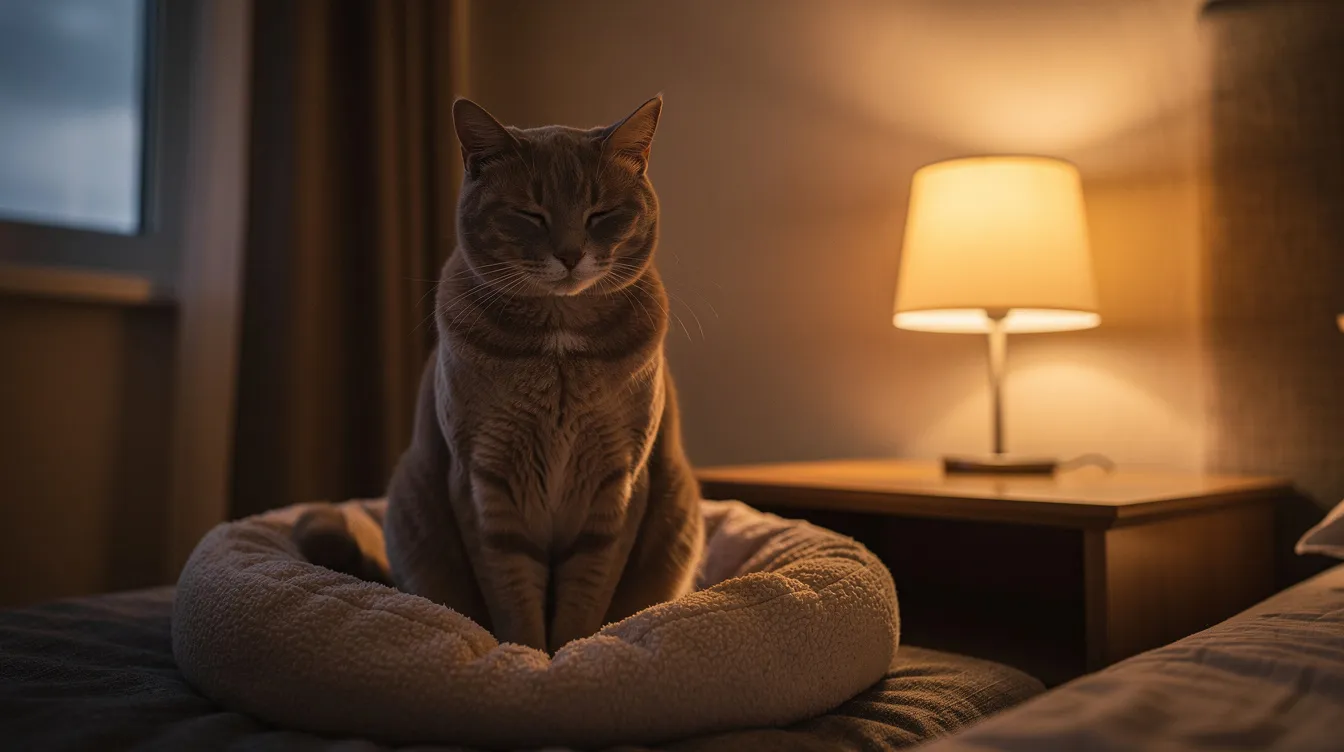
Passive visual enrichment means background movement or light patterns a cat can watch from a favorite spot without touching anything. Think projector night lights casting slow galaxy patterns, or an aquarium-style lamp with softly moving shapes. Interactive electronic toys like these offer mental stimulation for cats when left alone and can be part of a broader plan for keeping your cat entertained while you're away.
For anxious cats, these create a consistent focal point away from doors and windows, and a gentle cue that "this is the calm, home-alone setup." Look for stable bases, cool LEDs, and timer functions. Research on shelter cats found that dim, warm-toned light with reduced blue spectrum filters significantly lowered cortisol levels and behavioral stress scores.
2. Self-Directed Foraging Toys
Foraging toys encourage natural hunting behaviors in cats by letting them sniff, paw, and solve small challenges for food. Puzzle feeders, treat-dispensing toys, and interactive hunting spinner toys for indoor cats are effective for reducing stress in cats who enjoy working for their meals.
Cidero & Co.'s Carrot Burrow plush puzzle for cats offers a soft, nose-work inspired experience with pockets for hiding kibble. The UFO Tumbler wobbles and dispenses dry food when batted. Split your cat's daily ration so a portion goes into these toys. Avoid leaving perishable wet food out, and always introduce new foraging toys under supervision first.
3. Routine-Based Enrichment
This isn't a physical product. Routine helps reduce anxiety in cats by providing predictability. Structured play routines can help cats associate alone time with positive experiences.
A simple pattern: 10-15 minutes of interactive play (daily interactive play sessions should last at least 15 minutes), then feeding, then setting up passive enrichment, then a calm departure. Use consistent cues like turning on the same lamp at the same time each day. Comfort items such as familiar scents, like an unwashed shirt near the cat's bed, can also reduce anxiety. Adjust gradually over several days rather than overhauling everything at once.
How Passive Visual Enrichment Can Help a Cat Home Alone
Picture an indoor cat who normally watches the front door, but relaxes more when gentle, familiar light patterns play on the wall near their favorite resting place. Many cats enjoy quietly watching moving lights and shifting patterns, especially during low-light hours, and some cats stay engaged even longer with fake fish tank or Cat TV–style visuals.
The Cidero & Co. Calming Cat Projector Night Light creates warm-toned projections with a stable base and cat-safe LED lighting. Use it during workdays or evening absences. It's not a therapeutic device; it's a gentle environmental support that layers with other strategies.
Why Choose a Projector Rather Than Another Interactive Toy?
A projector runs when no humans are home. Some scared or anxious cats don't want to chase or wrestle when alone, but they do seek out safe observation spots. A projector gives them something to watch from a distance.
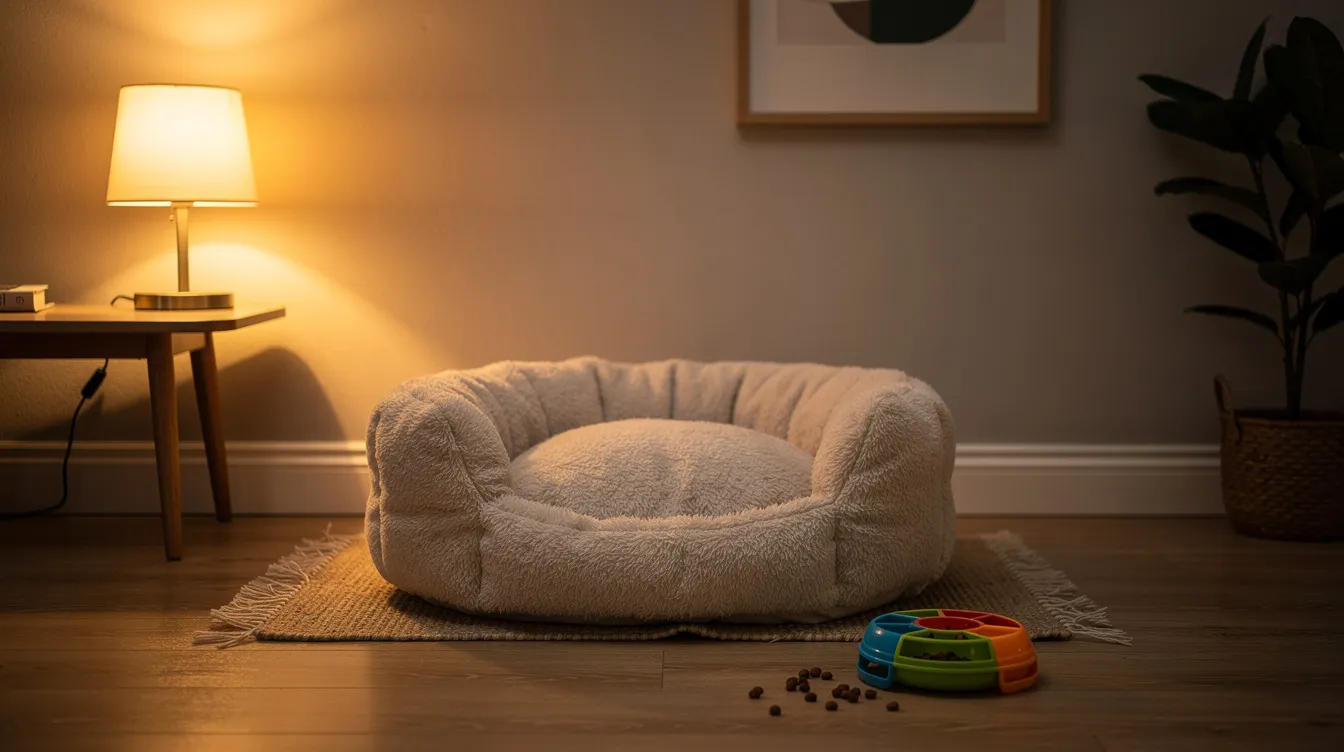
Use cases: a quiet bedroom for a cat who hides under the bed, a studio apartment during evening hours, or a dedicated "calm corner" with a soft bed and familiar blanket. Gentle visual setups like this can be especially kind to senior indoor cats who need low-impact enrichment. Use a timer to start it shortly after departure. Choose slow, gentle projection modes and avoid anything that flashes rapidly. The projector complements, rather than replaces, vet care or behavioral support.
What About an Aquarium-Style Cat Lamp?
The Interactive Aquarium Cat Toy Lamp offers a different type of passive visual enrichment. This fake fish tank for cats provides focused, continuous motion with floating "fish" inside a contained unit. If you want to learn more about safety considerations, see our vet-reviewed guide on aquarium cat toys.
Place the lamp near a favorite perch or napping spot where it won't be knocked over. Keep cables tucked away. The projector fills a room with ambiance; the aquarium lamp offers concentrated, fish-tank-like movement. If you're considering a real aquarium instead, read an honest look at whether you should get a real fish tank for your cat before committing. Choose based on whether your cat prefers broad visual atmosphere or focused observation.
Can Foraging Toys Help Cats That Struggle When Left Alone?
Cats with separation anxiety benefit from engaging toys that mimic hunting. Foraging gives anxious cats a focused "mission" during the first part of alone time. Sniffing, pawing, and digging for food can be inherently satisfying and may build confidence, especially when combined with other strategies for keeping indoor cats entertained while you're away.
The Carrot Burrow is a soft, nose-work toy for cats who prefer sniffing and digging. The UFO Tumbler is a rolling dispenser for cats who like batting. Not every cat responds the same way; monitor results and adjust. Keep treats within the daily calorie budget and choose durable, pet-safe materials.
Build a "Home Alone" Routine for Your Cat
Before you leave: Spend 10-15 minutes in interactive play with a wand or kicker toy. Positive interaction reduces anxiety in cats and helps burn off nervous energy. Follow with a meal or portion delivered via a foraging toy.
While you're away: Turn on the Projector Night Light or Aquarium Lamp. Ensure safe resting spots, fresh water, and clean litter. Optionally, use vet-approved Feliway diffusers, which emit synthetic feline facial pheromones to create a calming effect in the environment. Calming sprays that release soothing pheromones can also reduce stress in specific areas.
When you return: Keep greetings calm. Check toys for wear. Re-establish normal feeding and play without making arrivals overly intense events.
A Simple 3-Part Setup for Cats Home Alone
|
Layer |
Purpose |
Product Example |
|---|---|---|
|
1. Calm Environment |
Passive visual ambiance |
|
|
2. Natural Observation |
Focused movement to watch |
|
|
3. Independent Activity |
Self-directed foraging |
You don't need all three. Start with the type that best matches your cat. Rotating toys can prevent habituation and maintain your cat's interest over time. Add layers only if helpful.
What Not to Do When Your Cat Shows Signs of Separation Stress
- Never punish vocalization, scratching, or litter box avoidance. Punishment worsens anxiety and damages trust.
- Don't force interaction with any toy or calming product. Pushing a scared cat toward a running lamp increases stress.
- Avoid sudden, dramatic environmental changes right before a long absence.
- Don't rely solely on toys or over-the-counter drops, chews, or sprays when signs are severe.
- If your cat ignores toys entirely, that itself is useful information, not a failure.
When Cat Separation Anxiety Needs More Than a Toy
Some cats need professional help. Red flags include persistent refusal to eat, weight loss, frequent inappropriate elimination, self-injury from grooming, aggression, or sudden personality changes.
Schedule a vet exam to rule out medical conditions that mimic anxiety. Your veterinarian may discuss a combination of strategies: behavioral modification, prescription medications, Thundershirts that apply gentle pressure to calm anxious cats, cat calming collars that use pheromones to soothe adult cats, or calming diets formulated with tryptophan and alpha casozepine. L-theanine is another ingredient reviewed for feline use and has been shown to reduce stress-related behaviors in cats within 60 minutes. Calming treats often contain tryptophan as a key ingredient to promote relaxation.
For complex cases, the vet may refer to a feline behavior specialist. Bring behavior logs and home video to make the consultation productive.
How to Choose the Right Calming Cat Product
"Calming" doesn't mean guaranteed. It means the product supports a predictable, comfortable environment suited to your individual pet. Among the most popular products sellers offer, here's a simple way to find what works:
- Cat loves watching movement? → Aquarium Lamp
- Cat enjoys visual light and patterns? → Projector Night Light
- Cat enjoys food puzzles? → Carrot Burrow or UFO Tumbler
- Cat needs more than enrichment? → Talk to your vet about options like pheromone diffusers, calming treats, or prescribed support
If your cat isn't showing overt anxiety and you're mainly looking for stimulation during absences, explore our guide to how to entertain a cat when you're not home for enrichment-focused ideas. For homes with multiple cats, enrichment needs can look different. You can also browse our broader cat enrichment blog with ideas for indoor cats, including whether and how to use real or fake fish tanks as enrichment.
Frequently Asked Questions
What are the best cat toys for separation anxiety? Enrichment tools like foraging toys, visual lamps, and puzzle feeders support a comfortable environment, but they aren't a treatment for clinical anxiety. The best choice depends on whether your cat prefers watching, foraging, or physical play; some cats, for example, relax best when they can watch fish-inspired visual enrichment from a safe perch.
What can I give my cat for separation anxiety? Start with environmental enrichment and a predictable routine. Your vet may also suggest cat calming treats, pheromone diffusers, or other forms of support depending on severity.
How do I calm my cat when I leave the house? Use a consistent pre-departure routine: play, feed, set up enrichment, and leave calmly. Avoid dramatic goodbyes.
Do cats get separation anxiety when you're away? Yes. Cats can show separation-related distress, though behaviors can have multiple causes. A great first step is filming your cat while you're gone.
Should I leave toys out for my cat while I'm gone? Only toys that are safe for unsupervised use. No strings, feathers on sticks, or small detachable parts.
Do calming toys work for cats? Individual responses vary. Some cats find visual or foraging enrichment helpful over time, but "calming" should not be treated as a guarantee of relaxation.
Are light or projector toys safe for cats when they are alone? Generally yes, provided they use cool LEDs, have stable bases, and don't include accessible small parts. Check any toy before each use and ensure cords are out of reach.
Conclusion: Creating a Calmer, More Predictable Home for Your Cat
Toys and lamps don't cure separation anxiety. But the right combination of routine, enrichment, and professional guidance can help many anxious cats feel safer when alone. The process takes time and patience.
Start by observing and logging your cat's behavior. Adjust the environment. Match enrichment to your cat's preferences. And if distress is significant, consult your vet without delay.
Cidero & Co.'s Projector Night Light, Aquarium Lamp, Carrot Burrow, and UFO Tumbler are designed as thoughtful environmental tools, not miracle fixes. With the right supports, many cats can learn that home alone time is predictable, safe, and sometimes even pleasantly engaging.


