

How to Cat‑Proof a Fish Tank (and When Not to Keep One)
If you share your home with a cat and a fish tank, you already know the drill. Your kitty parks itself inches from the glass, tail twitching, utterly fascinated by every flicker of movement inside. Cats are naturally drawn to moving fish in tanks, and that curiosity can create real problems for both animals if the setup isn't secure. Here's how to make a cat proof aquarium that actually works, and when to consider skipping live fish entirely.
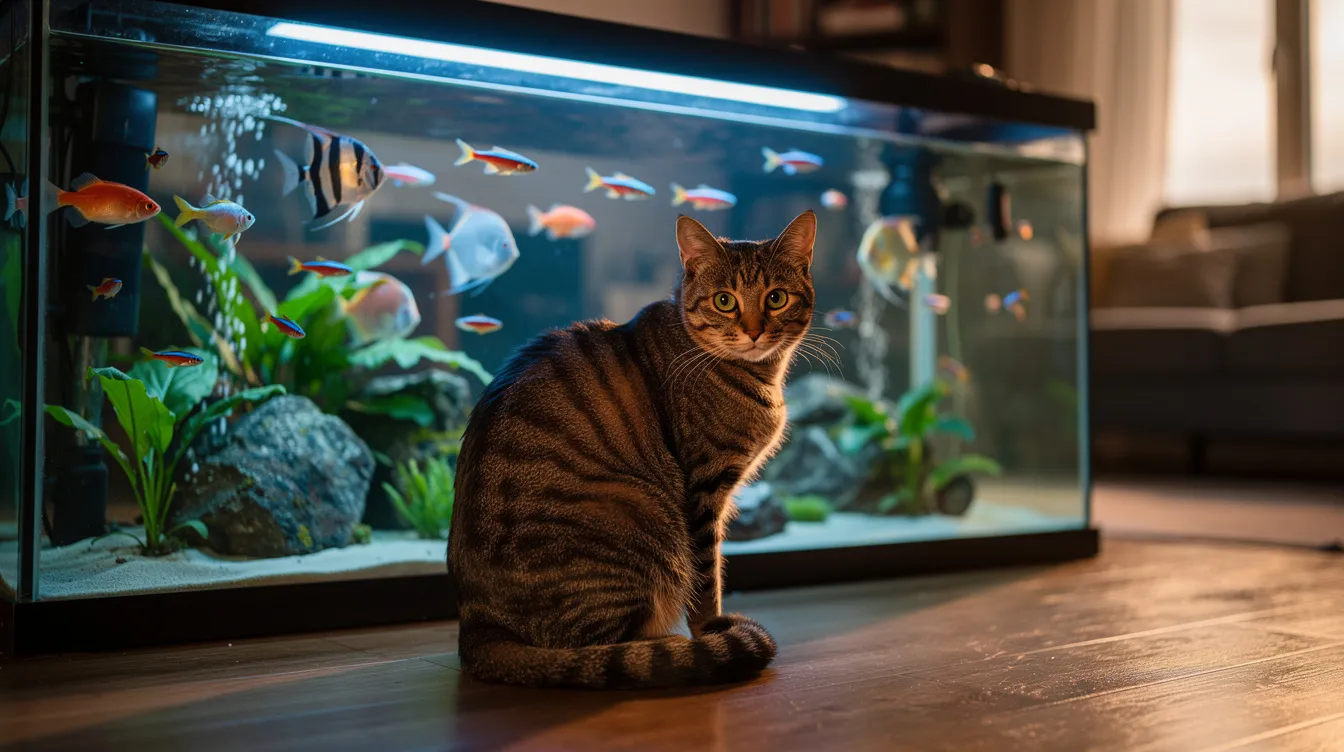
Can You Cat‑Proof a Fish Tank?
Yes, but a truly cat proof fish tank has to protect both sides of the glass. Keeping paws out of the water is only the starting point. You also need to account for the stand, the cords, the lid, and the less obvious issue: what constant stalking does to the fish themselves.
The four main physical risks are: these matter because they affect both fish safety and cat safety.
- The cat falling in. Open-top or poorly covered tanks invite exactly this.
- The tank or stand being destabilized. Cats can easily knock over unsecured fish tanks, especially small nano setups or goldfish bowls.
- Electrical equipment and cords. Filters, heaters, and dangling cables become toys for a bored pet.
- A lid that shifts or breaks. A tank lid that slides when a cat lands on it is barely better than no lid at all.
There's a fifth risk many people miss. Even if the aquarium is physically locked down, a cat constantly pacing, staring, and pawing at the glass can chronically stress fish. Picture a curious 10 lb indoor cat in a small apartment with a 20-gallon tank on a wobbly desk. The cat jumps from the sofa, the lid shifts an inch, a paw dips in, and the heater cable gets tugged loose. That scenario plays out more often than most pet owners expect.
How to Cat‑Proof an Aquarium
This is the practical section. Everything here applies to common home aquariums from about 10 to 55 gallons, including ultra clear glass tanks and acrylic models like biOrb aquariums, which are made from acrylic 10x stronger than glass. The key is to combine physical barriers with environmental adjustments for effective cat-proofing. For a deeper dive into safe setups, see our cat fish tank guide.
Use a Secure, Properly Fitted Tank Lid
A safe tank lid is rigid, full-coverage, and designed for your specific aquarium model; note that solid lid security helps stop paws from reaching in. Lid-less tanks are not safe for homes with cats, period. Even shallow betta tanks need coverage.
- A snug-fitting lid prevents cats from accessing fish tanks. Look for lids that sit flush with the rim and have cut-outs only where needed for filter intakes or heater cables. It also should not let a cat stick a paw through any opening.
- Secure aquarium tops with heavy-duty glass lids to prevent cat access. Many modern ultra clear glass aquariums have optional matching glass canopies that are far more reliable than DIY fixes.
- Custom aquarium lids can secure tanks against curious cats when standard lids don't fit properly.
- Fish tanks without lids are unsafe for homes with cats. Never balance heavy books or stones on a thin canopy. Excess weight can crack the glass or stress silicone seams.
Make Sure the Lid Can't Be Pushed Aside
Most cats will test a lid with their paws, stand on it, or push at corners. "Has a lid" is not the same as "cat proof."
A securely fastened lid must minimize gaps around filters and openings. Here's a quick check:
- Press and wiggle the lid with both hands. If it shifts, it needs clips or locking hinges.
- Check around filter intakes, airline tubing, and light brackets for gaps wider than a paw.
- Verify feeding flaps latch securely after each use.
- Consider sliding lids that overlap or canopy hoods that fully enclose the top.
Keep the Aquarium Stable
A cat proof fish tank starts with a solid base. Elevate the aquarium on a sturdy stand rated for the tank's full weight when filled. A 20-gallon tank weighs roughly 225 lb once you add water, substrate, and the tank itself. Even a medium cat repeatedly launching at a stand can gradually loosen joints over time.
- Place the tank on level floor away from wobbly furniture, narrow shelves, or tables that rock when bumped.
- Push the stand gently from the side. If it shifts, rattles, or tilts, reinforce or replace it.
- Never let furniture create a "cat ladder" (sofa → side table → tank). That combination increases jump attempts and stability risk.
Secure Cords and Electrical Equipment
Lights, filters, heaters, air pumps, automatic feeders, and power strips all trail tempting cords. A cat yanking a dangling cord can splash water, dislodge a heater, or create a shock hazard. Veterinary literature classifies electrocution from chewed cords as a known risk in small animals.
Properly secure aquarium cords to prevent chewing and accidents:
- Use zip ties, cable raceways, and adhesive clips along the stand.
- Route cords behind closed cabinet doors where possible.
- Keep power strips off the floor but out of reach of curious paws.
- Regularly check insulation for bite marks if your cat chews wires.
Protect Filter and Heater Equipment
External filter hoses, air lines, and heater cables that hang over the rim become "toys" for a bored animal. Use strain reliefs and clips to anchor hoses so they can't be pulled free. Choose covered or in-tank heaters over fragile glass models exposed near the top. Keep fish food secured in a closed container to reduce cat interest in the aquarium area.
Don't Create a Convenient Cat Launchpad
Scan the room. Nearby perches can encourage repeated jump attempts onto the tank. Cat trees, windowsills, bookshelves, and cabinets near the fish tank can serve as springboards onto the lid. Minimize launch pads by removing nearby furniture that leads to the aquarium.
- Leave at least 18–24 inches of clear space around the top of the tank.
- Place double-sided tape or textured mats around the aquarium base to deter cats. Cats dislike certain textures like sticky surfaces or aluminum foil, and a strip of foil along the shelf edge can discourage jumping.
- Even shifting the tank 30–40 cm away from a couch arm can cut jump attempts significantly in small spaces.
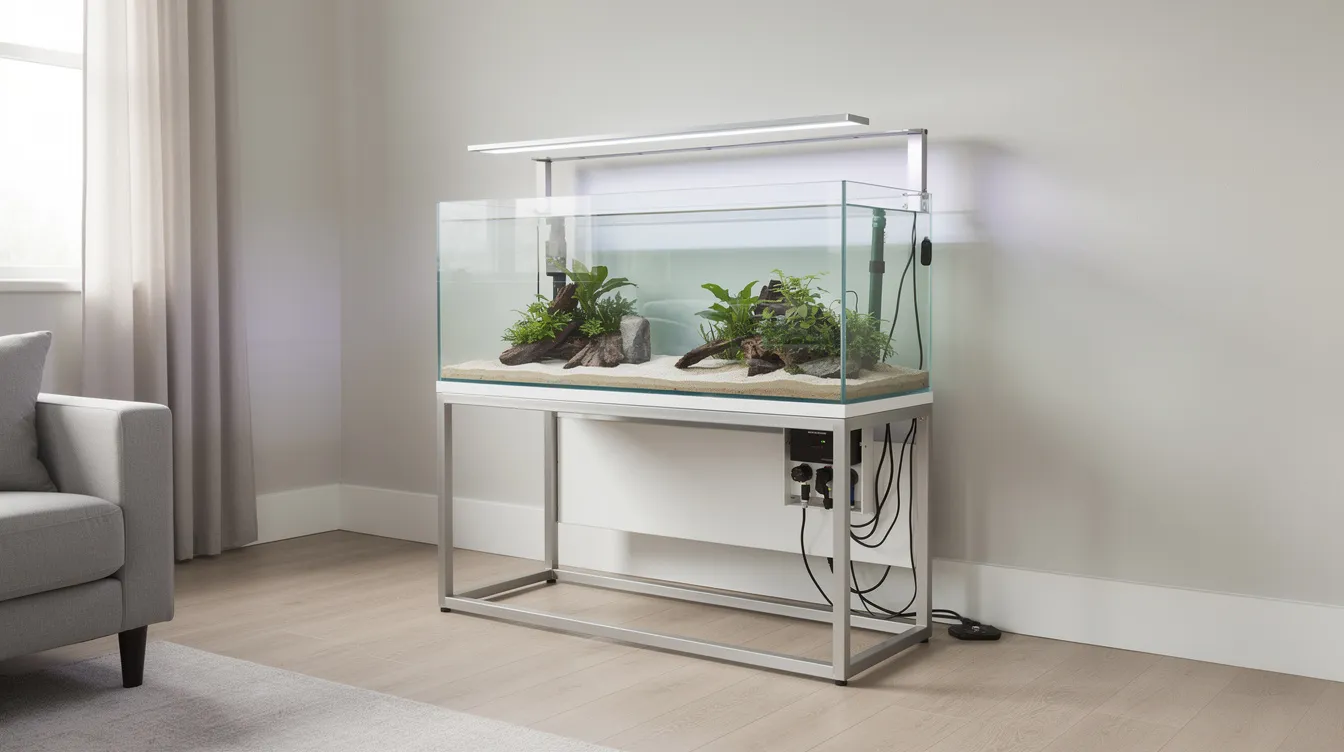
What About a Fish Tank With a Cat View?
A cat view fish tank is a setup intentionally placed where cats can watch fish closely but safely. Done right, it can be enriching. The goal is cat visibility without cat access: your cat gets a clear view while remaining physically separated from the water. Cat-proof aquariums keep cats dry while they watch fish, and understanding why cats love watching fish helps you design a setup that works for both species.
Positioning the Tank for Your Cat
Place the aquarium on a sturdy low cabinet or dedicated stand in a living area. Let your cat sit or lie on a nearby chair a short distance from the glass rather than on the tank lid itself. Avoid locations where glare encourages constant pawing, and keep high-traffic zones a little distance away to reduce startle events for fish.
Is Watching Fish Stressful for Cats?
Most cats treat a fish tank like a moving screen. Some watch calmly, some obsess, and many lose interest after a few days. Signs of overstimulation include tail lashing, chattering, clawing at the glass, or guarding the tank for hours.
Cats need at least 30 minutes of playtime daily to stay balanced. Mental stimulation prevents behavioral problems in cats, and under-stimulated stalking around the tank can lead to frustration or other behavior issues, so redirect highly fixated cats with daily play sessions, puzzle feeders, enrichment ideas for when you're away, and interactive toys like a tunnel for exploration. Providing scratching posts also helps keep cats engaged and less interested in the aquarium.
Is a Cat Safe Around a Fish Tank?
Even if the aquarium is secure for fish, consider whether it's safe for your cat, especially a kitten or a senior. Fortunately, most of these risks are preventable with the right setup. Slip risks from spilled water, shock from exposed outlets, and injury from broken glass are all preventable with a secure stand, proper tank lid, and basic electrical safety.
Can Cats Get Into Fish Tanks?
Cats most often fall or climb into tanks that are open-top, have hinged lids left open, or have large gaps around filters. Consequences include cold shock, exposure to treatment chemicals, and panic injuries. Close feeding flaps immediately and check lids each night, especially if your cat roams at night. Even a shallow 10-gallon tank can be hazardous if a small kitten can drop into it.
Can Cats Knock Over Fish Tank Equipment?
A healthy cat is unlikely to topple a full 40-gallon aquarium, but they can absolutely tip a 5-gallon nano tank on a flimsy desk or dislodge a hang-on-back filter by its hose. Goldfish bowls are especially accessible for cats to knock over. Hexagonal tanks are harder for cats to access than rectangular ones due to their shape. Use non-slip mats under small tanks and velcro or brackets for external equipment.
Can Cats Hurt Fish Through the Glass?
Cats cannot physically reach fish through intact glass or acrylic, but constant pouncing and tapping creates vibrations and sudden shadows that can cause measurable stress responses in fish. If fish are hiding all day or darting at every movement, reconsider the viewing setup. An opaque background on one side of the tank can help.
Does a Cat Watching Fish Stress the Fish?
It depends on the species, the tank layout, and how intensely the cat stalks. Shy tetras in a minimalist glass-box tank with no decor will react very differently than bolder goldfish in a planted setup with plenty of cover. With adequate plants, caves, and opaque backgrounds, many fish will largely tune out occasional cat watching.
Signs Your Fish May Be Stressed
Watch for these changes over 1–2 weeks:
- Fish hiding much more than normal (research links prolonged hiding with elevated stress)
- Schooling fish that scatter at every shadow
- Appetite changes, especially refusing food when the cat is present
- Physical signs like clamped fins or faded coloration
If stress signs persist, consult an experienced aquarist or aquatic vet.
Give Fish Places to Hide
A truly cat safe fish tank prioritizes fish control. Create hiding spaces for fish to reduce stress from cat presence using driftwood arches, rockwork caves, ceramic tubes, and live plants to break sightlines. Position decor so sheltered zones aren't immediately visible from the cat's typical spot. An opaque back panel or frosted foil on part of the glass reduces the sense of being surrounded.
What Is a Fishtank With a Cat Hole?
The viral cat hole trend features cat-proof aquariums with built-in openings for cat interaction, like a bottom chamber where a cat can sit under the tank and peer up at fish. Some designs, like the Orbit Tank concept, feature 360-degree viewing windows. The glass used in these cat-proof aquariums often has 92% light transmittance for crystal-clear views.
They look fun on social media, but from a fish welfare perspective:
- Fun idea: The cat gets an immersive close-up experience.
- Real-world risk: Constant close-range stalking from below or beside stresses fish. It encourages trapping behavior and aggression toward the glass.
Our recommendation: avoid any fish tank design that gives your cat direct access to the interior. The concept you want is a cat hole for viewing, not a cat hole for reaching.
How Much Does a Cat‑Safe Fish Tank Really Cost?
A real aquarium is a life support system for fish first, and a cat TV second.
Initial Setup
Core items for a modest 20–29 gallon beginner setup include the aquarium, a sturdy stand, matching tank lid, filter, heater, light, substrate, decor, plants, water conditioners, and test kits. Add safety spend for cable organizers, a better-fitting lid, and background film. Even a modest, humane setup often runs into several hundred dollars.
Ongoing Costs
Recurring expenses include electricity for filter, heater, and light; replacement filter media; dechlorinator; fish food; and occasional equipment replacements. Factor in time for weekly water changes and potential treatment costs if diseases arise. If you're weighing whether a real fish tank is right for your situation, this honest breakdown is worth reading, along with our guide to setting up a cat TV aquarium with real fish for cats to watch.
The Things Nobody Mentions About Keeping a Real Fish Tank
Water Changes
Most community aquariums need 20–40% water changes weekly or bi-weekly. Water changes are often when cats are most interested, so extra supervision is needed. Skipping them leads to water quality issues that harm fish far more than any cat.
Filter Noise and Vibration
Some filters hum or vibrate, especially in hollow stands. This matters in apartments or studios where the fish tank shares a room with humans and pets at night.
Cleaning and Glass Care
Regular tasks include wiping algae from glass, rinsing filter media, vacuuming substrate, and cleaning mineral deposits from the lid. Ultra clear glass shows smudges more easily, and cats rubbing paws on edges add to the work.
Fish Are Livestock, Not Decorations
Fish are living animals with their own welfare needs. If your primary motivation is enriching an indoor cat's life, honestly figure out whether you want to care for an animal or simply create something interesting to watch.
When You Probably Shouldn't Keep a Fish Tank for Your Cat
Give yourself permission to skip the aquarium if:
- You don't actually want to maintain fish
- You have no safe spot for a stable stand in the room
- Your cat shows constant aggression toward the glass
- You dislike filter noise
- Your primary goal is simply giving your kitty something fun to watch
- Bored cats are more likely to investigate fish tanks, and a highly fixated cat makes the whole setup harder to manage
Sadly, for many cat families, the money, time, and space a cat proof aquarium demands isn't worth it when the real goal is enrichment. Provide alternative stimulation for cats such as interactive toys or window perches instead.
Want the Fish‑Tank Experience Without the Fish?
If what you really want is for your cat to enjoy the visual appeal of swimming fish, you don't need live animals to make that happen. Our best fake fish tank for cats roundup highlights options like the Interactive Aquarium Cat Toy Lamp from Cidero & Co., which provides moving "fish" visuals in a completely cat safe format: no water changes, no tank lid to secure, no heaters or filters, no livestock welfare concerns.
Position the lamp at cat eye level on a stable surface. The soft light and motion are crafted specifically for indoor cat enrichment, and it can run safely while you're at work. To learn more about safety and effectiveness, see our vet-reviewed guide to aquarium cat toys.

Real Aquarium vs. Aquarium Cat Toy Lamp
- Live fish: Real tank has them. The lamp does not. No livestock, no welfare concern.
- Water changes: Weekly or bi-weekly for a real tank. None for the lamp.
- Filter and heater: Required for a real setup. The lamp uses simple, low-power electronics with no water.
- Cat viewing: Both provide it. The lamp is designed specifically for cat-level engagement.
- Risk profile: A real fish tank requires lid management, cord safety, and stable stands near water. The lamp is a fully enclosed decorative light.
- Maintenance: The lamp needs occasional dusting. That's about it.
A comparison of different interactive fish tank options can help you decide which solution fits your space.
Why Choose an Aquarium Cat Toy Instead?
"My cat really loves watching fish." They can still get a fish-inspired visual experience without live animals.
"I don't have room for a full fish tank." The lamp provides a simpler, smaller-footprint solution.
"I'm worried my cat will constantly bother the fish." No live fish means that concern disappears.
Interactive toys can reduce cat boredom significantly. Pair the lamp with chase toys, tunnels, and slow feeders to satisfy hunting, exploring, and problem-solving instincts. For ideas on keeping indoor cats entertained, see our guide to the best toys for bored indoor cats.
If You Already Own a Fish Tank, Do This First
Walk through this checklist while standing next to your aquarium:
- Securely fitted lid with no gaps a paw can catch
- Stable, level stand rated for full filled weight
- No easy cat launchpad within jumping distance
- Cables organized, covered, and bite-checked
- Filter and heater equipment clipped and anchored
- No direct cat access to the water surface
- Fish have appropriate hiding areas
- Watch for persistent fish stress signs over 1–2 weeks
- Routine maintenance of the aquarium setup helps ensure safety from accidents-keep your schedule
After completing safety upgrades, you can decide whether to keep the live setup or supplement with enrichment toys like the Aquarium Cat Toy Lamp.
Frequently Asked Questions
How do I cat‑proof an aquarium?
Install a secure, snug-fitting tank lid. Check for gaps around filters and openings. Stabilize the stand, secure all cords and equipment, remove nearby launchpads, and give fish hiding places with plants and decor.
Can a cat sit on a fish tank?
Your setup should never rely on a cat sitting on a glass lid. Even if the lid holds the weight, repeated jumping can stress seams over time and absolutely disturbs fish below.
How do I keep my cat from getting into a fish tank?
A snug, clip-on tank lid is the first line of defense. Close feeding flaps immediately after use. Place the aquarium where the cat can't easily climb onto it from nearby furniture.
Is a fish tank safe for cats?
A well-set-up aquarium with a fitted lid, stable stand, and tidy cables is generally safe. Open tanks, loose wires, and small unstable bowls like goldfish bowls are particularly vulnerable to curious cats and are not safe.
Can cats stress fish by watching them?
Some fish adapt. Others are stressed by constant stalking or tapping. Watch fish behavior over several weeks and add hiding spots if they seem agitated. Many cats love to watch, but the fish's response matters too.
Is it okay for cats to watch fish?
Relaxed, occasional watching from a short distance is usually fine. Obsessive guarding, pawing, or chasing at the glass should be redirected with play, toys, or repositioning the tank.
What is a cat‑view fish tank?
A cat view fish tank is an aquarium intentionally positioned or designed so cats can see the fish clearly while remaining completely separated from the water and livestock. The inner dimensions and layout should always prioritize fish welfare alongside the viewing experience.
Final Verdict
A cat proof aquarium protects both the fish and the cat. If you already keep fish, prioritize safety with secure lids, stable stands, and tidy cords. If you're on the fence, weigh the real cost, the ongoing time commitment, and whether you're genuinely interested in fishkeeping or mainly want your cat to be completely satisfied with something fascinating to watch.
For many indoor cat parents, a well-designed aquarium-style cat toy plus broader enrichment can deliver the fish tank experience without the fish, the water changes, or the welfare trade-offs, and it's worth thinking carefully before getting a real fish tank for your cat.


