

The Truth About Catnip Toys for Kittens: When to Use Them and What Works First
You just brought a kitten home, and you're staring at a wall of catnip toys at the pet store. Before you fill your cart, there are a few things worth knowing about how kittens actually respond to catnip, and what they need from their toys right now.
Can kittens have catnip toys? (quick answer first)
Catnip is safe and non-addictive for kittens. The catnip plant (Nepeta cataria), a member of the mint family, is generally considered safe and non-toxic for cats of all ages. But most young kittens under about three to six months simply don't react to it. Kittens typically start reacting to catnip at three to six months, so buying catnip toys for a very young kitty usually won't produce the rolling, rubbing, or zoomies you're expecting.
What matters more at this age is safe, age-appropriate enrichment: toys that let your kitten chase, bat, pounce, grab, and chew. The herb itself is secondary.
Quick answer
Can kittens have catnip? Yes. Catnip is safe in normal amounts, but many young kittens won't respond to it yet.
From what age does catnip work? Most cats react somewhere between 3 and 6 months. Some never respond at all.
What to offer instead? Toys that encourage movement, texture exploration, and prey-style play. At Cidero & Co., we design enrichment toys that keep indoor kittens engaged whether or not they care about catnip yet.
Why many kittens don't react to catnip (and what "catnip safe" really means)
Catnip contains an active oil called nepetalactone that affects cat behavior. When cats smell it, nepetalactone triggers a scent-driven brain response that can produce rolling, rubbing against objects, brief euphoria, and bursts of hyperactivity and playfulness. But sensitivity to catnip is hereditary and varies among kittens. Research suggests that roughly 50–80% of adult cats respond, while not all cats carry the genetic sensitivity at all.
Age matters just as much as genetics. Kittens under three months do not react to catnip. In a study of 60 domestic cats, infants younger than three months showed none of the active behaviors (rolling, nose rubbing) seen in older cats. The effects of catnip are typically short-lived, lasting about 5 to 15 minutes, after which even adult cats lose interest temporarily.
So when cat owners hear "catnip safe," it means the herb is non-toxic in normal amounts. It does not mean every cat or kitten will react, and it does not mean unlimited quantities are harmless. Catnip leaves and dried catnip can still cause digestive upset if your kitten eats large amounts. A catnip toy used for smell and batting is different from a pile of loose herb left on the floor for ingesting.
The typical reaction looks like this: your cat might roll on the ground, rub their nose against the toy, get a brief case of the zoomies, or show affection toward objects. Some people describe it as cats getting "high," but the response is closer to a short sensory burst than anything resembling a human drug experience. After those 5–15 minutes, cats calm down and lose interest.
How much catnip is okay for kittens? (and signs it's too much)
For kittens old enough to show a reaction (around 3–6 months and a bit older), start with a small amount of catnip. A pinch of dried catnip, roughly 1/4 to 1/2 teaspoon, once or twice a week is plenty. One small catnip toy per play session works just as well. Store unused dried catnip in an airtight container to preserve the scent and oil potency.
Too much catnip is usually about over-ingestion, not smell. Signs to watch for during and after playtime:
- Vomiting or diarrhea (mild digestive upset from ingesting large amounts of plant material)
- Hyperactive behavior that doesn't settle; even aggression toward other cats or humans
- Panting, wobbly walking, or disorientation (rare, but worth noting)
If your kitten shows any of these, remove the catnip toy, give them a calm, quiet space, and observe. Catnip can cause overstimulation in some kittens, so limit catnip exposure to prevent that. Supervise kittens during catnip playtime to ensure safety.
Talk to your veterinarian before introducing catnip regularly if your kitten has epilepsy, heart disease, is recovering from surgery, or is under 12 weeks old. For healthy kittens in that 3–6 month window, a conservative approach does no harm and keeps the experience novel.
What to offer young kittens instead of relying on catnip
For young kittens, enrichment comes from what a toy lets them do, not from whether it contains an herb. Whether or not kittens have catnip toys available, they need daily opportunities to practice natural behaviors. This is especially true for indoor cats in apartments or small homes, where boredom and anxiety can set in without proper stimulation.
Organize your kitten's toy options around what they're trying to do:
- Chase: Wand toys with dangling feathers, remote-control chase toys, or rolling balls that mimic prey movement.
- Bat and pounce: Lightweight crinkle balls, ping-pong balls, soft fabric mice that are easy for small paws to swat.
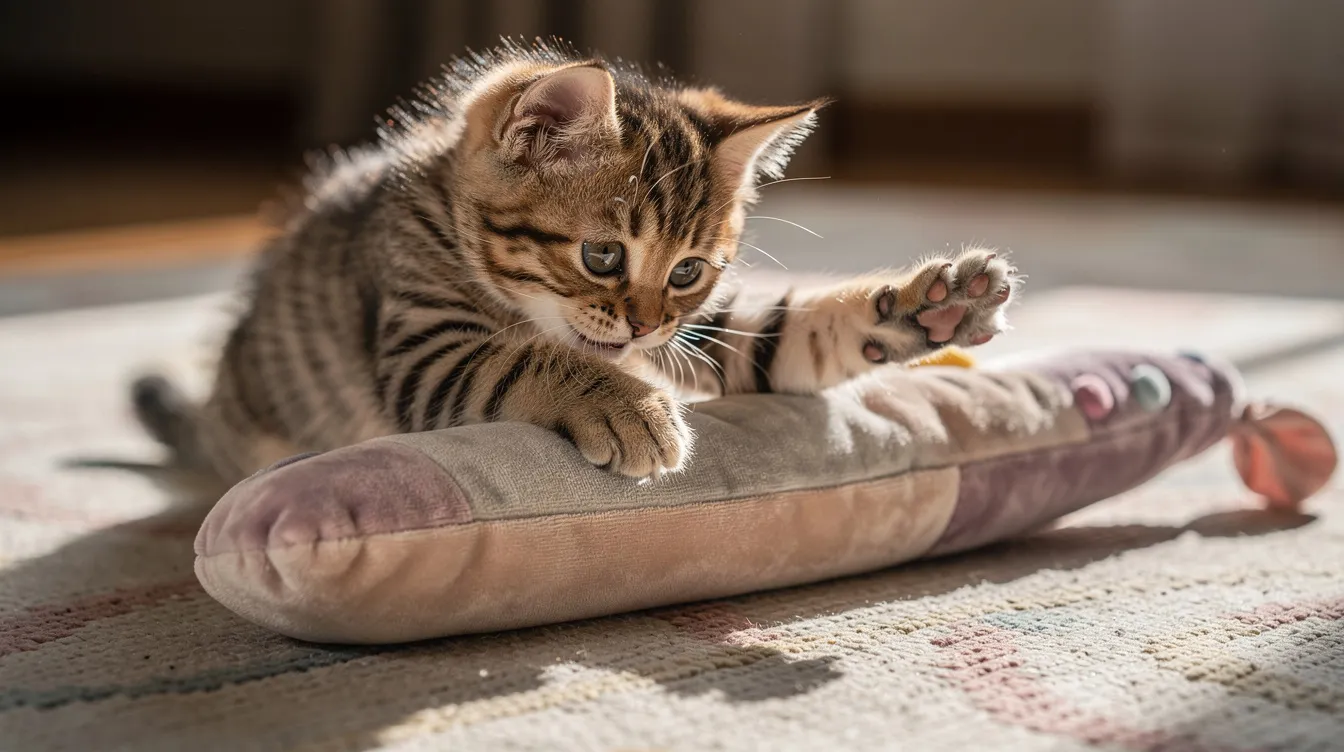
- Grab and kick: Small kicker toys sized for young kittens, soft elongated plush items your kitten can wrap both paws around and bunny-kick.
- Explore and hide: Fabric tunnels, cardboard boxes, crawl-through tubes that create hiding and ambush opportunities. For more detail on picking the right option, see our guide to choosing the best cat tunnel for kittens and senior cats.
- Chew and investigate: Textured plush (fleece, corduroy, crinkle), soft rubber nibblers, toys with varied surface interest.

Once a kitten is old enough to enjoy catnip, catnip toys can enhance play sessions and encourage interaction with other toys. Layer them into this same enrichment framework rather than replacing normal play.
Is silvervine better than catnip for kittens?
Silvervine (Actinidia polygama) is a different plant attractant that produces iridoid compounds similar to nepetalactone. Some cats who ignore catnip respond strongly to silvervine. Research published in PMC found no signs of addiction, organ damage, or stress biomarker changes from repeated silvervine exposure under normal use.
Here's how the three options compare for kittens: Catnip works in roughly 50–80% of adult cats but rarely in very young kittens, and response depends on genetics. Silvervine may trigger responses in more cats, including some catnip non-responders, but still isn't guaranteed for kittens under three months. Non-herb enrichment toys work from day one regardless of age, scent sensitivity, or genetics.
For very young kittens, neither catnip nor silvervine is guaranteed to produce a reaction. Introduce silvervine in very small amounts and watch carefully. Avoid it in kittens with known respiratory or neurological issues unless a vet approves. The core idea: you don't need herb-filled toys to enrich a kitten. Well-designed kitten enrichment toys are effective with or without scent attractants.
How to choose safe, kitten-friendly toys (with or without catnip)
This is the practical checklist. Apply these questions while shopping, whether the toy has catnip inside or not.
- Size: Large enough that your kitten can't swallow it whole, but light enough for a 2–4 pound kitten to bat, carry, or kick. Avoid loose pom-poms, tiny bells, and beads that can detach.
- Construction: Tight seams, securely attached feathers or strings. Check toys regularly and discard them once stuffing or catnip starts leaking. Supervision is recommended when kittens play with catnip toys to prevent ingestion of parts.
- Materials: Soft fabrics like felt, faux fur, and fleece. Flexible rubber or silicone for chew toys. Avoid brittle plastics that splinter or cheap dyes that bleed. At Cidero & Co., we design toys with indoor kittens in mind, prioritizing pet-safe materials and durable stitching.
- Supervision: Wand toys, long strings, and toys with elastic or remote-control components should only come out during supervised sessions, especially with young kittens that are still clumsy.
Before giving a kitten a new toy, ask yourself:
- Can my kitten swallow this?
- Are there parts that could snap off?
- Will claws or teeth destroy it quickly?
- Does it encourage healthy play behavior?
- Does it need to be put away between sessions?
Kitten kicker toys and other enrichment picks from Cidero & Co.
Kicker toys become especially fun once a kitten starts grabbing with both front paws and bunny-kicking with their back legs, which often happens around 10–14 weeks.
- Jumbo Cotton Swab Cat Toy: Its soft, elongated shape is easy for small paws to wrap around. Light enough for kittens, it's ideal for supervised wrestling sessions and doesn't need catnip to hold interest. If your kitten has started grabbing, biting, and kicking their toys, see our guide to choosing the right kicker toy.
- Rabbit Fur Octopus: Multiple legs for batting and grabbing, interesting texture for stalking and pouncing. Catnip toys provide mental and physical stimulation for cats, but this toy delivers that through movement and texture, making it useful for both young kittens and older cats.
- Catnip-Infused Bubble: For kittens old enough to show interest in catnip, the floating bubbles encourage chasing and leaping while keeping actual catnip ingestion minimal. This catnip bubbles guide explains how they work, safety tips, and how to use them as an occasional bonus enrichment option once your kitten is a bit older.
We design every product with indoor-friendly living in mind: compact, aesthetically clean for modern homes, and built to support healthy kitten development through instinct-driven play.
Building a simple toy rotation for your kitten
Kittens don't need a huge basket of toys out at once. Rotating 4–8 toys over the week keeps familiar items feeling new and prevents overstimulation. Catnip can enhance playtime and reduce boredom for kittens, but constant access reduces the novelty.
A sample daily rhythm:
- Morning: Interactive chase or play with a wand toy. If you're away during the day, leave a safe solo toy out.
- Afternoon: Soft kicker or grab toy for independent play.
- Evening: Tunnel or exploration session with hiding spots.
- Occasional: A catnip or silvervine toy once or twice a week, if your kitten responds.
Catnip toys help reduce stress and promote relaxation in cats after play, so an evening catnip session can work well as a wind-down. Bonus: occasionally place a favorite non-catnip toy in your kitten's carrier so it smells familiar and safe for vet visits.
A small, thoughtful rotation of well-made enrichment toys does more for a kitten's happiness than a big pile of random, heavily catnip-stuffed items.
Catnip and kittens: quick answers to common questions
Can kittens have catnip? Yes. Catnip is generally considered safe, but many kittens won't respond until around 3–6 months. Tiny amounts are enough to test your kitten's interest. The spray form works too, applied lightly to a scratching pad or toy.
At what age does catnip work for most kittens? Kittens typically respond to catnip between three to six months. Some cats react later. Kittens may show no reaction to catnip before six months old, and some adult cats never respond. That's normal.
How much catnip is safe for a kitten? A pinch of dried catnip (1/4 teaspoon) or one catnip toy per session. Too much catnip can lead to mild digestive upset in kittens, including loose stool or vomiting. Remove the toy if your kitten seems uncomfortable or overly hyperactive.
Why doesn't my kitten react to catnip? Two reasons: age and genetics. Kittens under three months are immune to the effects of catnip. And some cats simply lack the genetic sense needed to react. Neither situation causes any harm. Offer non-herb enrichment toys as the primary solution for playtime and challenge.
What can I offer my kitten instead of catnip toys? Age-appropriate chase toys, pounce toys, kicker toys, tunnels, and textured chew toys. These deliver the same mental stimulation and physical activity that kitten catnip toys aim for, without depending on a scent reaction. At Cidero & Co., we design these for indoor kittens of every age.
Did you find this article helpful? If you have any concerns about your individual kitty's health or reaction to catnip, silvervine, or other plants, speak with your veterinarian. For enrichment that works from week one, explore our collection of kitten-friendly toys at Cidero & Co.


