

Why Do Cats Love Bug Toys? (And How to Pick the Right Motion)
What Are Bug Toys for Cats (and Which Ones Are Worth Buying?)
Your cat ignores a $30 plush mouse for months. Then a single fly lands on the kitchen window, and suddenly you're living with a world-class predator. That contrast tells you something useful about what actually grabs a cat's attention.
Bug toys for cats are toys designed to imitate the appearance or movement of insects, including butterflies, beetles, flies, and moths. They trigger chasing, stalking, and pouncing by reproducing the small size and erratic motion that indoor cats rarely encounter on their own. Indoor cat toys should spark natural hunting instincts such as chasing and pouncing, and bug-style toys do this more reliably than most static alternatives.
This guide is a practical buying framework. It will help you match your cat's hunting style to the right toy, compare the main bug-toy formats, and navigate safety and product quality before you add anything to your cart. Cidero & Co. specializes in design-forward interactive cat toys and enrichment accessories, and you can explore the full collection for options beyond what's covered here.
Why Do Cats Love Chasing Bugs?
Even well-fed indoor cats retain strong hunting instincts. Insects happen to be the right size and speed to activate those instincts on contact. Understanding how your cat responds to bugs is the first step toward choosing a toy it will actually use.
Small, Fast Movements Trigger the Chase
Cats' eyes are tuned to detect quick, small, prey-sized motion. Real flies dart, stop mid-air, and change direction without warning. Moths flip and flutter near lamps. Beetles scuttle in bursts across hard floors. Cats can exhibit an urge to hunt through batting and chasing at lightweight toys that replicate these patterns.
Compare a motionless plastic beetle on the floor to a small vibrating insect toy that buzzes across tile. One sits there collecting dust. The other gets stalked within seconds. A toy's movement matters more than whether it looks like a real bug.
Hunting Is About More Than Hunger
Play hunting happens even right after dinner. It is about instinct, mental stimulation, and practice. Battersea's veterinary team notes that cats react to prey-like motion regardless of how recently they've eaten.
The typical predatory sequence runs: watch, stalk, chase, pounce, grab, bite. Good bug toys allow at least three or four of those steps. The best toys for indoor cats combine mental stimulation and physical exercise, and puzzle feeders can add another layer of enrichment by challenging a cat to work for food between play sessions, fitting into a broader approach to keeping indoor cats entertained and enriched.
Why Some Cats Love Bugs but Ignore Other Toys
Some cats prefer tiny toys like pom balls and small mice. Others lock onto a gnat against a window and ignore everything else in the room. This comes down to prey preference. "Air hunters" watch ceiling corners and lamp fixtures. "Ground hunters" stalk under doors and along baseboards.
Spend a few days observing your cat. Does it chase flies at the window, or does it track crumbs and hair ties across the floor? Interactive toys can transform cats from loungers to hunters when the movement type matches what the cat naturally pursues. Once you know whether your cat likes fluttering or scurrying, choosing the right category of bug toy becomes straightforward.
Types of Bug Toys for Cats: Fluttering, Scurrying, and Buzzing
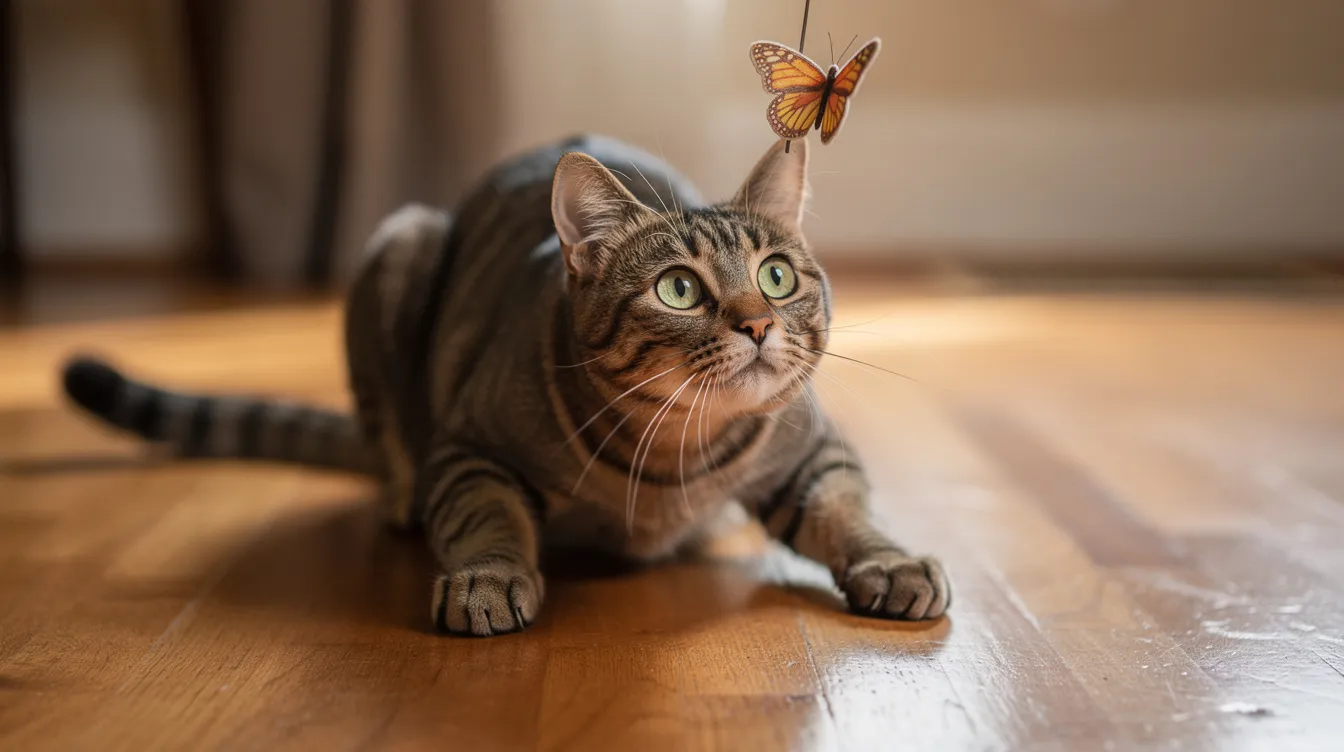
Bug toys for cats differ mainly by how they move: through the air (fluttering), along the floor (scurrying), or by vibration in place (buzzing). A fourth category, wand toys with insect-like attachments, puts the owner in control of all three movement styles.
Quick comparison: fluttering toys encourage jumping and swatting and work without owner input; crawling toys drive ground-level chasing on smooth surfaces; buzzing toys grab attention through sound and tremor; wand toys require owner time but offer the most flexible, realistic insect movement of any format.
1. Fluttering Butterfly Toys for Cats
Butterfly and moth-style toys mimic the looping, erratic flight that many cats love watching near windows. Most use a motorized base with a thin wire and a butterfly attachment that spins or wobbles above.
These suit cats that swipe at dust motes in sunlight or jump for objects waved in the air. Before you buy, check the stability of the base, how durable the wings are, whether replacement attachments ship separately, and if the toy needs to be stored away after use.
Cidero & Co.'s Fluttering Butterfly Cat Toy is designed for realistic flutter with pet-safe materials and a clean look that fits a modern home. If your cat likes fluttering motion, it's a strong starting point, and you can dive deeper into what to check before buying a flapping butterfly cat toy.

2. Crawling and Scurrying Insect Toys
These toys look like beetles or small bugs that scoot along hard floors using vibration or tiny wheels. The HEXBUG nano® toy mimics real bug movements and is a well-known example; HEXBUG nano mimics real bugs using vibration technology, making it dart and change direction on smooth surfaces.
Crawling toys work best on tile, wood, or laminate. They tend to struggle or stop on carpet. Check noise level, whether direction changes are random, and how well moving parts are protected from claws and teeth. Inspect for cracks, broken wings, and loose pieces regularly, and remove any damaged toy immediately to avoid swallowing hazards.
Cidero & Co. does not currently offer this exact style, but comparing crawling toys to automatic cat toys such as an automatic rotating peekaboo cat toy can help you decide which motion your cat prefers.
3. Buzzing and Vibrating Bug Toys
This category uses internal vibration to make small insects buzz, tremble, or wobble across a surface. Battery-powered insect toys stimulate cats' hunting instincts by combining movement with a low hum that grabs attention even from across the room. Some are touch-activated: they start when batted, which keeps cats interested longer.
Not every cat likes the noise. Test at a low volume first. Check the strength of the casing, the type of battery (watch batteries are common), and realistic runtime. Battery-powered insect toys vibrate to stimulate hunting instincts, but those batteries don't last forever. Remove used batteries from cat toys promptly, never leave loose batteries where cats or kittens can reach them, and dispose of used batteries at proper collection points.
4. Wand Toys With Insect-Like Attachments
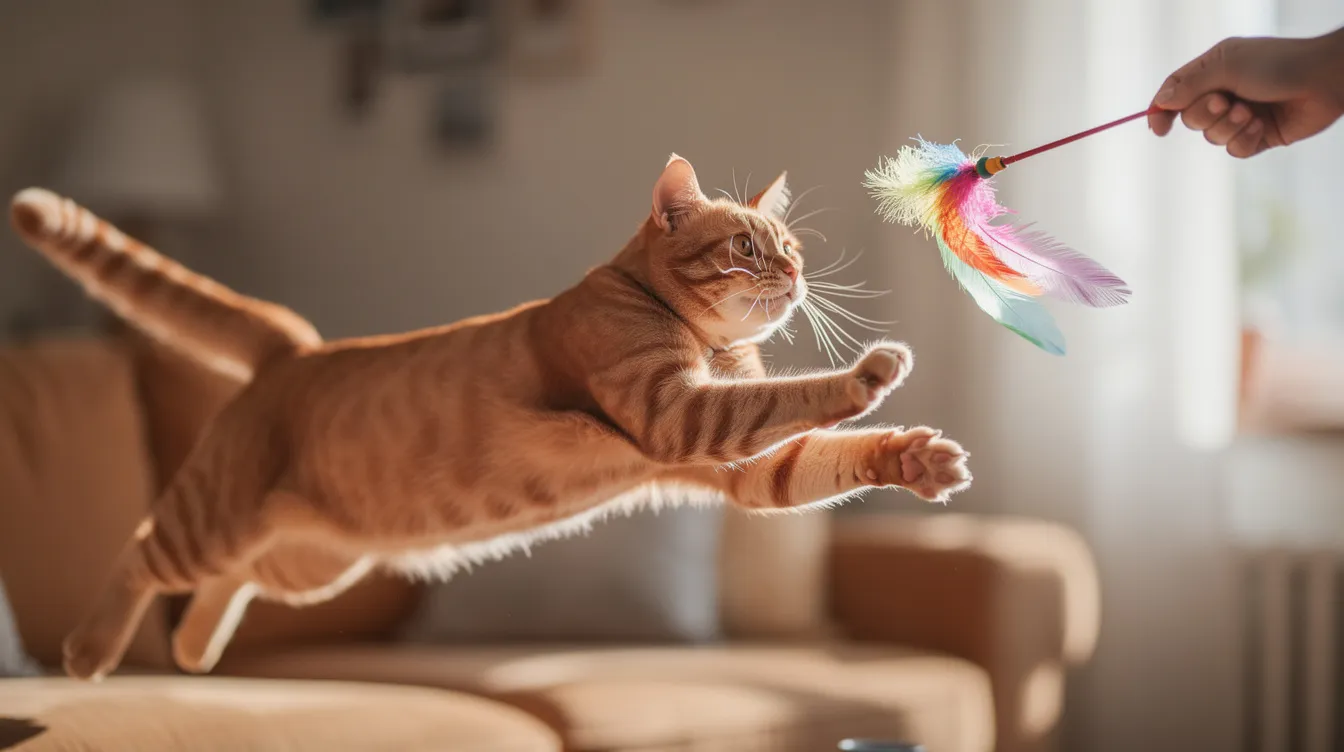
Wand-style toys with bug-like lures, such as moths, flies, or small segmented bodies with wings or fur, are among the most interactive cat toys available. The owner controls speed, height, and direction, making the movement feel like a real insect zig-zagging and darting away.
Neko Flies toys resemble insects and birds for interactive play, and Neko Flies toys are durable and withstand aggressive play. Neko Flies resemble insects and inspire natural hunting behavior, making them a reliable option in this category. Interactive toys can enhance bonding between cats and their owners during play, and wand toys are the clearest example of that.
Safety rule: toys with strings must be put away after every session. Strings pose entanglement and ingestion risks. Store the wand in a closet or drawer. Check for replaceable lures, secure fastenings, and joints that handle repeated hard pounces.
These are also excellent for shy cats. Start with small, gentle movements on the floor and gradually build speed as the cat's confidence grows.
How to Choose the Best Bug Toy for Your Cat
Start from what your cat already chases. If it stares at windows and jumps for moths, try a butterfly toy. If it chases bottle caps and tiny balls across the floor, consider crawling insect toys. If it responds to odd sounds and vibrations, a buzzing toy may be the best test. Cats are individuals; some love multiple toy types or flip preferences over time, so treat these as starting points.
What to Check Before Buying
- Movement: Confirm whether the toy flutters, crawls, or vibrates as advertised. Search for video reviews to see real-world behavior before you buy.
- Construction: Toy options should utilize non-toxic materials without sharp edges. Look for securely attached wings and legs, robust casings, and no exposed wires.
- Small parts and strings: Check for detachable eyes, antennae, or beads that could end up in a cat's mouth. Treat any string-based toy as supervised-only play.
- Noise and power: If your house is quiet or your cat is noise-sensitive, avoid products with loud motors. Factor in the ongoing cost of batteries.
- Maintenance: Wipe toys clean, retire damaged items promptly, and check whether replacement parts (like butterfly lures) are available so you don't have to buy a new product each time.
Quality bug toys for cats may cost more upfront, but they typically deliver safer, longer-lasting enrichment than disposable alternatives. That's money better spent.
Are Real Bugs Safe for Cats to Chase and Eat?
Many cats chase and eat flies or moths. This is usually not an emergency, but it isn't risk-free either.
Why Real Insects Can Carry Risks
PetMD notes that ordinary house flies are often harmless if eaten occasionally, but insects can still carry parasites or bacteria. Stings or bites from bees, wasps, or certain spiders pose additional danger. Insects carried into the house may have contacted pesticides. Watch for vomiting, facial swelling, drooling, or lethargy after a cat eats a bug, and contact a vet if anything looks bad.
Can Bug Toys Replace Real Insects?
No toy perfectly replicates a live insect, but well-designed butterfly, buzzing, and crawling cat toys satisfy much of the same chasing and pouncing urge. They're not automatically safe either: inspect them regularly, supervise when recommended, and retire frayed or broken toys. For owners who dislike their cat hunting around light fixtures, a daily bug-toy play session is a cleaner compromise.
How to Get Your Cat Interested in a Bug Toy
How you present a new toy matters almost as much as the toy itself. Short sessions, natural movements, and allowing a "victory" all help.
Start With Short, Natural Movements
Imitate real bugs: quick darts followed by stillness, small zigzags away from the cat, sudden stops. Keep first sessions under five to ten minutes. Place the toy on the floor and let the cat watch and approach on its own time. Timid cats respond better to slow motion at first.
Let Your Cat Stalk and Catch It
A satisfying hunt ends with a catch. Let the cat pin, bite, and bunny-kick the toy periodically. Move it away like a fleeing insect, under chairs and around table legs, so the cat can stalk and ambush. Cats enjoy ambush play with toys that provide hiding spots, and using furniture as cover makes sessions feel more realistic.
Allow several easy "wins" per session. End when the cat starts to slow down or groom, and optionally follow with a small snack to complete the hunt, eat, groom cycle.
Rotate Toys to Keep Play Interesting
Rotating toys every few days keeps playtime exciting for cats. Store most toys out of sight, offer one or two at a time, and swap them to make each feel new. Providing a variety of toys can prevent boredom-related behavioral issues and ties directly into strategies for entertaining a cat when you're not home. Rotate between fluttering, crawling, and buzzing styles to discover new preferences. For more rotation ideas, see how to keep your cat entertained while you're away. A small rotation of high-quality items often works better than a scattered pile of random products.
Find the Right Bug Toy for Your Cat
The best bug toys for cats depend on whether your cat likes fluttering, scurrying, or buzzing motion. Match the toy to what your cat already chases, and you'll see more active play and a stronger bond at home. Cidero & Co.'s butterfly toys are a strong starting point for cats who love chasing flying insects, built for realistic movement and a beautiful, interior-friendly design.
Explore our butterfly toys and interactive cat toys to find your cat's next favorite hunt.

Frequently Asked Questions About Bug Toys for Cats
These questions cover quick concerns owners often have before buying. Each answer is self-contained.
What are the best bug toys for cats?
The best bug toys depend on how your cat likes to play. Butterfly toys suit cats attracted to fluttering movement, and articles explaining how flying butterfly cat toys actually move can help match designs to your cat’s play style. Crawling insect toys encourage ground-level chasing. Buzzing toys grab sensory seekers. Wand toys with insect-like attachments, such as Neko Flies, are ideal for cats that enjoy interactive play with their owners. Observe your cat for a few days and then choose the movement type it naturally pursues.
Why do cats love chasing bugs?
Bugs are small, quick, and unpredictable, closely matching what feline hunting instincts respond to. Even well-fed indoor cats are hardwired to react to tiny movements. Chasing insects is a normal form of hunting play, not a sign of hunger.
Are butterfly toys good for cats?
Butterfly toys can be an amazing option for cats that watch and swat at flying insects or dust in the air. Check construction quality, follow safety instructions, supervise when recommended, and store toys with wires or strings out of reach after play.
Can indoor cats benefit from insect cat toys?
Insect-inspired toys give indoor cats opportunities to stalk, chase, and pounce in a small space. They should be part of a varied toy mix, including other interactive items and solo-play products, rather than the only source of stimulation.
Are bug toys safer than letting cats chase real insects?
Bug toys avoid hazards like stings, parasites, and pesticide exposure. They still require safety checks. Choose well-made products, inspect them for damage, and discard any with loose parts. Supervise if there are strings or electronic components.
What if my cat ignores its new bug toy?
Introduce the toy during active hours. Use short, natural movements and let the cat stalk and catch it. If your cat stays uninterested after several attempts, try a different movement style. Some cats that ignore a fluttering toy go crazy for a crawling or buzzing one.
Are electronic bug toys suitable for kittens?
Some electronic insect toys can work for kittens if they are appropriately sized and robustly built. Soft plush toys are recommended for kittens instead of hard plastic options. Kittens should have safe toys designed without small detachable parts to prevent choking. Inspect kitten toys regularly for wear and tear to maintain safety during play, and keep batteries securely enclosed at all times.


