

Why Is My Cat Scared of Moving Toys? 5 Fixes (and Quiet Alternatives)
When the "Fun" Toy Freaks Your Cat Out
You unbox a sleek automatic mouse, set it on the floor, and press the button. Instead of pouncing, your cat freezes for one moment, then bolts under the bed. She's gone for the next hour. Sound familiar?
It's more common than most cat owners expect. Many cats are scared of moving toys, especially noisy or unpredictable electronic ones. The good news: your kitty probably doesn't hate play itself. The problem is usually a specific combination of sound, speed, or movement style that feels more like a threat than prey. Play mimics hunting behavior in cats, and cats need mental stimulation to stay healthy, so giving up on enrichment entirely isn't the answer.
This article covers why this fear happens, five practical ways to help, and how to choose gentler toys instead of retiring play altogether. At Cidero & Co., we design safe, instinct-led enrichment for indoor cats, and understanding what makes a cat afraid of certain toys is central to everything we build.
Why Is My Cat Scared of Moving Toys?
If you're asking why is my cat scared of moving toys, the answer usually isn't that your cat is "weird" or unplayable. Cats are natural predators that possess instinctive self-preservation traits. Movement can excite their hunt drive or trigger their fear response, depending on the stimulus. Several specific triggers commonly push a cat from curiosity into panic.
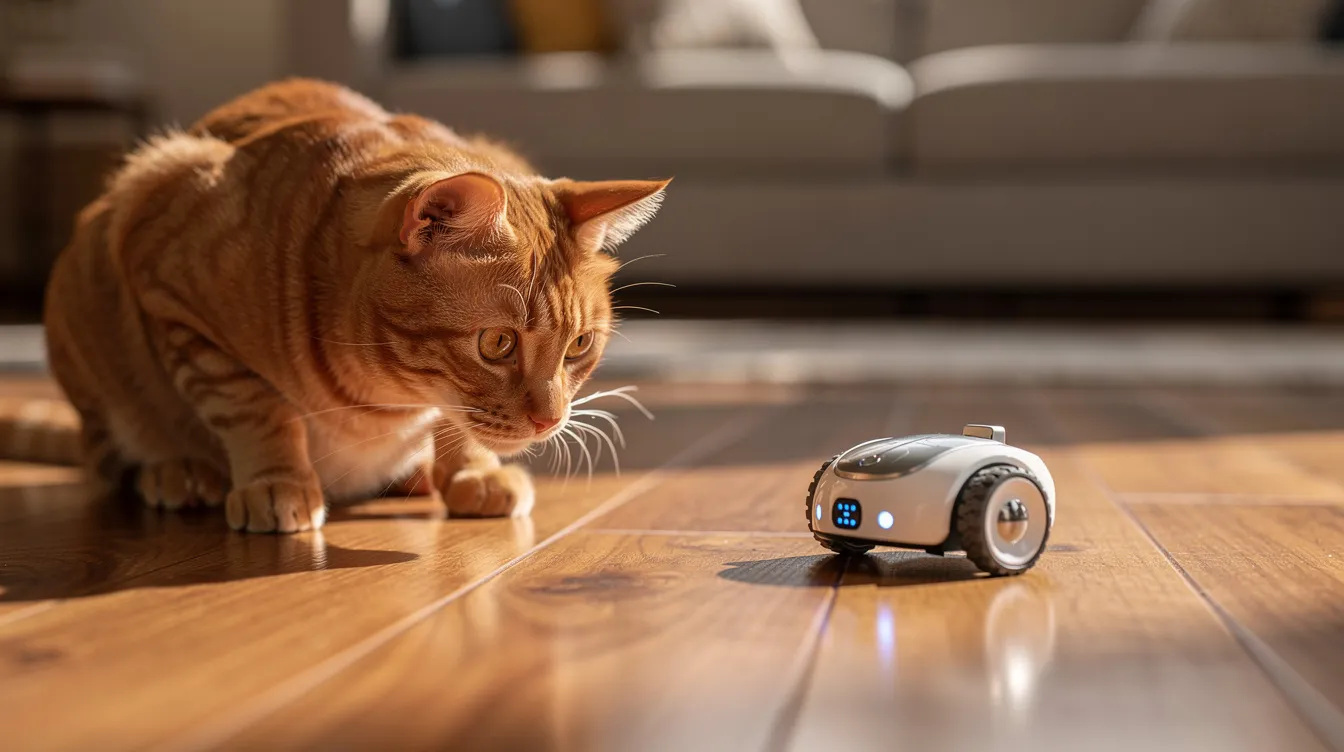
1. The Toy Makes Too Much Noise
Buzzing motors, grinding gears, rattling plastic shells, and sudden beeps on activation are standard features of many electronic cat toys. The trouble is that cats hear frequencies up to roughly 65 kHz-more than three times the upper range of humans-so a "barely audible" whir can feel loud and harsh to them. Loud or unfamiliar noises from toys can startle cats due to their sensitive hearing, and cat toy anxiety occurs when toys overstimulate or scare cats this way.
Watch for these common noise culprits:
- Hard plastic casings that amplify motor vibration
- Exposed gearboxes or clicking mechanisms
- Bells or electronic sound effects triggered by motion sensors
- Sudden on/off activation without gradual ramp-up
A cat who already startles at kitchen appliances or the vacuum is more likely to fear noisy toys too.
2. It Moves Too Fast
Some battery-powered chase toys sweep across the floor faster than any bird or mouse would realistically move. When a toy rushes straight toward a cat or circles them rapidly on the ground, it can feel like an incoming threat rather than something to stalk. Fast or large toys may be perceived as a threat rather than play, and cats prefer to stalk and ambush prey rather than chase fast, erratic items.
This is especially true for a shy rescue, a senior animal, or a kitten raised on gentle wand play who suddenly encounters a high-speed autonomous robot. Older cats or those with mobility issues are particularly likely to find rapid movement overwhelming rather than fun. Toys that overstimulate can lead to cat toy anxiety rather than the confidence-building engagement you're hoping for.
3. The Movements Are Unpredictable
Cats rely heavily on predictable motion to assess risk during play. Their hunting strategy depends on reading a pattern, sitting low, and timing the pounce. Cat toys that move in unexpected ways can create a predatory caution response rather than excitement.
Think about a toy that suddenly springs upright from under the sofa, or a tail attachment that whips around the cat's feet without warning. Unpredictable movements of toys can overwhelm a cat's senses and trigger anxiety. Mechanical or self-moving toys may trigger a fear response due to their unnatural movement. Contrast that with the smooth, prowl-like motion of a feather dragged slowly across the ground-easy to track, easy to figure out, and far less frightening.
4. Your Cat Hasn't Had Time to Learn It's Safe
Many owners pull a new toy from the box, switch it on immediately, and expect interest. But an indoor cat who rarely encounters novel sounds or objects may experience neophobia-a natural fear of unfamiliar things. Socialized cats may take longer to adapt to moving toys if they've had limited exposure to them, and cats with previous negative experiences may be more cautious around unfamiliar toys.
If your cat was once frightened by a dropped object, startled by a loud gadget, or chased too aggressively with a wand, they can form lasting negative associations with toys that have previously startled them. A cat's fear of moving toys can result from a lack of control over the stimulus-they didn't choose to engage, and the noise or motion didn't stop when they wanted it to. This isn't stubbornness. It's a normal protective response.
5. Underlying Stress or Sensitivity
Sometimes the toy itself isn't the real issue. Multi-pet tension in the house, a recent move, a new baby, lack of hiding spots, or even a door slamming at night can raise a cat's baseline stress so that any sudden stimulus-including a harmless ball rolling across the room-feels like too much. Some toys may overwhelm shy or cautious cats who are already anxious about everyday life.
Cats in chronic pain from arthritis or dental issues may also be more jumpy. Signs of anxious behavior often appear during or after play: flattened ears, hiding for hours, or refusing food. If your cat is terrified of people walking by, stairs creaking, or paper rustling, moving toys are just one more trigger-and a vet visit may be the better first step.
5 Ways to Help Your Cat Get Used to Moving Toys
These steps are optional and low-pressure. The goal is to give your cat choices, not to force them through a fear they can't handle. If fear escalates at any point, it's better to switch to softer enrichment-puzzle feeders, tunnels, or scent-based stuff-than to push through panic.
Step 1. Let Your Cat Explore the Toy While It's Switched Off
Place the new toy in a neutral space on the floor, powered off, away from food and your cat's bed. Sprinkle a few treats or a pinch of catnip nearby-but not directly on top-to build curiosity. Gradual exposure to moving toys can help reduce fear in cats over time, but forcing it won't. Don't wiggle the toy at your cat, corner them, or pick them up and set them beside it. Note: overly strong catnip toys can cause anxiety in some cats, so use a light touch.
A curious cat will sniff, approach slowly, and keep their tail at half-mast. A cat who flattens their ears and retreats is telling you they need more time-or a different approach.
Step 2. Start Slow, at a Comfortable Distance
Activate the toy briefly-five to fifteen seconds-while it sits several feet away. Ideally, your cat is watching from higher ground like a post or cat tree where they feel secure. Don't aim the toy toward them; let it move parallel. Some cats prefer stationary or slow-moving items to avoid overstimulation, and simply watching from across the room for several days is still real progress.
Step 3. Pair Calm Movement With Something Positive
When the toy is present but not overwhelming, offer a high-value treat or a lick of something your cat loves. Build a pattern: toy moves slowly, turns off, treat appears, quiet rest. Successful playtime boosts a cat's confidence, and cats need to feel successful during play to avoid giving up. Allow cats to catch their toys to boost confidence when they're ready.
If your cat refuses food while the toy is active, stress is too high. Scale back. Don't try to bribe a frightened animal through panic.
Step 4. Let Your Cat Stay in Control
Always leave an escape route open. Don't block the door to a hiding spot or crowd your cat against a wall. Watch whether they choose to come closer or prefer to sit and observe-and respect that choice. Cats prefer toys they can control, like feather wands or interactive items, which is why using a handheld wand or remote-controlled toy lets you adjust speed and direction in real time. Interactive toys can mimic natural hunting behaviors when a human controls the pace.
Quick body-language check:
- Relaxed tail and forward whiskers → okay to continue
- Low body, dilated pupils, tense posture → time to pause
Step 5. Stop Before Fear Spikes-and Know When to Switch Toys
Stop immediately if you see hissing, swatting without play intention, panting, bolting to another room, or hiding and refusing to come out. Reduce intensity next time or try a completely different toy. Cats have unique play styles that vary widely-what terrifies one girl might delight another kitty from the same shelter.
It's acceptable and kind to retire a toy your cat consistently finds frightening. The trick isn't to make every toy work. It's to find the right toys that match your cat's comfort level.
Best Types of Toys for Cats That Are Scared of Movement
This section is about matching toy intensity to your cat's comfort level. Some cats thrive on high-speed chase play. Others do best with gentle, predictable motion or purely stationary enrichment. Both are valid.
1. Simple, Predictable Manual Toys
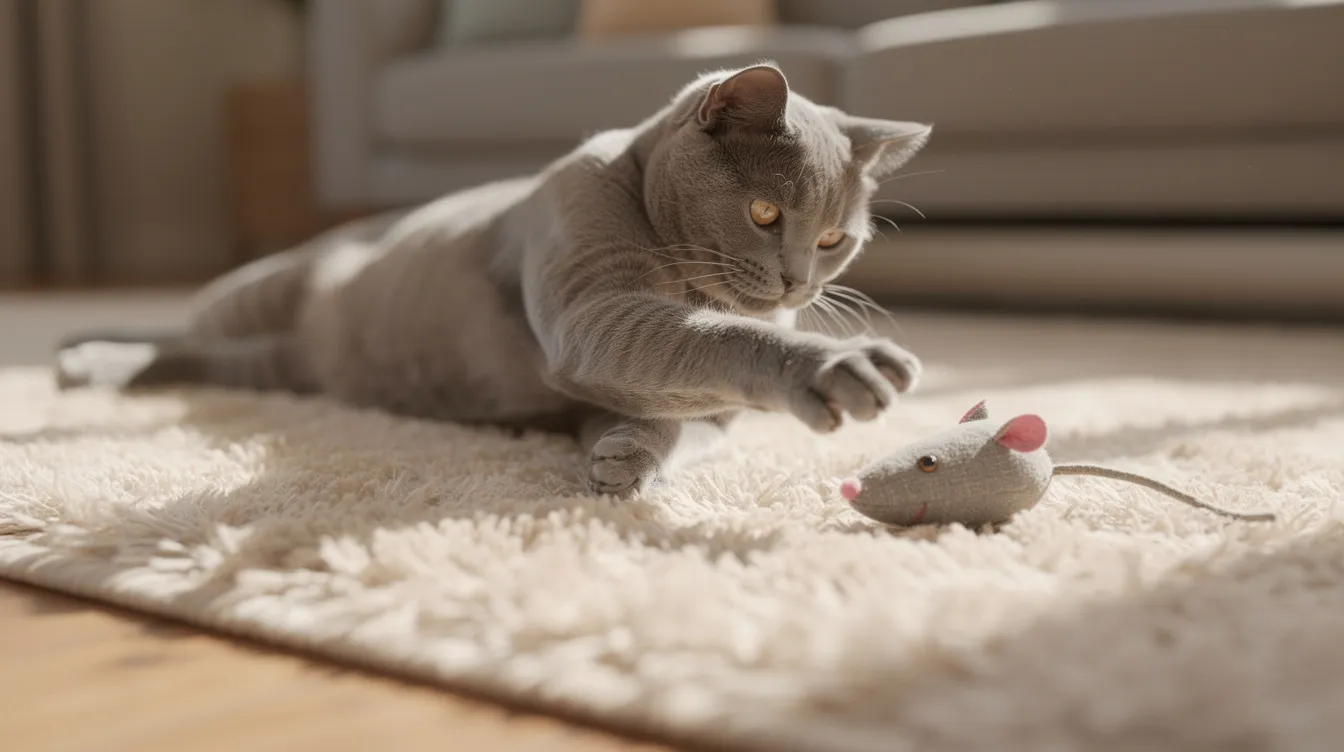
Soft plush mice, crinkle balls, and fabric fish only move when your cat bats or carries them. They're quiet, non-threatening, and never suddenly "come alive." A plush toy like a soft octopus can give a frightened cat something to claw, pounce on, and carry around the house without any noise or surprise. Varying toys helps prevent boredom in cats, so rotate these through different locations-under blankets, inside boxes, on the stairs-to keep interest alive. Variety in play prevents boredom in cats even when the toys themselves are simple.
2. Owner-Controlled Wand Toys and Teasers
Classic feather wands, ribbon toys, and string teasers give you complete control. You can instantly slow down, pause, or pull the toy away if your cat looks unsure. Use gentle play patterns that mimic a wounded bird on the ground rather than frantic flailing through the air. Playtime strengthens the bond between cats and owners, and wand play is one of the best ways to build that trust.
One note: some cats develop fear of wand teaser toys during play if the feathers whip too close to their face or the wand moves aggressively. Keep it slow. Da Bird and similar toys are great options, but only when the human adjusts to the cat's pace. Store wands out of reach when the play session ends to prevent chewing or tangling.
3. Stationary Enrichment: Slow Feeders, Lick Bowls, and Puzzle Toys
For cats who stay highly afraid of any motion-based toys, non-moving enrichment is a legitimate and effective alternative. Slow feeders and lick bowls let cats "hunt" with their paws and nose instead of chasing across the room. Cidero & Co.'s slow feeders and lick bowls are designed to engage natural foraging instincts without noise or sudden movement.
One caution: overcomplicated puzzle toys can frustrate cats and lead to stress. Puzzle toys can frustrate cats if too complicated, so start simple and build difficulty gradually. Rotate food-based enrichment with gentle play to keep things fun without overfeeding.
4. Are Electronic Toys Ever Okay for Timid Cats?
Yes-if you choose carefully. Calming toys can help alleviate anxiety in cats during play, and some electronic toys are specifically designed with gradual movement, softer materials, and lower motor noise. When comparing automatic toys, look for:
- Decibel level (if listed)
- Adjustable speed modes
- Automatic shutoff timers
- Localized movement vs. roaming across the room
Start with toys that stay in one spot so the cat chooses how close to get. No electronic toy is guaranteed to be anxiety-proof; suitability depends on your individual cat.
5. When a Small, Fluttering Toy Might Be a Better Fit
A small fluttering or spinning object anchored to a base sits between static enrichment and room-crossing robots. The movement stays localized, letting your cat watch from a distance and approach at their own pace. If your cat loves to watch bugs or dust motes but runs from anything that charges across the floor, this style is worth testing.
Cidero & Co.'s Fluttering Butterfly is one option to trial under supervision. It's designed for gentle, localized motion-but no toy is a cure for fear. If your cat is mainly spooked by big, fast toys but seems curious about smaller motion, it may be a reasonable starting point. If your cat is frightened by movement in general, start with stationary enrichment instead.
When to Talk to a Vet About Your Cat's Fear of Toys
Mild caution around a new toy is normal. Intense, escalating, or sudden fear is not. Seek veterinary advice if you notice:
- A previously confident cat developing new, unexplained fearfulness
- Hiding for hours after brief toy exposure
- Aggression when approached during or after a play session
- Fear spreading to everyday situations-people walking, doors closing, normal household life at night
Pain, sensory changes, or thyroid issues can lower a cat's threshold for stress and make even gentle stimuli overwhelming. Ask your vet whether referral to a certified feline behaviorist is appropriate if the fear extends well beyond toys.
Frequently Asked Questions About Cats Scared of Moving Toys
Why is my cat scared of electronic toys in particular?
Electronic toys combine several triggers at once: mechanical noise, vibration, and abrupt start-stop movement. Some cats generalize fear from other electronics-like robot vacuums-to any gadget that whirs or moves on its own. Try a quieter, simpler toy first to figure out whether sound, motion, or both are the main issue.
Should I force my cat to play with a toy they're afraid of?
No. Forcing contact can intensify fear and damage trust between you and your cat. Let them set the distance. If they consistently avoid the toy, retire it. There are plenty of different toys and enrichment options, so there's no need to worry about making one specific product work.
How can I introduce a moving toy to a very timid cat?
Start with the toy switched off so your cat can sniff and observe. Then introduce brief, distant movement and pair it with treats. Let the cat choose to approach and stop at the first sign of stress. Owner-controlled wand toys or small localized-movement toys are better starting points than roaming robots. Keep initial sessions under five minutes.
What kind of toys work best for cats that are afraid of movement?
There's no universal "best," but most toys that suit anxious cats share common traits: quiet materials, gentle or owner-controlled motion, and no sudden activation. Categories to try include soft plushes, kicker toys, wand toys, and stationary puzzle feeders. If your cat ignores toys entirely, the issue may go beyond fear of movement.
Can a gentler moving toy help my cat overcome their fear?
For some cats, gradual positive experiences with mild movement can build confidence over time. But the goal is tolerance and choice-not forcing them to "get over it." If your cat stays highly distressed despite careful introduction, step back to non-moving enrichment. Persistent or worsening fear warrants a vet consultation.
How to Choose the Right Toy for a Cat That's Scared of Movement
Now that you understand the triggers, here's how to turn that knowledge into an actual buying decision. Focus on three factors.
Choose Based on Your Cat's Sensitivity to Sound
Pay attention to how your cat reacts to daily noises-doorbells, TV, the food processor. If they startle easily, prioritize fabric, foam, or silicone toys and avoid hard plastic shells. When browsing online, look for filters like "silent," "no batteries needed," or "manual."
Choose Based on Movement Style and Speed
Fixed-base toys and hand-controlled wands suit most fearful cats. Roaming, high-speed robots are best reserved for confident players who already chase a ball across the room without hesitation. If your cat has run from a "charging" toy before, start with something that moves in small arcs or gentle bobbing motions.
Choose Based on How Much Supervision You Can Provide
Anxious cats rarely do well with toys left running while you're out of the house. If you work long hours, use self-guided enrichment like slow feeders during the day, then offer focused, supervised play with a wand or gentle interactive toy when you're home. Cidero & Co.'s collection includes both passive enrichment for unsupervised time and interactive toys ideal for short, supervised sessions.
Which Types of Toys Are Most Likely to Suit Your Cat?
Quick Recommendations
- Choose soft plush and kicker toys if your cat hides from anything that moves on its own but will pounce on blankets or chase your hand under the covers.
- Choose wand toys and teasers if your cat seems curious but nervous-you can fine-tune speed, distance, and direction on the fly.
- Choose slow feeders and lick bowls if your cat refuses chase play entirely but enjoys food-based puzzles and calm foraging.
- Choose compact fluttering or fixed-base interactive toys if your cat is mainly afraid of large roaming robots but will sit and watch a bird through the window with interest.
- Keep several styles in the house and swap based on your cat's mood and energy level each day. No single toy needs to do everything.
Final Thoughts
A cat scared of moving toys isn't broken or unplayable. It means they need enrichment that respects their comfort zone-the right speed, the right sound level, and the right amount of control. Understand the trigger, introduce any movement slowly and on your cat's terms, and choose toys that match where your cat is today, not where you hope they'll be tomorrow.
Browse Cidero & Co.'s collection of quiet, instinct-friendly toys and feeders designed for modern indoor cats. Your cat's wellbeing always comes before any toy-but with the right fit, play can become the best part of their day.


