

Peekaboo Cat Toy: Why Hide-and-Pounce Beats a Laser Pointer
The Problem With "Always-On" Cat Toys
It's a familiar scene. You're finishing up work at your desk, and your cat is sitting three feet from a spinning feather toy, completely uninterested. The motor hums. The feather whips around. Your kitty yawns.
Classic cat toys like a little mouse on a string or a rolling ball tend to lose their charm fast. Fully automatic toys that spin nonstop can feel like background noise after a couple of sessions. The issue isn't that your cat doesn't want to play. The toy may simply not match how your cat wants to hunt.
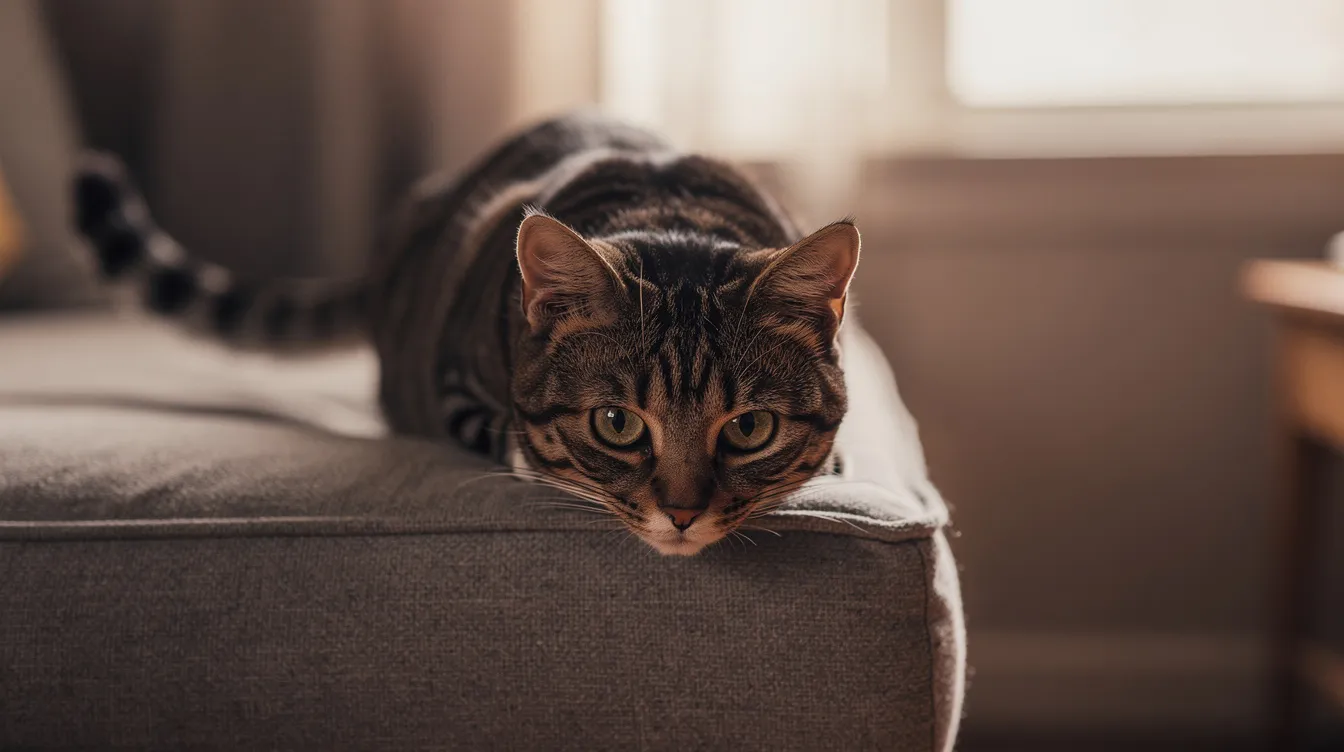
A peekaboo cat toy takes a different approach. Instead of constant motion, the target hides inside the toy, briefly appears through an opening, then vanishes again. The cat has to watch, wait, decide, and pounce. It's stalking and ambush play, not an endless chase across the floor.
This article explains what a peekaboo cat toy is, who it's best for, and how to choose between peekaboo play, laser toys, and other motion activated options.
What Is a Peekaboo Cat Toy?
A peekaboo cat toy is an interactive cat toy where a "prey" element hides inside a base, briefly appears through one or more openings, then disappears again to keep your cat guessing.
The physical format is usually a stable base-a box, dome, or disc-with multiple holes or slots. Inside, a target like a plush mouse, feather, or string pops in and out on a motorized track or manually by hand. These can be electronic interactive cat toys with programmed patterns or simpler manual versions where pet parents move the target themselves.
The key play elements are unpredictability, short bursts of motion, deliberate pauses, and the opportunity for cats to paw, bat, and catch something tangible. Peek-a-boo toys stimulate cats' natural hunting instincts by leaning into curiosity and anticipation rather than constant visibility. Compare this with rolling balls or open-track toys where the target is always in plain sight-peekaboo toys ask the cat to think before they strike.
How Peekaboo Play Mimics a Real Hunting Sequence
Cats evolved as ambush hunters. In the wild, they spend far more time watching and stalking than actually running down prey.
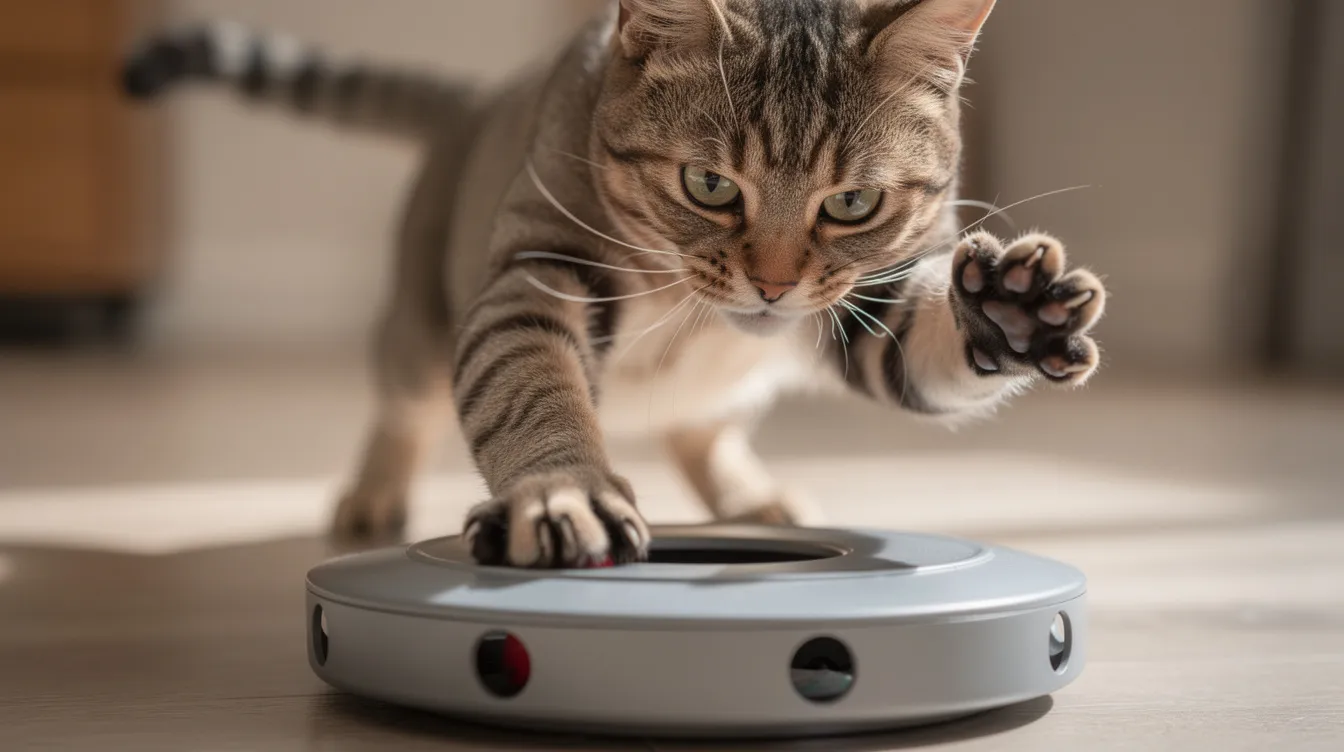
The hunting sequence breaks down like this: notice → stalk → wait → approach → pounce → catch. A peekaboo toy maps directly onto each stage. The target appearing from a hole triggers "notice." The cat crouches, watches, and stalks the opening. The pause between appearances builds the "wait." When the target flicks back out, the cat decides to approach and pounce. And unlike a laser pointer, the cat can physically bite, grab, and claw the target-giving a satisfying catch that closes the loop.
Toys that mimic prey this way stimulate natural hunting behaviors in cats, and feline enrichment guidelines specifically recommend hide-and-seek style toys as tools for expressing the full predatory play-hunting sequence. This hide-and-pounce pattern is especially helpful for indoor cats who don't get access to real-world stalking opportunities like birds in shrubs or insects under furniture.
Why Do Cats Like Toys That Hide and Reappear?
Most cats stay engaged longer with toys that don't reveal everything at once. Prey that vanishes is more interesting than prey that runs in predictable circles forever. Peek-a-boo toys provide mental stimulation for indoor cats by forcing them to decide where to sit, how long to wait, and when to strike-which can be more mentally tiring than pure sprinting. Pet parents can also explore the best toys for bored indoor cats to round out a balanced enrichment routine.
This sort of play can help reduce boredom-related behaviors like pestering at night, over-grooming, or random zoomies. Behavior-oriented toys help combat boredom and destructive behavior in indoor cats without requiring a lot of space or energy from pet parents.
Watch your cat's pupils, tail, and ear position during a session. You'll see how engaged they become the moment a target disappears and reappears. Peekaboo toys excel at three things: giving cats something to watch, a reason to wait, and a chance to pounce.
It Gives Cats Something to Watch
Picture this: the toy is still, then a feather flicks out of a single hole for one second. Your cat locks in visually, drops into a crouch, and holds perfectly still. A partially hidden target-just the tip of a tail or feather showing-can hold a cat's attention far longer than a fully exposed toy spinning in plain sight. Research in shelter cats found they spent over 55% of their time in compartments offering hiding opportunities versus only about 2% with a visible toy, confirming that concealment drives interest.
It Creates a Reason to Wait
Some cats enjoy the tension of not knowing which hole the target will appear from next. The pauses between movements are as important as the movements themselves because they reset the cat's focus instead of overwhelming them. This is very different from toys that whirl nonstop until a timer runs out, which can become background noise. Pet parents can sit beside the toy quietly during the first few sessions to reinforce that waiting is part of the game.
It Creates an Opportunity to Pounce
A good peekaboo cat toy lets your cat choose a launch position and time their pounce, rather than forcing them to chase something jetting across the floor, and a better hide-and-pounce design lets the target redirect after hitting the toy’s inner walls or edges so it doesn’t stall in one spot. This is ideal for cats who love hiding under tables, behind curtains, or in tunnels, then exploding out with a single jump. Manual hide-and-pounce toys like the Cloud Whack a Mole cat toy offer a quiet, battery-free way to encourage pouncing and batting at something half-hidden in a hole, promoting front-paw coordination and controlled bursts of muscle use.
The Catch Matters
For many cats, the moment of actually catching, biting, and "killing" the toy is what makes a hunt feel complete. Toys that allow cats to capture their prey fulfill natural hunting sequences-and that's where laser pointers can fall short. Lasers can be fun, but some cats may feel less satisfied when there's never a physical object to grip.
Peekaboo toys usually feature a soft target (mouse tail, feather, cord) sturdy enough for paws and teeth, giving the cat clear feedback that they succeeded. Ending a play session with a catch and a few treats can help close the loop of "hunt → eat → groom → rest."
Peekaboo Cat Toy vs. Laser Pointer: What's the Difference?
Laser pointers remain some of the most popular interactive cat toys, and many pet parents already own one. They're cheap, easy to use, and most cats react instantly. But the play they create is fundamentally different from what a peekaboo toy offers.
|
Feature |
Laser Pointer |
|
|---|---|---|
|
Target |
Physical toy (mouse, feather) |
Light dot |
|
Hiding/reappearing |
Yes |
Usually no |
|
Stalking emphasis |
Strong |
Possible |
|
Pouncing |
Yes |
Yes |
|
Physical catch |
Yes |
No |
|
Human involvement |
Low with automatic models |
Usually high |
|
Best for |
Ambush/stalking cats |
Fast visual chasers |
Neither is "bad." They create different kinds of play. However, a study of 618 cat guardians found that frequent laser play correlated with higher reports of abnormal repetitive behaviors like obsessively chasing shadows or staring at reflections-particularly in indoor-only cats. If you enjoy laser play, recommend ending each session with a physical toy or treat so the cat still gets a tangible catch. Peekaboo toys are often better for cats who already ambush toys from hiding spots, while lasers remain useful for active cats that crave pure speed.
Is a Peekaboo Cat Toy Better Than an Automatic Cat Toy?
A peekaboo cat toy can itself be an automatic cat toy. The real question is whether hide-and-reveal play is more engaging than toys that simply move around randomly.
Here are common types of electronic interactive cat toys on the market:
- Random-motion toys that spin attachments (like the SmartyKat Loco Motion, which can be programmed for two hours of play)
- Rolling balls that roam the floor (the Cheerble M1 toy has three interaction modes for varied play)
- Automatic cat string toys that whip cords across the ground
- Motion activated toys that respond when the cat approaches or touches them
- Hide-and-reveal toys like the PetSafe FroliCat Cheese Teaser, which features mice popping out randomly from holes
- Rechargeable models like the Catit Groovy Fish, which lasts for 250 movement cycles before recharging
Many automatic toys fail because they move too fast, never pause, or are too predictable-causing cats to tune them out quickly. The best automatic cat toy is the one that matches your cat's preferred play style, not the one with the most features or brightest lights.
What Makes an Automatic Cat Toy Keep Your Cat Entertained?
Six qualities separate engaging automatic toys from forgettable ones: unpredictability in movement direction, appropriate speed for the cat's reaction time, built-in pauses that let anticipation build, a visible but not overexposed target, a real opportunity to catch the prey, and enough pattern variation that the toy doesn't feel identical after 60 seconds. Motorized electronic toys provide unpredictable movements to maintain a cat's interest, but only when the motion pattern is thoughtfully designed.
Motion activated cat toys save battery life and create a direct cause-and-effect reaction-the cat approaches, the toy responds. Automatic shut-off timers in electronic toys prevent overheating and over-exhaustion, which matters for safety during unsupervised sessions. Responsive movement after hitting furniture or the base also helps prevent dead spots in play. If your cat ignores most rolling or spinning toys, a peekaboo play pattern may be worth trying before giving up on interactive electronics altogether. These practical details reduce owner worry during solo play sessions.
The Best Cats for Peekaboo-Style Play
Peekaboo toys are fantastic for certain personalities, but not a universal solution for every cat. If you recognize these behaviors, your cat is probably a great fit for hide-and-pounce play. Peak activity levels for cats may vary, and toys should accommodate different play styles.
Cats Who Like to Stalk
Look for these signs: slow tail twitching while observing a bird through a window, pupils dilated while peeking from behind a sofa, creeping forward in tiny steps, and pouncing only after a long, deliberate pause. These cats often ignore toys that roll past too quickly but become laser-focused when something moves partially out of sight or under a blanket. Try recording a short video of your cat during playtime to spot these stalking patterns before choosing a new cat toy.
Cats Who Prefer Ambushes to Long Chases
Ambush-loving cats are the ones who love hiding in tunnels, cardboard boxes, or under beds, then spring out when someone or something passes. These cats may tire or lose interest quickly with toys that require constant running, but they stay engaged with toys that let them hide, wait, and strike. Peekaboo cat toys pair particularly well with tunnels and hideouts, allowing the cat to position themselves in a "den" and attack the toy as it appears. Choosing the best cat tunnels for indoor cats that get bored fast can make this ambush setup even more engaging. Try placing the peekaboo toy near a tunnel or cardboard box so the cat can practice ambushes safely indoors.
Indoor Cats Who Need More Independent Play
Many pet parents work hybrid or full-time schedules and can't always be available for wand play during the day. Automated cat toys can provide mental stimulation for cats and keep them entertained when owners are busy. Interactive toys can keep a cat entertained even when you're not home, though this doesn't replace human interaction-it supplements it by giving the cat something mentally rich to do between shared play sessions. Multi-cat households benefit from toys that allow for simultaneous engagement, and multiple openings in toys allow for engagement of multiple cats or varied stalking angles. If you're managing more than one cat, peekaboo toys often let the reserved cat participate without competing for the same chase path. You can also use strategies to keep your cat entertained while you're away so independent play stays enriching even on busy days.
But Peekaboo Play Isn't Right for Every Cat
Not every cat enjoys waiting for prey to appear. Some simply want to run, chase, and cover distance. Runner cats dash after tossed balls, sprint down hallways, and chase string toys across the room without much pausing. These cats may bat at a peekaboo toy once or twice and walk away-not because the toy is bad, but because it doesn't match their preferred play pattern.
Automated toys help maintain healthy weight in indoor cats whether they prefer stalking or sprinting, but the toy style has to match the energy. In many multi-cat homes, one cat may love the peekaboo toy while another claims the faster automatic cat string toy, and that's completely normal and healthy.
If Your Cat Loves to Run, Choose Movement-Heavy Play
Signs your cat is a runner: they immediately sprint after feather wands, chase toys thrown across the room, follow laser dots for several minutes nonstop, jump onto counters mid-chase, and seem frustrated when the play area is too confined.
For these cats, the Cidero & Co. Hunting Spinner guide to spinner toys explains how this toy is designed around chase and looping movement rather than hide-and-seek. A simple pairing strategy works well: peekaboo toy for calm stalking sessions, Hunting Spinner or rolling motion activated toy for cardio-style chase play. Variety in toys prevents boredom and encourages active play across different energy levels.
How Pet Parents Can Introduce a Peekaboo Cat Toy
Getting the introduction right matters more than most pet parents realize. These toys can keep cats engaged for 10 to 15 minutes per session, but only if the first impression goes well.
- Start with the toy turned off. Unbox it in a quiet room and let your cat sniff, push, and investigate it as a familiar object before anything moves.
- Use the slowest mode first. Run the toy on its gentlest setting for just a few minutes while your cat watches. Avoid loud sound or frantic motion at the start.
- Lure with treats or catnip. Place a bit of catnip or a favorite treat near the holes so your cat's paws discover that movement happens when they interact.
- Keep early sessions short. End playtime after 5–10 minutes while interest is still high, rather than waiting for your cat to walk away bored.
- Check for safety. Supervise the first couple of sessions, inspect for loose parts or frayed strings, and store the toy away if anything shows damage.
Rotating toys periodically can keep them feeling novel and maintain engagement. Put the peekaboo toy away for a day or two between sessions so each appearance feels like a fresh discovery.
Why Does My Cat Ignore Interactive Toys?
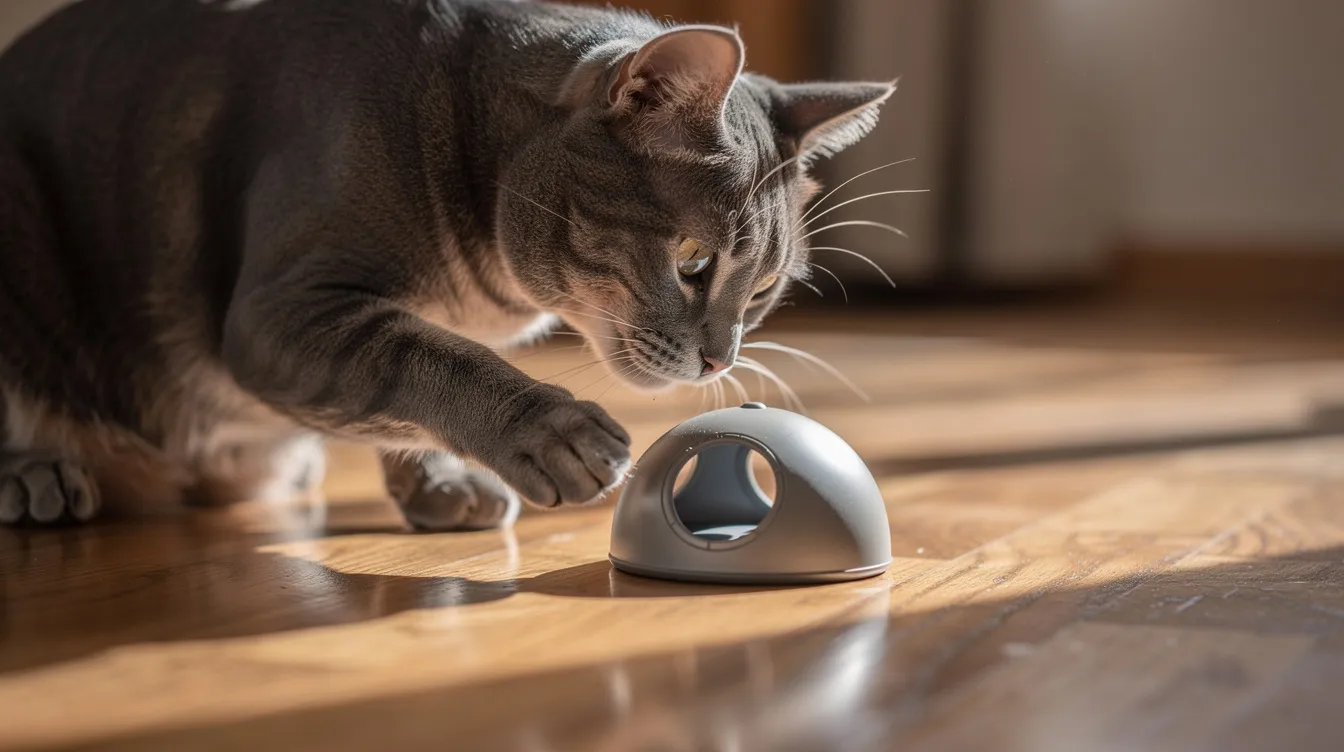
Many pet parents purchase a new cat toy, watch their cat sniff it once, and assume the toy is a failure. That reaction is more common than you'd think.
Several reasons a cat might ignore a motion activated toy: the movement is too fast or too slow, the pattern is too predictable, the sound is scary, or the toy simply doesn't match the cat's preferred hunt style. Timing matters too-offering a new toy when a cat is sleepy, full from a meal, or stressed by visitors often leads to disinterest.
Simple tricks to try: switch to dusk or early morning hours when cats are naturally active, move the toy to a different room, or pair it with treats to build a positive association. If you've tried all of this and your cat still doesn't engage, read our deeper guide on why your cat might ignore toys for more specific troubleshooting tips.
Is a Peekaboo Cat Toy Worth It?
A peekaboo cat toy is likely worth the investment if your cat loves stalking, ambushing from hiding spots, watching toys from a distance, and quickly getting bored with endlessly spinning feathers. Automated toys provide mental stimulation for indoor cats and can help maintain a healthy weight for cats who need activity without requiring marathon sprints.
Premium peekaboo toys from brands like Cidero & Co. use thicker plastics, reinforced fabrics, and pet-safe electronics, making them more durable and reliable than ultra-budget options. Durable construction is important to withstand enthusiastic play and prevent damage over time. Consider the cost-per-month of engagement: a higher price can still be the better value when it reflects durable build quality and longer-term use, rather than impulse-buy cheapness that gets tossed aside after a few weeks.
No single toy can do everything. A peekaboo toy should sit alongside a small rotation of cat toys that includes chase items, kicker toys, scratchers, and comfort items for a well-rounded life. Our full range of cat toys and accessories can help you build that mix around your cat's favorite play styles.
Meet the Cidero & Co. Peekaboo Cat Toy
The automatic peekaboo cat toy from Cidero & Co. is built around everything this article covers-priced at $64.99 and designed specifically for indoor cats who thrive on stalking and ambush play.

The physical design features a low-profile base with multiple openings placed at different angles, and a soft prey element (mouse tail and feather combo) that appears and disappears through the slots. The finish uses a muted color palette that blends with modern home decor instead of screaming "pet toy" from across the room.
Key features include pre-programmed hide-and-reveal patterns, varied timing and hole selection, a low-noise motor, and safe rounded edges around every opening. Sustainable and pet-safe materials are used throughout, with a secure battery compartment and components designed to withstand repeated batting and clawing from even the most enthusiastic kitty.
Built Around the Hide-and-Pounce Pattern
The toy's programming deliberately follows appear → disappear → wait → reappear → pounce rather than constant spinning. It randomizes which hole the target appears from and how long it stays visible, keeping your cat guessing across repeated sessions. The speed and motion range have been tested with real indoor cats to find the sweet spot between enticing and overwhelming. Every feature-timed pauses, random hole selection, soft prey tip-connects directly to a moment in the hunting sequence that makes this toy feel like a real hunt rather than a gimmick.
Designed for Independent Interactive Play
Timer options and auto-shutoff make the toy a reliable choice for pet parents who want to give their cats safe, independent play windows during work hours. The motion pattern and low noise level are chosen so the toy can run in a living room or home office without being disruptive. While the toy works well automatically, we still recommend supervised early sessions and occasional joint playtime to strengthen the cat-owner bond. Energy-efficient battery use means you won't be swapping batteries constantly even with regular use.
A Different Kind of Interactive Cat Toy
This isn't another electronic toy that relies on flashing LEDs and rapid spinning without much behavioral thought. It's built around giving cats something to stalk and catch, not just something to chase in circles. For pet parents who care about aesthetics as well as function, it's a design-forward option that doesn't look cluttered on your floor. Interactive toys encourage hunting behaviors and provide enrichment for cats in a way that feels natural and satisfying.
Explore the Peekaboo Cat Toy →

Peekaboo Cat Toy FAQs
What Is a Peekaboo Cat Toy?
A peekaboo cat toy is an interactive toy with a base featuring multiple openings and an internal prey element-like a mouse or feather-that hides, briefly appears, and disappears again. It can be manual or automatic, but the key is the hide-and-reveal mechanism that encourages stalking and pouncing rather than constant chasing.
Are Peekaboo Cat Toys Good for Indoor Cats?
Yes. Peekaboo toys can be especially enriching for indoor cats because they simulate stalking and ambush opportunities that indoor environments often lack. They encourage both mental focus and short bursts of physical activity, but they don't replace other enrichment like climbing, scratching, and human play. Indoor cats benefit from a mix of peekaboo, chase, and food-based enrichment like slow feeders for a well-rounded routine.
Do Cats Get Bored With Automatic Toys?
Honestly, yes-many cats will get bored if the toy moves the same way every time or stays out around the clock. Rotating toys periodically, varying session length and location, and using the toy during natural active hours all help keep electronic cat toys feeling novel. Store it between sessions so rediscovery feels exciting.
Are Motion Activated Cat Toys Worth It?
Motion sensor cat toys can be convenient because they only activate when a cat approaches, saving power and creating a cause-and-effect experience. But sensors alone don't guarantee engagement. The underlying play pattern still matters most. Find a play style your cat enjoys first, then consider whether motion activation is a helpful extra feature.
Are Electronic Interactive Cat Toys Safe?
Choose reputable brands and check for secure battery covers, no exposed wires, and sturdy construction. Toys should be made from non-toxic and chew-resistant materials to ensure safety. For fabric toys, it also helps to understand what's really inside your cat's kicker toy so you can avoid unsafe fillings or fragile seams. For kittens or heavy chewers, supervise every session and stop using the toy immediately if parts become loose or frayed. Cidero & Co. designs toys with rounded openings, durable materials, and clear usage instructions to support safe, long-term use. A vet can also advise on age-appropriate toys if you're unsure.
Is a Peekaboo Toy Better Than a Laser Pointer?
Neither is universally better-they're different tools. Peekaboo cat toys have the advantage of providing a physical target the cat can pounce on and catch, which many cats find deeply satisfying. Use both if it suits your cat: lasers for quick, energetic chase bursts, and peekaboo toys for quieter stalking sessions that ask the cat to think and time their pounce. You can check reviews from other pet parents on Amazon or our site to see how different cats respond to each style.
Conclusion: Give Your Cat Something to Stalk, Not Just Something to Chase
Truly enriching cat play isn't just about making a motor spin faster. It's about offering a full hunting sequence-from watching and stalking to the perfect pounce and a satisfying catch. That's the order of engagement that keeps a cat mentally stimulated, physically active, and genuinely interested session after session.
Peekaboo cat toys shine for ambush-loving, observant cats who prefer to hold their position, read the situation, and strike at the right moment. Chase-heavy toys like the Hunting Spinner serve the runners who need to burn energy across distance. Spend a few days watching how your cat naturally plays-do they stalk or sprint?-and let that answer guide your next purchase.
Find the interactive toy that matches how your cat actually plays →


