

Tired of 3 AM Toy Noise? Here’s How Quiet Cat Toys Keep Light Sleepers at Peace
Why Your Cat's Toys Are Waking You Up (Quick Answer)
It's 3:07 a.m. A single plastic ball rockets across a hardwood floor, bounces off the baseboard, and rolls under the dresser. You're wide awake.
Your cat doesn't need to be loud to ruin your sleep. One rigid toy on the wrong surface is enough. The best quiet cat toys avoid three things: rattles and bells that amplify every bat and pounce, hard plastic parts that roll and clatter across floors, and electronic toy motors that hum or click in a silent house. Brands like Cidero & Co. focus on soft, low-noise enrichment-plush toys, fabric-based designs, and visual stimulation that keep a cat entertained without waking the house.
This article will explain exactly why toys sound louder at night, what materials and designs actually make a toy quiet, and how to reduce those 3 a.m. zoomies before they start.
Why Won't My Cat Sleep at Night?
Many people assume cats are primarily nocturnal creatures, but that's not quite accurate. Domestic cats are crepuscular, meaning their natural energy peaks around dawn and dusk. Research tracking indoor cats shows two clear activity spikes-one in early morning and one around evening-with dips in the middle of the day and night.
The problem is what happens during the quiet hours in between. If you work from roughly 9 to 5, your cat may spend most of the day with little stimulation. Even with access to a cat tree, a litter box, and a few scattered toys, indoor cats don't get to fulfill their hunting instincts the way outdoor cats do. That stored-up energy has to go somewhere, and it often explodes after dark-right when everything else in the house is silent.
Some nighttime movement is completely normal. Cats sleep 12 to 16 hours a day, but they do it in short bursts rather than one long stretch. The goal isn't to stop all motion overnight. It's to make whatever play does happen quieter and more manageable so you can sleep peacefully.
What Makes a Cat Toy So Loud at Night?
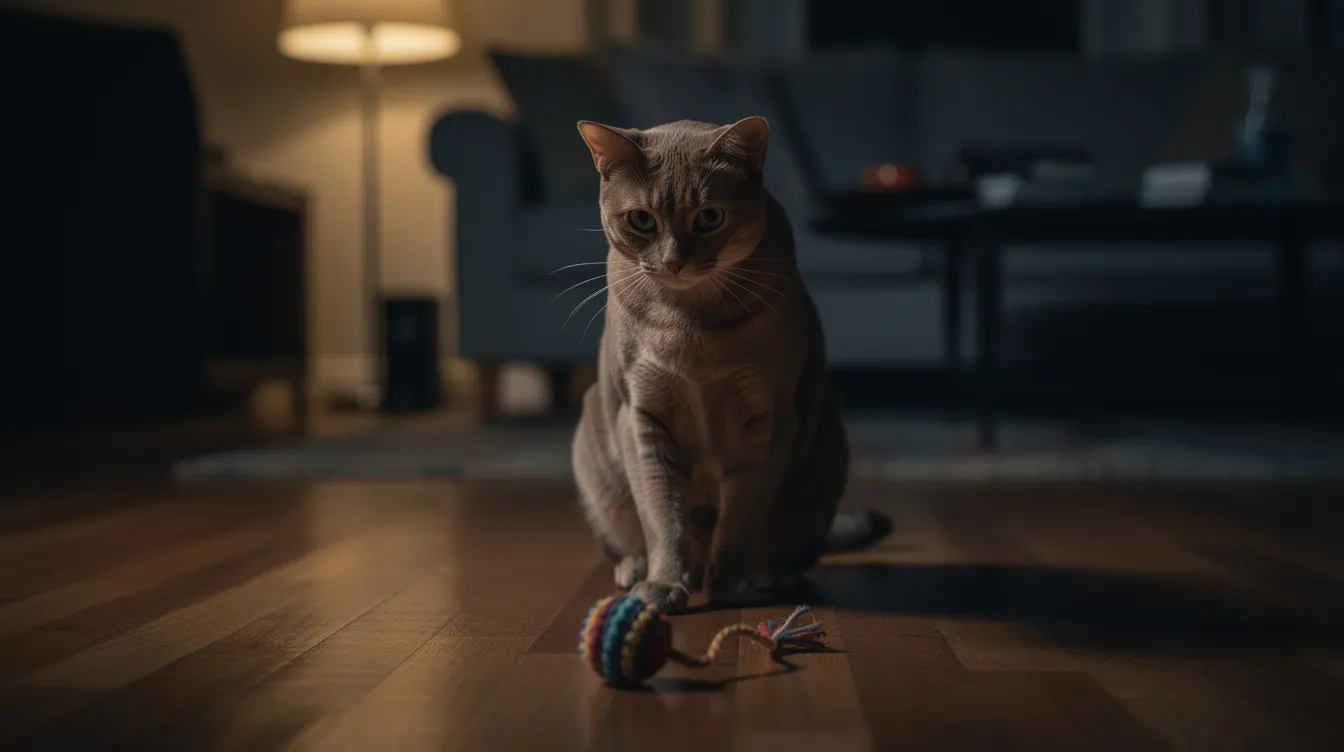
A toy that seems harmless at 2 p.m. can sound like a drum kit in a silent apartment at 2 a.m. The noise comes from two places: the toy itself and how it interacts with your floors, walls, and furniture as a cat bats it around. You should always avoid noisy materials when choosing cat toys to minimize disturbances, but the surface underneath matters just as much.
Here are the three main sources.
Rattles, Bells, and Crinkle Fillings
Bells, beads, and loose internal pieces inside many ball toys and bird toy designs amplify every swipe and pounce. A Frisco bird toy with a tiny jingle bell sounds cute during a daytime play session. In a quiet bedroom at night, it's piercing.
Crinkle material-the foil or paper filling often used in wings or the body of toy mice-creates sharp, high-frequency rustling that cuts through silence. If you see a toy labeled with "jingle," "crinkle," or "rattle," it's fine for supervised playtime during the day. The issue is leaving it available overnight in sleeping areas.
Hard Plastic on Hard Floors
A toy doesn't have to make noise on its own. Plastic plus hardwood plus a determined cat equals midnight percussion.
Standard jingle balls, circuit track systems, and motorized mice that skid across tile all create the classic sequence: CLUNK when hitting a wall, ROLL as friction drags it across the floor, BANG when bouncing off a metal table leg. Even foam balls are quieter by comparison. If a favorite toy must stay out, confine it to a carpeted room or place it on a large area rug at night. Enclosed track toys keep ball action contained and quiet, which makes them a better alternative to loose balls on hard surfaces.
Motors and Mechanical Sounds
Many toys marketed as the "best electronic toy" or "interactive cat toy" can hum, click, or whir in a way that's tolerable during the day but unmistakable at night. Repetitive motion from a rotating wand or concealed motion toy can become more irritating than a few isolated pounces.
Before deciding to leave any electronic toy running overnight, listen to it in a quiet room. Use timers or auto-shutoff features when available. These toys are generally best for supervised evening play sessions rather than background activity while people sleep.
What Actually Makes a Cat Toy Quiet?
A quiet cat toy is one that allows your cat to bat, stalk, and pounce without producing sharp rattles, clacks, or motor noise. Quiet motion toys can have low noise levels and still engage cats effectively.
The key is material. Soft, absorbent fabrics like plush, fleece, felt, and cotton dampen sound vibrations rather than amplifying them. Studies of felt and non-woven textiles show that thick wool felt (15–25 mm) can absorb roughly 40% of incident sound energy in mid-to-high frequencies-exactly where toy noise lives. Cats enjoy toys designed with soft-rolling materials and silent motion profiles, and these same materials happen to be excellent at keeping things quiet.
Soft, silent motion balls made from wool or felt quietly roll on floors instead of clattering. Designs that stay relatively contained-kicker toys, plush mice, small fabric catnip toys-reduce the chance of a toy ricocheting across the room and into furniture.
Quiet doesn't mean boring. Cats can still be stimulated by texture, scent (catnip, silvervine), visual interest, and opportunities for stalking. Mental stimulation doesn't require volume.
Are 3AM Zoomies Really a Nighttime Problem?
Sometimes the problem isn't that your cat is too active at night. It's that they didn't get enough satisfying activity before bedtime.
Because cats are crepuscular, indoor cats often shift their activity peaks to match when their people are home-early evening and early morning. A long, quiet, understimulating evening can leave most cats ready to play hard right when you're ready to sleep. This is especially common in homes where extended play sessions don't happen before bed, or where the cat's daily enrichment is limited to a few toys scattered near a cat perch.
If sudden or intense nighttime activity appears in older cats (roughly age 10 and up), or if it's accompanied by excessive meowing, disorientation, or behavioral changes, a vet visit is wise. Cat behavior shifts in senior cats can sometimes indicate hyperthyroidism, cognitive changes, or pain. For most cats, though, the fix is simpler: better evening routine.
If you're looking for more ideas on how to keep your indoor cat entertained while you're at work, daytime enrichment can also reduce nighttime restlessness significantly.
Try an Evening "Hunt → Catch → Settle" Routine
Structure makes a difference. Here's a simple sequence:
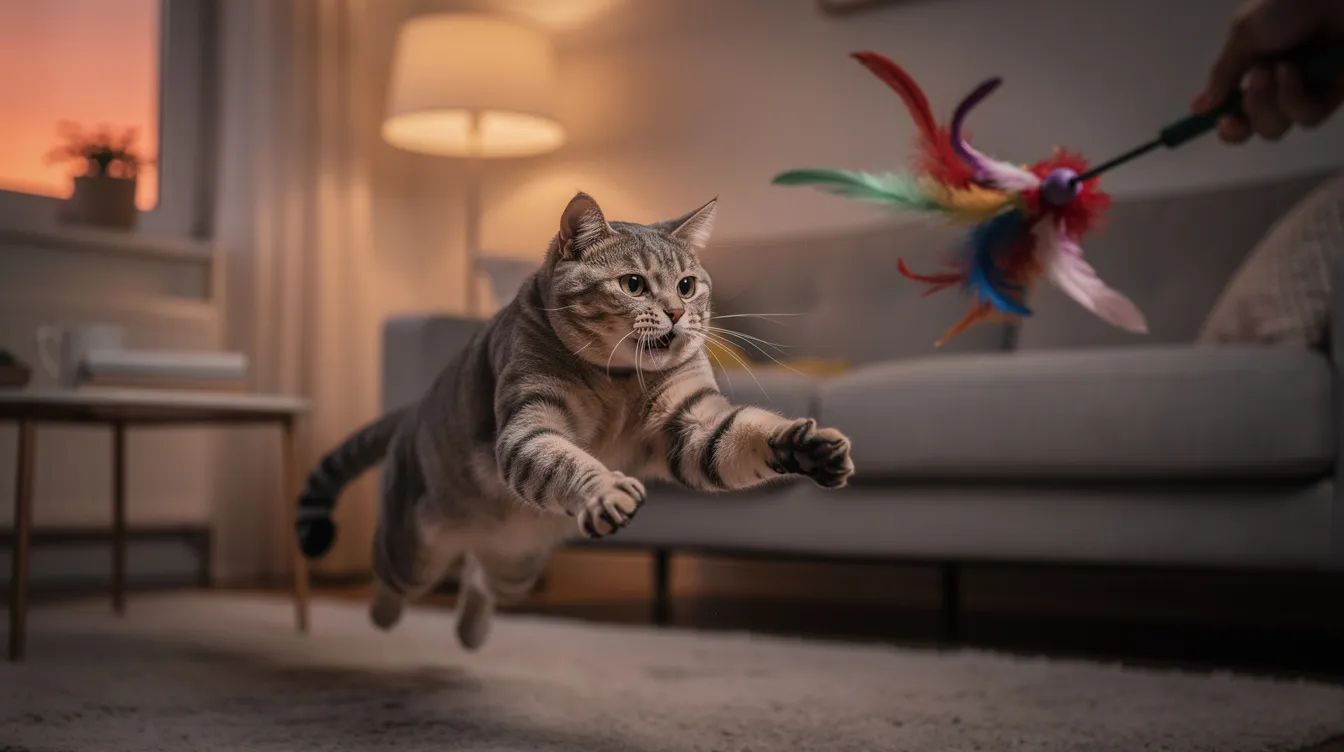
- Hunt - 10–15 minutes of interactive chase play. Use a wand toy, a laser pointer (with a physical "catch" at the end), or a remote-controlled chase toy that mimics prey movements. Motion-activated toys that mimic prey movements for hunting instincts work well here too.
- Catch - Let the cat actually grab and "win" the toy. This completes their predatory sequence. Without the catch, frustration builds.
- Eat - Follow with their regular meal or treats. Puzzle feeders and treat toys can enhance mental engagement without noise during this phase.
- Settle - Switch to softer, quieter enrichment: plush catnip toys, visual toys, or calm petting.
- Lights out - Dim the room and reduce stimuli. Leave only quiet toys accessible.
This routine takes 20–30 minutes and mimics the natural hunt-feed-rest cycle that satisfies a cat's instincts.
The Best Types of Quiet Cat Toys for Light Sleepers
This isn't a massive "best cat toys" roundup. It's a focused guide to four categories of nighttime cat toys that actually work in apartments, shared spaces, and bedrooms where light sleepers are trying to get through the night. Interactive toys can keep cats entertained at night without creating a racket, as long as you choose the right toys.
Cidero & Co. designs products in these categories specifically to be soft, low-noise, and visually engaging. Experiment with a mix so your kitty always has at least one favorite toy that doesn't wake the house.
Soft Plush Toys for Quiet Pouncing and Kicking
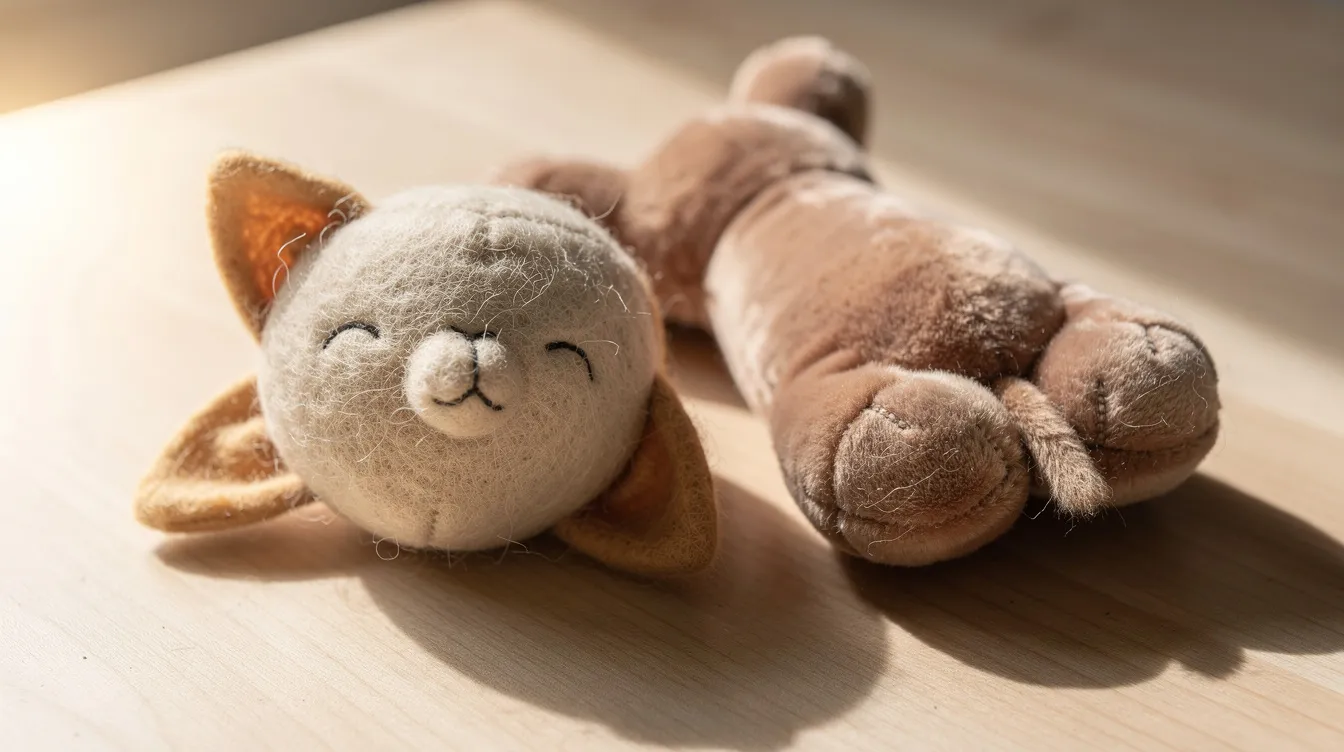
Soft plush cat toys and kicker toys are naturally quieter because fabric absorbs impact instead of amplifying it. A cat playing with a plush kicker on a hardwood floor makes a fraction of the noise that a plastic ball would.
Look for toys with no bells, no rigid cores, soft filling, and textures that invite grabbing, bunny-kicking, and wrestling. Unstuffed fleece kicker toys allow silent wrestling for cats who prefer a flatter, more grippable shape. Soft plush mice with no bells are ideal for quiet batting play during independent play.
Cidero & Co.'s Rabbit Fur Octopus–style plush combines natural-feeling fur with a floppy, sound-dampening body-perfect for solo play in the bedroom.
Soft Novelty Toys That Don't Clatter
Novelty toys come in fun shapes-like a jumbo cotton swab toy or an oversized household-object parody-but are still lightweight and fabric-based. Soft plush toys with quiet crinkle minimize noise during play, keeping the fun without the sharp racket of full crinkle material.
These are great for cats who like to carry their favorite toy around, toss it in the air, or drop it on the bed without producing a loud crash. Cidero & Co.–style jumbo cotton swab toys rely on texture and size for enrichment rather than noisy components. They're also easy to spot on the floor at night, which reduces tripping hazards for sleepy humans navigating in the dark.
Visual Toys: Something to Watch, Not Chase Across the Floor
Visual stimulation can keep a cat entertained while the toy itself stays in one place. LED light-up balls engage cats during nighttime play, and a calming cat projector night light takes this concept further by casting gentle, slow-moving shapes on walls or floors for a cat to watch and track.
Cidero & Co.'s projector-style night light is a compact lamp designed for exactly this purpose. It provides something to stalk visually without any rolling, clattering, or crashing into furniture-making it ideal for light sleepers in smaller spaces.
Keep brightness and motion gentle. The goal is enrichment, not turning the room into a nightclub.
Ambient Visual Enrichment: Aquarium Lamp and Similar Toys
An aquarium lamp–style product projects the illusion of slow-swimming fish or drifting shapes inside a contained, low-noise lamp. It's a step beyond a static night light-it gives indoor cats something genuinely interesting to watch while the room stays quiet and offers many of the same benefits highlighted when comparing fake fish tanks vs. Cat TV for keeping cats entertained.
These are enrichment tools, not sleeping aids. They won't knock your cat out, but they can redirect attention from crashing toys along baseboards to calm, passive observation. The Interactive Aquarium Cat Toy Lamp from Cidero & Co. features an enclosed design with no small pieces and soft light that fits naturally into a calming evening routine. If you're curious about how these compare to other options, read about which types of interactive fish tanks hold a cat's attention longest.
Position these lamps in common nighttime hangout spots-near a cat bed or window perch-so your cat has something to observe instead of batting ball toys across the kitchen.
What About a Cat Night Light?
Many people search for a "cat night light" thinking their feline friends need help seeing in the dark. In reality, healthy cats already see well in low-light environments. A dedicated night light is more about enrichment and human convenience than feline vision.
If you do use a night light, choose soft, warm, or dimmable light levels. Avoid bright colors or flashing LED modes that could disrupt both your sleep and your cat's natural rest patterns. Cat tunnels with glowing interiors stimulate exploration at night and can serve as an alternative to overhead lighting-they keep the visual enrichment contained to the tunnel space.
Cidero & Co.'s projector-style night light works as a dual-purpose tool: low-level illumination for humans navigating the hallway, and gentle visual enrichment for a cat who wants something to watch. It's a better solution than leaving bright overhead lights on or relying on a standard plug-in that provides no enrichment value.
How to Make Cat Play Quieter at Night (Even With Existing Toys)
You don't need to replace every toy you own. Here's a practical checklist:
- Move noisy toys out of the bedroom. Anything with bells, hard rattling balls, or loud electronic toy components gets stored in a drawer before bed.
- Rotate in soft toys for overnight access. Keep two or three plush toys, soft catnip-filled toys, or fabric mice available. Catnip-filled toys keep cats entertained without loud noises and encourage active play during nighttime hours without the volume.
- Swap hard balls for soft alternatives. Soft foam balls allow silent play without disturbing sleep. They provide quiet play and won't dent baseboards.
- Set up a night play zone. Place a large rug or carpet runner in the area where your cat likes to play. When a cat bats a toy on fabric instead of tile, the noise difference is dramatic.
- Don't leave every toy available. A smaller overnight selection is easier to manage. Most cats don't need 15 options-they need two or three right toys that satisfy their play style.
Should You Leave Cat Toys Out Overnight?
It depends on the toy and your cat.
Better overnight choices:
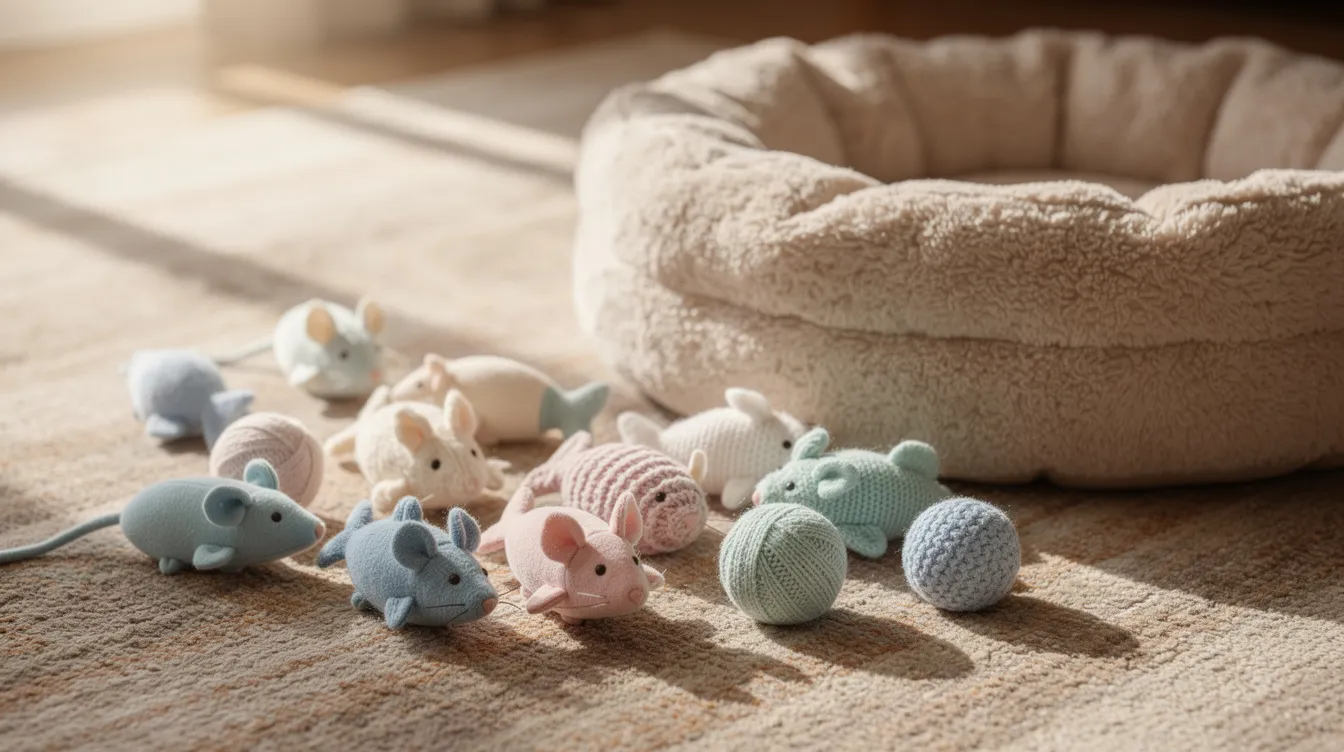
- Soft plush toys and kicker toys
- Quiet catnip toy options (fabric, no bells)
- Yarn pom-poms, which offer a noise-free play experience
- Stationary visual enrichment like projector lamps or aquarium lamps
- Interactive puzzle toys that provide challenges without loud noises
Less sleep-friendly options:
- Jingling ball toys or anything with internal bells
- Rolling electronic toys with motors
- Hard plastic track systems (unless enclosed and on carpet)
- Toys that easily roll under furniture (you'll hear the retrieval attempts)
- Motorized toys with noticeable hum
Safety note: Any toy with strings, loose feathers, or small detachable parts should be put away rather than left unsupervised overnight. Chew toys with brittle components are also better reserved for supervised play sessions. If you have two cats or multiple cats, monitor which toys survive rough play before leaving them out unsupervised. For multi-cat considerations, this guide on cat toys that actually work for two or more is helpful.
Choosing the Best Quiet Cat Toys for Your Home
The best toys at night depend on what's actually waking you up.
If your main problem is toys crashing across the floor, start with soft plush toys and kicker toys. They absorb impact, don't roll far, and won't ricochet off walls. If your cat likes something to watch rather than chase, a projector-style night light gives them visual tracking without anything bouncing around the room. If your cat is a visual hunter who lost interest in static toys, an aquarium lamp provides slow, continuous motion that holds attention. If your cat likes carrying and batting, a rabbit-fur-style plush or jumbo cotton swab toy gives them something to grab without noise. And if a cat likes to kick and wrestle, a dedicated plush kicker toy delivers that satisfaction silently; understanding why cats like kicker toys can help you choose the right style.
Cidero & Co. focuses on quiet, design-forward enrichment that fits small homes and shared walls. Start with one or two changes rather than overhauling everything at once. See what your cat likes and adjust from there.
A Better Bedtime Routine for Indoor Cats
Routine matters as much as the specific toy. A structured evening can reduce midnight chaos more effectively than any single product.
Here's a 5-step flow that takes about 20–30 minutes after dinner:
- Play - Give your cat an active hunting session. A wand toy or chase toy gets the heart rate up and lets them use their body the way it was designed. This is where your kitten or adult cat burns real energy.
- Catch - Let them actually win. Grab, bite, kick-complete the predatory sequence so they feel satisfied rather than frustrated.
- Eat - Follow with their normal meal or a small snack. This mirrors the natural hunt-feed cycle. Puzzle feeders work well here for extra mental engagement.
- Settle - Switch to quiet enrichment. This is the phase where Cidero & Co. products shine: soft plushes, quiet catnip toys, and visual lamps all support the wind-down without revving energy back up.
- Sleep - Dim the lights. Leave only soft, quiet toys accessible in the house. Turn off or timer-control any electronic enrichment.
This sequence is realistic even for busy owners and makes a measurable difference in how much noise your cat generates after midnight.
Quiet Cat Toy Ideas by Play Style
Different cats have different play preferences. Chasers, kickers, chewers, and watchers each need a quiet option.
For chasers: Skip the plastic jingle balls. Instead, try options from a best cat kicker toys guide along with soft foam balls, wool felt mice, or silent rolling ball toys that roll quietly across the floor. Felted wool balls provide a silent play experience for indoor cats and satisfy the chase drive without the clatter. A laser pointer can also work for a supervised pre-bed chase session.
For kickers: Long plush kicker toys filled with catnip or silvervine are ideal, as long as they don't contain internal rattles or crinkle material. Unstuffed fleece kickers and catnip-filled toys stimulate play behavior without noise.
For watchers and lower-energy cats: Visual lamps, aquarium-style toys, and slow-moving light patterns work without requiring constant human interaction. These are especially good for senior cats or pets who prefer to observe rather than pounce. Cat tunnels with glowing interiors can also stimulate exploration at night for indoor cats who get bored fast.
For chewers: A fabric dental toy or a best catnip toy made from durable cotton or felt satisfies the urge without hard plastic cracking noises. Wool felt mice make no sound when batted around, and they hold up well during a testing period of heavy play.
Materials, Safety, and Durability in Quiet Cat Toys
Quiet toys still need to be safe and durable, especially when left out overnight without supervision.
Toys should be made from non-toxic materials-this is non-negotiable. Soft plush toys are often made from safe synthetic fabrics, and natural wool is a safe material for cat toys that doubles as a sound absorber. If you're curious about what's really inside your cat's kicker toy, pay attention to fillings like fiberfill, catnip, and recycled plastics along with the outer fabric. Catnip-filled toys can stimulate play without harmful materials as long as the catnip itself is organic and the outer fabric is securely sewn. Plastic toys should be BPA-free for safety whenever plastic components are present.
Look for securely stitched seams and clean finishes. Loose strings, brittle plastic parts, or tiny attachments can be chewed off during solo play and become choking hazards. Toy safety standards like ASTM F963 cover requirements for sound-producing components, small parts, and seam strength-principles that apply to pet products as well.
Materials like fleece, felt, and plush are gentle on teeth and gums while also reducing noise. Cidero & Co. designs focus on durable stitching and food safe materials so that repeated pouncing, bunny-kicking, and wrestling don't result in small parts breaking free. Wash toys periodically in warm water to keep them clean and check for wear.
FAQs About Quiet Cat Toys and Nighttime Play
What is the best cat toy for light sleepers? Generally, a toy that provides enrichment without rattles, bells, hard parts rolling on floors, or noticeable motor noise. Soft plush toys and visual enrichment lamps are the most consistently quiet options.
What are the quietest cat toys? Soft plush and fabric toys-felt mice, fleece kickers, yarn pom-poms, and catnip-filled plush mice-tend to create the least noise.
Selection: Felted wool balls provide a silent play experience for indoor cats and are among the quietest ball toys available.
How can I stop my cat from making noise at night? Move noisy toys out of the bedroom and provide more satisfying interactive play and enrichment earlier in the evening. A structured hunt-catch-settle routine before bed can significantly reduce 3 a.m. activity.
Why does my cat get the zoomies at 3 a.m.? Cats are naturally active at certain times throughout the day, and some indoor cats become particularly active at night when they haven't had enough stimulation or playtime earlier. It's usually a sign of stored energy rather than bad behavior.
Should I leave toys out for my cat overnight? Quiet, intact toys like soft plush or fabric mice are generally fine. Noisy toys or toys with detachable parts are better put away before bed.
Do cats need a night light? Cats generally navigate low-light environments well, so a night light isn't necessary for visibility. If used as enrichment, keep the lighting gentle. A projector-style lamp can serve as both a subtle night light and a quiet source of visual play.
Are motorized cat toys noisy? Some are. Motor noise, clicking mechanisms, and repeated movement can be noticeable in a quiet bedroom. Always test the actual sound level in a quiet room before using one overnight, and look for models with auto-shutoff timers.
What toys work for a cat who likes nighttime play but has best friends sleeping nearby? Catnip-filled toys encourage quiet solo engagement. Visual enrichment like aquarium lamps or a Flashing Firefly Mat provides quiet entertainment without the noise of physical toys moving across floors. Soft foam balls provide quiet play without disturbing sleep for anyone in the room.
Make Nighttime Play a Little Quieter
You don't have to choose between a cat entertained and a full night's sleep. Combine a better evening routine with quieter toy choices, and both you and your cat can get through the night without the 3 a.m. percussion concert.
Give your cat something to watch without something crashing across the floor. Cidero & Co.'s projector-style night light provides gentle visual enrichment that satisfies your cat's tracking instincts in silence. For cats who prefer ambient motion, the Interactive Aquarium Cat Toy Lamp offers slow-moving visuals in an enclosed, quiet design.
Explore the full collection of soft, quiet enrichment toys for indoor cats at Cidero & Co.-and reclaim your sleep.


