

6 Best Remote Control Cat Toys of 2026 (And How to Pick the Right One for Your Cat)
Remote control cat toys let you steer, trigger, or guide a toy from across the room while your cat chases, stalks, and pounces. This article compares the main types of remote control cat toys available in 2026, explains what to check before buying, and helps you match a toy to your cat's play style and your home setup.
Quick Picks: Standout Remote Control Cat Toys in 2026
If you want answers fast, here are six remote control cat toys worth comparing. Each serves a different play style, budget, and level of owner involvement.
- SmartyKat Race 'N Chase Electronic Remote Control Mouse Cat Toy (best classic prey-style remote toy). The SmartyKat Race 'N Chase allows manual control for interactive play, driving a plush mouse forward and backward across hard floors. Powered by 3 LR44 button cells (mouse) and 2 AAA batteries (remote). Best for indoor cats who love chasing a fleeing mouse across tile or hardwood. Remote range tops out around 12 feet.
- Cat Lures Cool Cat 3-in-1 Light USB Toy (best value USB rechargeable toy). Combines a red laser, flashlight, and UV light in one device. No moving parts on the floor; the owner controls a light dot. USB rechargeable, so no disposable batteries. Best for budget-conscious owners whose cats chase light.
- Enabot EBO Air 2S FamilyBot (best premium app-controlled robot for tech-forward homes). App-steered rolling robot with a 2.5K camera, 137-degree field of view, night vision, and two-way audio. Built-in 5000 mAh rechargeable battery; up to four hours of continuous movement. Best for owners who want pet monitoring plus play. Price sits around $259 to $299.
- EYS Pet Gravity Glide Remote Control Cat Toy (best for flexible remote/auto modes). Offers both manual remote control and a "Smart Mode" where the toy moves on its own. USB-C rechargeable. Rolls on hardwood and carpet. Best for owners who want to switch between driving the toy and letting it roam.
- Shele UFO Electronic Remote Control Treat Dispensing Cat Toy (best for unpredictable floor movement with treat rewards). Combines movement with treat dispensing to keep cats engaged through both chase and food reward. USB rechargeable; dimensions 7.9 × 7.9 × 5.1 inches. Best for food-motivated indoor cats.
- Cidero & Co. Hunting Spinner (best for couch-based owner-controlled play). A compact spinning chase toy with feather attachment and realistic bird chirping sound. Controlled via handheld remote for speed and mode adjustments. USB-C rechargeable. Designed for owners who want to play from the couch without standing up.
Why Choose a Remote Control Cat Toy for Indoor Cats?
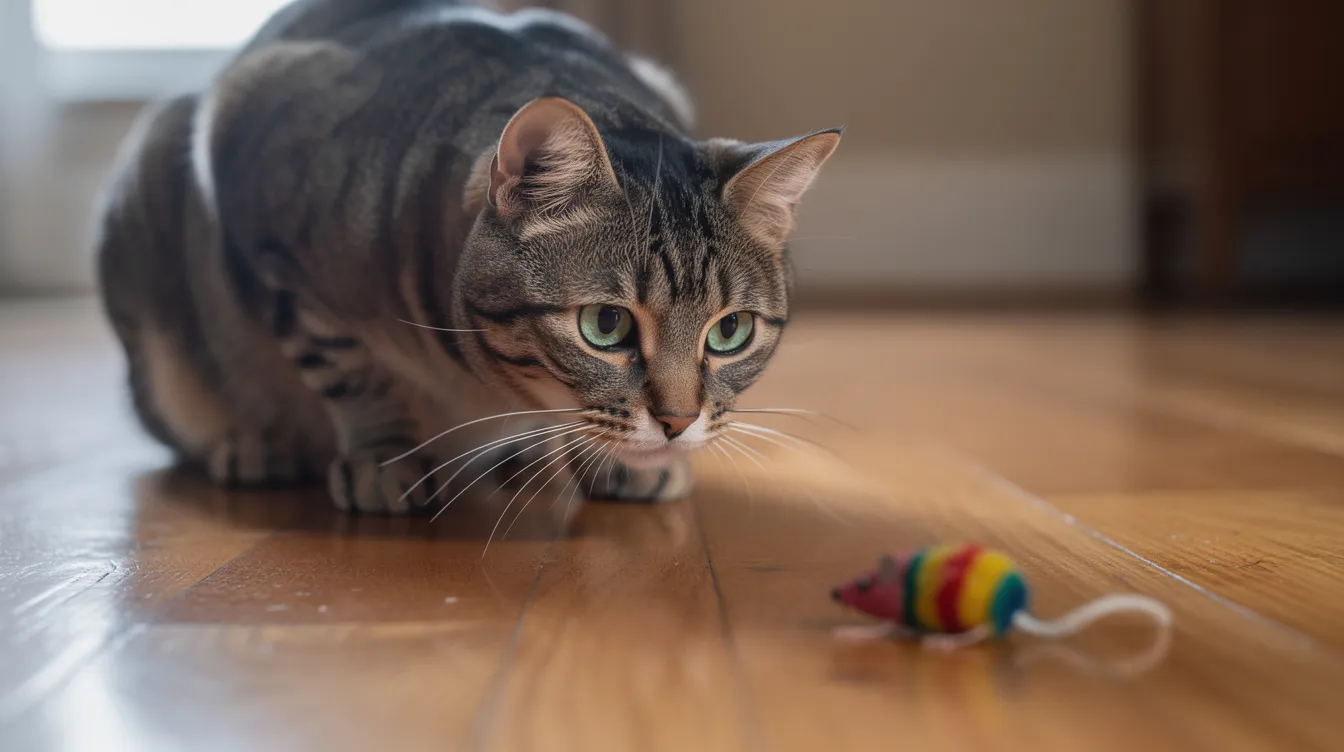
A remote control cat toy is any cat toy where the owner triggers or guides movement using a handheld remote, app, or button device. Unlike manual wand toys, they let you control play without constantly swinging your arm.
- Convenience: You can keep your cat entertained from the couch or desk. Remote control toys mimic prey movements for engaging play without requiring you to crawl around on the floor.
- Control: The remote lets you start, stop, vary speed, change direction, and adjust intensity for active cats or calmer kitty sessions in small spaces.
- Limits: Even the best remote control cat toys do not guarantee interest. Different cats respond differently to movement, sound, and size. A toy that drives one cat crazy may bore another.
- Safety: Remote control toys are for supervised, interactive play. They are not designed to entertain your cat while you are away or asleep. Interactive toys can help reduce boredom in indoor cats, but only when used with attention.
What Are the Main Types of Remote Control Cat Toys?
Before shopping, it helps to know what categories you will encounter. Remote control cat toys fall into three broad types, each offering a different kind of play.
- Chase toys (mice, UFOs, cars) roll or scoot across the floor, mimicking fleeing prey for cats who love to chase.
- Feather and light toys emphasize visual tracking and pounce moments. Some use motorized feathers; others project a laser dot or light pattern you control with a switch.
- Robotic and app-controlled toys use cameras, two-way audio, or AI-driven movement for more complex interaction. Some let owners interact with their pets from another room or even another city.
The sections below explain each type and how to match them to your cat's play style.
Remote-Controlled Spinning and Moving Toys
These toys spin, wobble, or scoot along the floor while you trigger or guide them with a remote. They range from simple forward-and-backward mice to UFO-shaped toys with unpredictable darting patterns.
Toys that mimic prey encourage natural hunting behaviors. The appeal is direct: a moving object on the floor activates a cat's instinct to stalk and pounce. Products like the SmartyKat Race 'N Chase, the Shele UFO, and various racecar-style toys fall into this category.
When evaluating a spinning or moving toy, check the movement pattern (straight lines only, or zigzags and spins), how responsive the remote feels, and whether cats can catch and swat the toy when they close in. Obstacle handling is important in the design of remote control cat toys; a toy that gets stuck under furniture every 30 seconds will frustrate both you and your cat.
Floor surface compatibility affects the performance of remote control cat toys. Most rolling toys work best on smooth hardwood, tile, or laminate. Thick carpet increases friction and can stall cheaper motors. Check product reviews for surface-specific feedback.
Cidero & Co.'s Hunting Spinner fits this category as a spinning chase toy. Owners activate and adjust chase sequences with a handheld remote while seated, and the feather attachment adds a visual target. It charges via USB-C and includes a bird chirping sound module.
Remote-Controlled Feather Toys
Feathers appeal to cats because they resemble birds and small prey, triggering stalking and pouncing in many indoor cats. But "feather toy with remote" means different things depending on the product.
- Traditional feather wands require you to move the feather entirely by hand. There is no motor and no remote.
- Truly remote-controlled feather toys use a motor to move the feather while you control modes, speed, or activation via remote. The Cidero & Co. Hunting Spinner, for example, spins a feather attachment at adjustable speeds while the owner presses buttons from across the room.
If a product listing says "remote controlled" but the owner must still drag or wave the wand manually, it is a wand toy with a wireless on/off switch, not a fully remote-controlled feather toy. Read listings carefully.
Feathers wear out. Before buying, check whether replacement feathers or attachments are sold separately. A toy with durable, swappable feather parts will last longer and keep your feline friends interested over months of use. For more on matching your cat's play style to hunting stages, Cidero & Co. has a dedicated guide.

Remote-Controlled Robotic and Smart Toys
These are the most advanced remote control cat toys. They act like small robots in the home, often controlled through a smartphone app rather than a handheld remote.
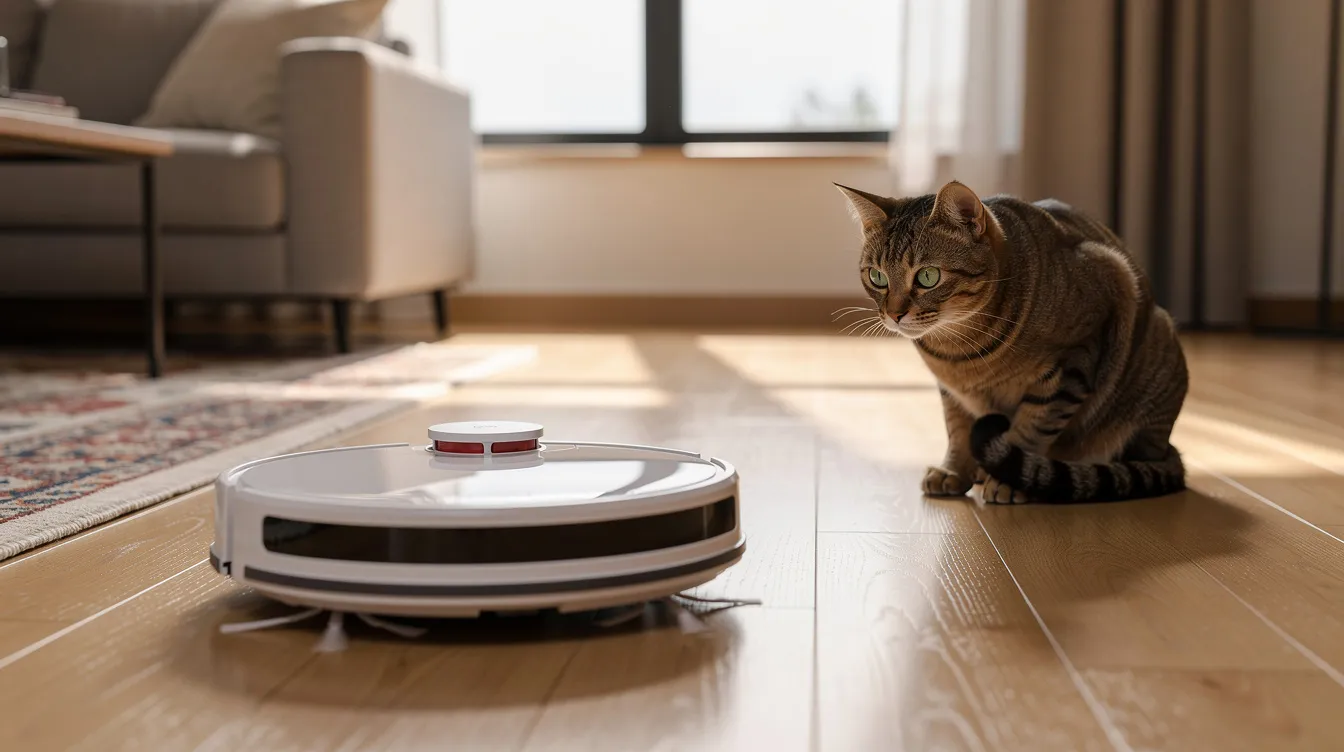
The Enabot EBO Air 2S FamilyBot is a clear example: it includes a mobile camera, two-way audio with noise cancellation, app steering via virtual joystick, and smart navigation that avoids obstacles as small as 10mm. Mobile rolling robots let owners interact with their pets via smartphone apps while away. The Enabot ROLA PetPal features a built-in camera for remote interaction as well, expanding the options in this category.
Video resolution of at least 1080p is recommended for remote control camera toys. The EBO Air 2S exceeds this with 2.5K resolution. Voice-activated remote control toys can enhance interactive play experiences; some app-controlled robots include parrot mode or voice playback to engage curious animals.
The trade-offs: higher price (the EBO Air 2S runs $259 to $299), the need for reliable Wi-Fi, charging docks, and the risk that the robot's size or motor noise will intimidate sensitive indoor cats. Before buying, confirm how much control you actually have (live steering vs. pre-set patterns) and whether you need the pet monitoring features or just want a fun chase toy.
How to Choose the Right Remote Control Cat Toy
This is the core of any purchase decision: narrowing down the best remote control cat toys for your specific cat and home. Four factors matter most.
You will want to evaluate what the remote actually controls, how the toy moves, where you will play, and everyday ownership details like battery life and cleaning. Some owners benefit from owning different toys for different cats or rooms; a small ball for a timid kitty in a studio serves a different purpose than a fast UFO toy for a high-energy cat in a larger house, and combining remote-controlled options with the best toys for bored indoor cats can provide a more complete enrichment setup.
1. Check What the Remote Actually Controls
Read the product description before assuming "remote control" means full steering. The phrase covers a wide range of functionality.
- Simple remotes only start and stop the toy or switch between auto and manual mode. This suits owners who want hands-off play with occasional input but may disappoint anyone expecting to drive the toy around the room.
- Directional remotes let you move the toy forward, backward, left, and right. The Race 'N Chase mouse, for instance, has buttons for forward and backward movement; pressing backward causes the mouse to turn. The control is basic but direct.
- App-based remotes (like the EBO Air 2S) offer a virtual joystick plus extras such as video, audio, and scheduled patrols. These provide the most control but require Wi-Fi and a compatible phone.
Some toys are mostly automatic play devices with a remote used only for mode selection. If you want to guide every move, verify the remote's actual functions on the product page. Cidero & Co.'s Hunting Spinner remote is designed for direct, real-time interaction from a distance; shoppers should confirm exact control functions on the product listing.
2. Match the Movement to Your Cat's Play Style
No toy is the best option for every cat. Think about what your cat naturally does during play.
- Chasers and pouncers do well with faster floor toys: remote-controlled mice, cars, or UFO-style toys with darting patterns. These encourage exercise and satisfy natural hunting instincts in active cats.
- Watchers and stalkers prefer visible, slower movement. Spinning feathers, light-based remote control toys, or toys with intermittent pauses let these cats track and plan before they pounce.
- Pawers and batters want close-range interaction. Slower-moving toys, spinner-style chase toys, or soft silicone ball-style toys with easy "catch" moments prevent frustration and keep picky cats interested.
Keeping play sessions short prevents overstimulation in indoor cats. Start with five to ten minutes and observe your cat's body language. These are guidelines, not guarantees; if your cat walks away, try a different speed or mode before switching toys entirely.
3. Consider Where You Will Play
Picture the actual room and floor surface before choosing a toy.
- Couch-based play: If you want to relax on the sofa, prioritize toys with remotes that work reliably from several feet away without needing line-of-sight pointing at a tiny sensor. Wireless RF or app-based remotes handle this better than infrared.
- Floor surfaces: Many rolling toys (fake rats, racecars, UFOs) work best on smooth hardwood, tile, or laminate. Thick rugs or high-pile carpet may slow or stall cheaper wheels. The SmartyKat Race 'N Chase, for example, loses responsiveness on carpet.
- Small apartments: Compact, quieter, USB rechargeable toys produce less noise for sensitive neighbors and need less floor area for effective games; interactive hunting spinner toys are a good example of space-efficient designs.
Check any stated control range or recommended play area in the manufacturer specs. Do not assume whole-home coverage from a budget remote.
4. Look at Practical Ownership Requirements
The best remote control cat toy is one you can maintain and use often without it collecting dust.
- Batteries and charging: Distinguish toys using disposable AA or AAA batteries from those with built-in USB rechargeable batteries. Running two separate battery types (one for the toy, one for the remote) adds cost and hassle. Many remote control cat toys are rechargeable for convenience, but check whether the remote itself also charges or requires button cells.
- Runtime and auto-shutoff: Many remote control cat toys include five to fifteen minute auto-off timers to protect motors and batteries. This is useful for cats but can frustrate owners who want longer sessions. Check the specs.
- Cleaning and storage: Smooth, sealed plastic designs are easier to wipe down. Feathers, strings, and small parts should be stored away between sessions, especially in homes with dogs or children, and investing in thoughtfully designed enrichment toys for indoor cats can make upkeep simpler over time.
- Noise and durability: Quiet motors and stable bodies (less tipping over) lead to longer, less stressful play for both cat and owner. Read reviews for mentions of motor noise before buying, and consider brands with a clear enrichment-focused mission like Cidero & Co.'s story when evaluating design quality.
Is a Remote Control Cat Toy Worth Buying?
Remote control cat toys are worth considering for many indoor cats, but they are not essential for every household.
A remote control cat toy is a strong fit if:
- You enjoy interacting with your cat but do not always want to wave a wand toy for 20 minutes.
- Your cat is motivated by chasing, stalking, or pouncing on moving objects.
- You want more variety than a standard cat toy. Variety in toys prevents cats from getting bored quickly, and a remote control option adds a different kind of mental and physical stimulation to your rotation.
It may not be ideal if:
- Your cat is fearful of motors, wheels, or electronic sounds. Some cats never warm up to motorized movement.
- You mainly want a toy that runs when you are out of the house. In that case, consider automatic cat toys for independent play instead.
- You prefer simple, low-tech toys like basic plushes, catnip kickers, or cardboard tunnels.
Remote control toys are designed for shared play that supports bonding and enrichment. They provide mental stimulation and physical exercise, but they do not replace daily attention.
Cidero & Co. Hunting Spinner: An Option for Couch-Based Play
The Hunting Spinner is Cidero & Co.'s entry in the remote control cat toy space, designed for owners who want to play with their indoor cats without getting up from the couch.
- What it is: A remote-controlled spinning chase toy for indoor cats. The movement pattern focuses on quick, prey-like spins and darts that encourage chasing and pouncing. It includes a feather attachment and a realistic bird chirping sound module.
- Power source: USB-C rechargeable battery. ABS plastic construction. Compact size (main unit approximately 5.5 × 4.1 inches).
- How it works from the couch: The handheld remote lets you start, stop, and adjust speed and play mode from a seated position. Several published customer reviews mention playing from the couch as a primary use case. This is one well-documented scenario, not a universal outcome.
Before buying, evaluate:
- Whether the Hunting Spinner's movement speed and pattern seem right for your cat's play style. Fast spinning works well for active cats; slower modes suit more cautious animals.
- Whether the remote feels comfortable for your usual play position.
- Whether the charging time, runtime, and noise level fit your routine and space.
Explore the Cidero & Co. Hunting Spinner to see current specifications, included accessories, care instructions, and up-to-date reviews.

Remote Control Cat Toys vs. Automatic Cat Toys
These two categories overlap but serve different purposes.
- Remote-controlled cat toy: The owner presses buttons or uses an app to start, stop, steer, or change modes in real time. Best when you are present and want to guide your indoor cat's play session directly, while automatic options like an interactive peekaboo cat toy can fill in during more independent play.
- Automatic cat toy: The toy follows pre-set motions, timers, or sensors without constant owner input. Automated toys provide mental stimulation for indoor cats and can promote healthy exercise. Automated toys help maintain healthy weight for indoor cats and can reduce boredom in cats left alone. They are often chosen for brief entertainment when owners are busy but still at home.

Some products combine both. The EYS Pet Gravity Glide, for example, includes both automatic and remote modes; the toy reverts to auto mode after about 30 seconds without remote input. Shoppers should check what each mode does before assuming full control, especially if they also use treat-dispensing puzzle toys as part of their cat's play routine.
If you want unattended or fully automatic enrichment, read Cidero & Co.'s guide on automatic cat toys for independent play for a deeper comparison.
Battery and Charging: USB Rechargeable vs. Replaceable Batteries
Power source is a practical differentiator that affects cost, convenience, and safety.
Replaceable battery toys (AA, AAA, or button cells) offer zero downtime; swap in fresh batteries and keep playing. But ongoing battery purchases add up, and you may need different sizes for the toy and its remote. Button cell batteries in remotes also pose a serious ingestion hazard. In 2025, CPSC issued a warning to stop using Petgravity cat toys because the coin cell batteries in the remote were accessible to children.
USB rechargeable toys (Cat Lures 3-in-1, Shele UFO, Hunting Spinner, and many modern smart toys) charge via USB or USB-C, producing less waste. USB-C rechargeable remote control toys reduce battery waste and offer extended playtime. The trade-off: you need to remember to charge them, and lithium batteries lose capacity over years of use.
For reference on runtimes: the SmartyKat Loco Motion toy can run for two hours continuously on its batteries. The Catit Groovy Fish lasts for 250 movement cycles before recharging. Automated toys can provide mental stimulation for cats across these different power formats. Consider how often you realistically play and whether a short runtime with fast recharge or a longer-lasting rechargeable battery fits your schedule, and remember that non-motorized options like cat kicker toys for bunny-kicking play can round out your enrichment toolkit without adding charging tasks.
Noise, Size, and Material: Keeping Your Indoor Cat Comfortable
The real question behind these specs: will your cat feel safe near this toy?
- Noise level: Loud wheels or clunky gears startle sensitive cats. Check customer reviews for comments about quiet operation. A toy described as "too loud" in multiple reviews is a red flag for timid indoor cats. Some cats, on the other hand, are drawn to the sound and chirps.
- Size: Larger robot toys (camera-equipped bots like the EBO Air 2S) can overwhelm smaller or nervous cats. Fake mice, small spinning toys, and compact ball-style toys are less intimidating. Always check dimensions in product listings before buying for kittens or small-frame cats.
- Materials: Look for smooth, pet-safe plastic and silicone that are easy to clean. Loose strings or poorly attached feathers can fray and become a swallowing hazard. Supervise whenever such parts are in use, and store removable attachments out of reach when play is over.
Gradual introductions help. Keep early sessions short, let the toy move slowly at first, and allow your cat to retreat and observe from a distance. Many cats need two or three sessions before they engage with a new motorized toy. If they never warm up, they may prefer a different style entirely; browsing a broader collection of enrichment toys or exploring the best cat kicker toys for indoor cats can help identify alternatives.
Frequently Asked Questions About Remote Control Cat Toys
Below are direct answers to the most common questions shoppers ask about remote control cat toys.
What is the best remote control cat toy?
There is no single best remote control cat toy for every cat. The right choice depends on your cat's personality, preferred movement, and your home setup.
- Best for fast floor chase: SmartyKat Race 'N Chase or UFO-style toys with darting patterns.
- Best value USB rechargeable: Cat Lures Cool Cat 3-in-1 Light USB Toy.
- Best app-based robot: Enabot EBO Air 2S for owners who want camera, audio, and full steering.
- Best for owner-led couch play: Cidero & Co. Hunting Spinner.
Prioritize control type, movement style, and noise level over brand names alone. Shopping based on your cat's energy and your play habits gives better results than chasing the most expensive or most popular product.
Are remote control cat toys good for indoor cats?
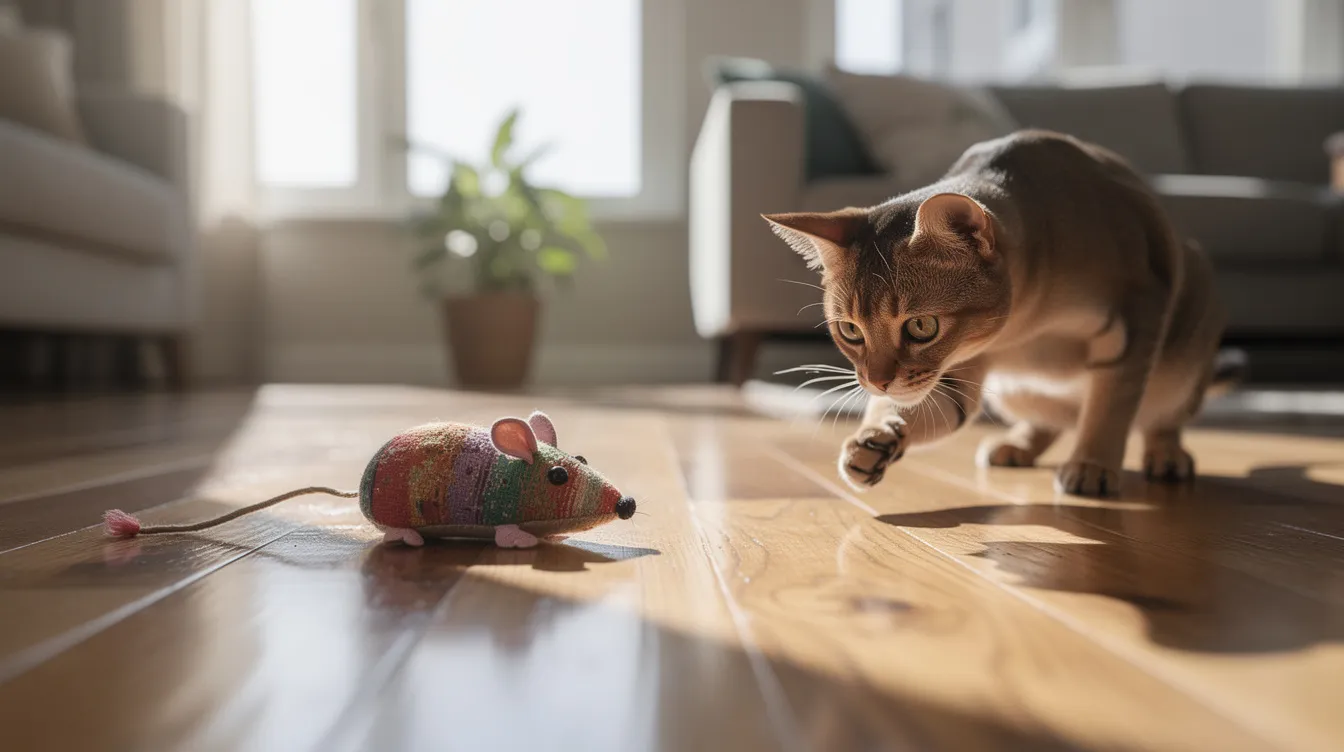
Yes, they can be helpful for many indoor cats when used appropriately and under supervision. Remote control toys allow owners to trigger chasing, stalking, and pouncing behaviors that provide mental and physical stimulation in a safe indoor environment.
Effectiveness varies. Some cats take to motorized movement in their first session; others prefer quieter, slower, or entirely manual cat toys. Remote control toys can help reduce boredom in indoor cats, but observe your cat's body language and adjust toy choice or session length if the cat appears stressed, overstimulated, or simply bored.
Can I use a remote control cat toy from the couch?
Often, yes, if the remote control and toy are designed for that kind of distance and setup. Many shoppers choose remote control cat toys specifically to play from the couch or bed.
Check the stated range (the SmartyKat Race 'N Chase works within about 12 feet) and whether the remote needs to be pointed directly at the toy. IR remotes require line-of-sight; RF and app-based remotes do not. Cidero & Co.'s Hunting Spinner is designed to be controlled comfortably from a seated position, and customer reviews confirm this use case.
Even from the couch, owners must supervise to prevent feather swallowing, entanglement, or the toy getting stuck under furniture.
Are remote control feather toys better than regular feather wands?
Neither is universally better. They offer different experiences.
Remote control feather toys let owners rest their wrists and shoulders while providing consistent movement with the press of a button. Classic feather wands give very fine-tuned control of motion and timing, require no charging or batteries, and are often quieter. A fetch and drag motion with a wand creates a natural rhythm some cats prefer.
Try both if possible. Choose based on your physical comfort, available time, and your cat's reaction to motor noise versus hand-guided movement.
Can I leave my cat alone with a remote control toy?
In most cases, no. Remote control cat toys are designed for supervised, interactive play. Moving parts, wheels, strings, and feathers can pose risks if cats chew or become entangled without an owner present.
Follow manufacturer instructions about supervision and store removable attachments (feathers, cords, small parts) out of reach when not in use. If you want independent play options, research automatic cat toys designed for solo use with appropriate safety features.
How do I get my cat interested in a remote control toy?
Many cats need time to warm up to motorized toys, especially if they are used to quiet play with simple furry mice or catnip plushes.
- Start with the toy turned off. Let your cat sniff and investigate at its own pace.
- Introduce slow, small movements first. Skip the full-speed mode on the first day.
- Keep sessions short and positive. Let the cat "win" by catching or batting the toy sometimes.
- Place treats or familiar catnip toys nearby to create positive associations.
If your cat remains consistently frightened or uninterested after several brief attempts across different ages and moods, it may simply prefer other styles of play. That is normal. Not every cat responds to the same toy, and the money is better spent on something your cat will actually use.
Conclusion: Pick a Remote Control Toy That Fits Your Cat and Your Lifestyle
Three questions should guide your purchase:
- What does the remote truly control? Full steering, mode switching, or just on/off?
- How does the toy move, and does that match your cat's favorite way to play? Fast chase, slow stalk, or close-range swat?
- Is the toy's power source, noise level, and size practical for your home? USB rechargeable or disposable batteries? Quiet motor or loud gears? Compact or room-roaming?
Start with one thoughtfully chosen toy instead of buying several at once, then adjust based on your cat's response. If couch-friendly, remote-controlled play is what you are after, explore the Cidero & Co. Hunting Spinner and the broader Cidero & Co. collection of enrichment toys for indoor cats.


