

How to Turn 500 Sq Ft Into a Cat Playground (Without Sacrificing Your Floor)
If you live in a 500–700 sq ft apartment with an indoor cat who treats 3 a.m. like peak performance hour, you already know the struggle. There's no room for a six-foot cat tree. Every toy you buy ends up underfoot. And your kitty still needs to run, hide, and hunt something besides your ankles.
That's where foldable enrichment comes in. A cat tunnel that pops open for play and disappears when company arrives is one of the smartest moves an apartment cat parent can make. This guide is not another generic roundup. It's built around one question: which tunnel actually works in small apartments and small living rooms? We'll cover what to look for, where to place it, when a tunnel isn't the move, and how Cidero & Co. designs specifically for apartment living.
Quick Answer: What Kind of Cat Tunnel Works in a Small Apartment?
Short on time? Here's the cheat sheet.
The ideal apartment tunnel is collapsible, lightweight, has multiple openings, uses quiet fabric, and stashes under a sofa or in a closet in seconds. Collapsible tunnels are ideal for small apartments because they solve both the enrichment problem and the "I need my floor back" problem simultaneously.
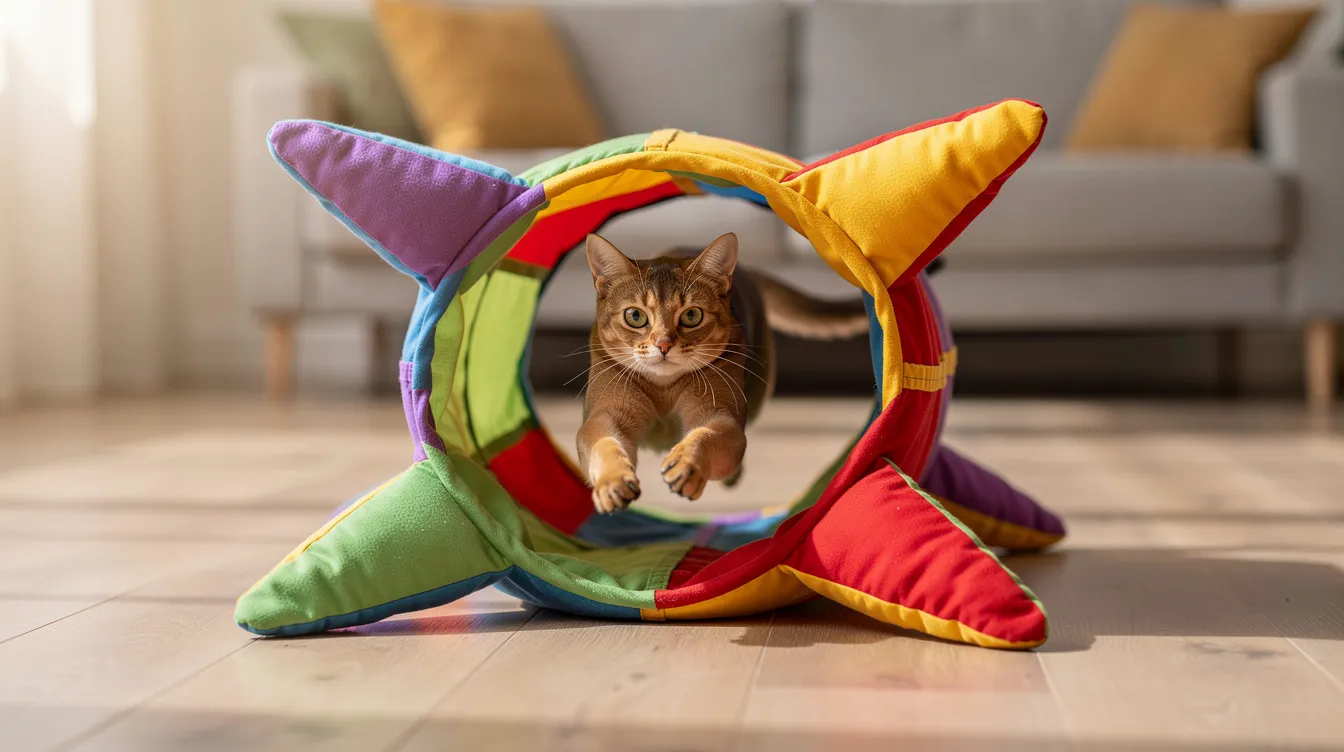
For most small spaces, a 3-way or starfish-shaped play tunnel beats a long straight tube. You get more routes and ambush spots without eating up a hallway's worth of floor space. Tunnels can also serve as beds or hiding spots, so your cat gets a cozy napping zone and a zoomie lane in one piece.
The Cidero & Co. Rainbow Starfish Tunnel is the kind of design we'll reference throughout this article-a foldable, multi-exit tunnel made for modern apartments. But the buying framework below works for comparing any brand.
Let's break it down.
Are Cat Tunnels Good for Apartment Cats?
Indoor cats in apartments often live in what researchers call "sensory-lite" environments. Fewer windows, no backyard, limited vertical space, and the same four walls every single day. That's a recipe for boredom-and sometimes worse.
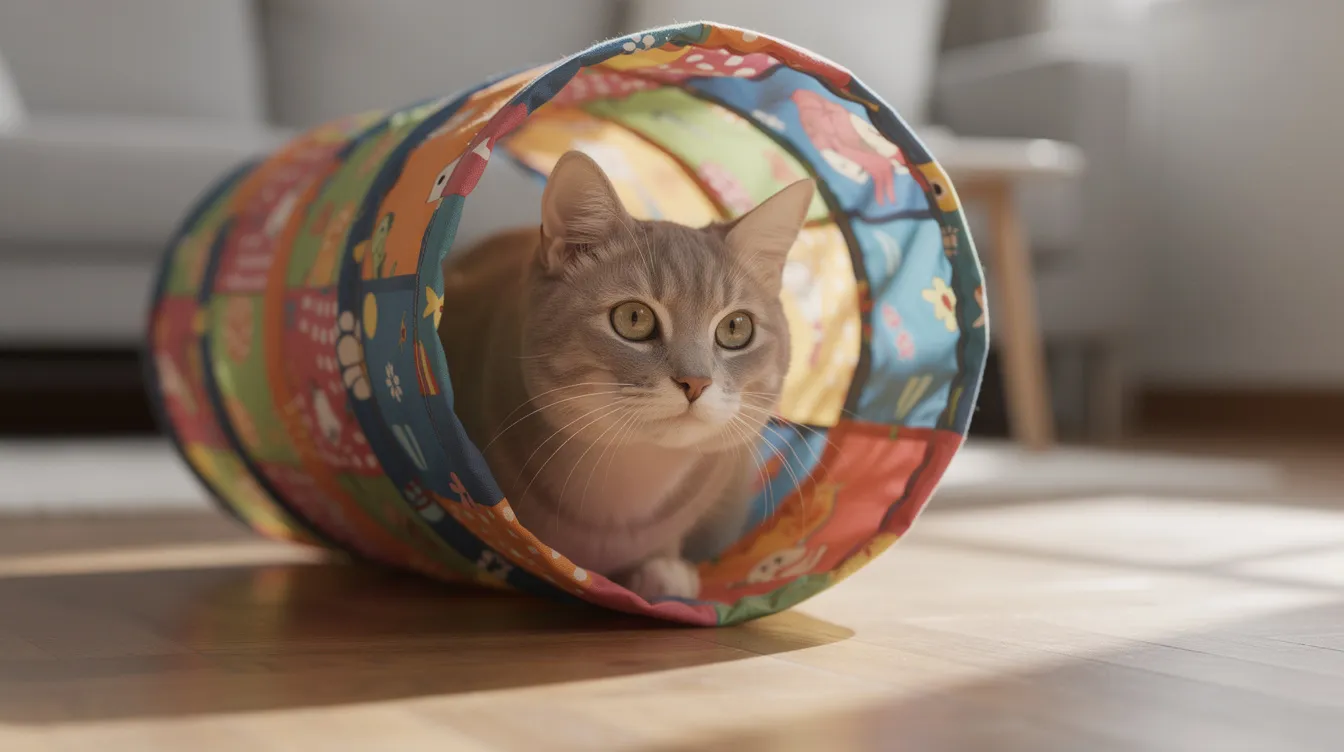
Cats love tunnels because they encourage stalking and pouncing behavior, the same instincts your cat would use hunting in the wild. A tunnel turns a boring stretch of floor into a territory worth patrolling. Studies show that tunnels can reduce stress indicators in cats: in one Dutch shelter trial, cats given hiding enrichment reached lower stress scores a full seven days earlier than cats without it. Tunnels encourage natural chasing and hiding behaviors even in a studio apartment, and they reduce boredom while supporting the mental stimulation your cat is missing.
Here's what surprised us: tunnels can increase a cat's active patrol range by 30–40%. That's a meaningful difference when your entire apartment is 500 square feet.
A tunnel uses a narrow footprint-often less than a yoga mat-but can feel like a whole world to a cat who gets to explore, pounce, and feel secure inside it. Pair it with wand toys or drop some treats inside, and you've turned a Tuesday evening into a hunt course.
For a deeper dive into the behavior side, including why cats like tunnels and the key benefits for indoor cats, check out The Ultimate Guide to Cat Tunnels.
What Makes a Cat Tunnel Good for Small Spaces?
If you have a large house, almost any tunnel works. In an apartment, you have to be pickier. Here's what actually matters:
Foldable, collapsible design. Pop-up wire frames that twist flat into a disc you can slide under a bed or hang behind a door. If it can't fold, it'll live in your closet forever. Modular designs allow for flexible shapes in cat tunnels, so you can adapt the layout to fit different rooms or corners.
Lightweight but stable. Light enough to move with one hand, but look for a flattened base or non-slip underside so the tunnel doesn't rocket across hardwood during a 2 a.m. chase session. A safe tunnel frame should be wire-free or well-reinforced so nothing pokes through the fabric and compromises pet safety.
Multiple openings. A 3-way or 5-way starfish layout gives your cat more routes without requiring more square footage. Multi-way tunnels encourage chasing and hiding behaviors and keep a single tunnel interesting for longer, especially if you’re choosing among the best cat tunnels for indoor cats that get bored fast.
Quiet materials. Cats enjoy crinkle fabric while playing in tunnels, though preference varies-and your downstairs neighbors definitely have a preference too. Soft polyester or felt interiors absorb sound better than plastic-lined crinkle tunnels. For late-night play, quiet matters.
Washable, safe fabric. Durable polyester or Oxford fabric withstands scratching and repeated folding. Smooth fabrics in cat tunnels are easier to clean than plush materials, which is a big deal in a compact apartment where odors linger. Pet tunnels should use non-toxic dyes and materials, and materials must meet FDA food-contact standards for safety. Avoid PVC-coated fabrics due to health risks. Cat tunnels should also have a wall thickness of at least 3mm for durability, and these safety details become even more important when choosing the best cat tunnel for kittens and senior cats.
Size check. Most cat tunnels are 9 to 10 inches in diameter. The diameter of cat tunnels should be at least 10–12 inches for medium or large cats so your cat can turn around comfortably inside. For length, 30–40 inches works in most rooms without dominating the space.
Quick test: if a tunnel stores flat, doesn't scream in neon plastic, and stays put on the floor, it's apartment-friendly.
Quick Comparison Table: Space-Saving Tunnel Options
Not every apartment or cat is the same. Here's a framework for matching your situation to a tunnel shape:
|
Situation |
Tunnel Type |
Why It Works |
|---|---|---|
|
Very small studio |
Compact 3 or 5-way play tunnel |
Folds flat, fits under a couch, covers minimal floor space |
|
Large or chunky cats |
Wider diameter tunnel (11–12 in) |
More room to turn, navigate, and nap comfortably |
|
Multiple cats |
Multi-opening starfish tunnel |
Tunnels provide retreats for shy cats in multi-cat households; multi-tunnel designs enhance engagement for cats sharing space |
|
Budget under $25 |
Simple single pop-up tube |
Fewer features but still supports hiding and chasing |
|
Clutter-averse owner |
2-in-1 tunnel + cat bed hybrid |
Doubles as a soft resting spot; blends with décor |
Multi-way tunnels promote dynamic play among multiple cats and reduce competition over a single exit. If you share your home with more than one cat, it’s worth looking at the best cat tunnels for multiple cats so size, durability, and layout match your crew. Cidero & Co. focuses on enrichment-first designs, but this framework works for comparing any brand's tunnels against your apartment reality.
Our Top Pick for Apartment Cats (and Why We Designed It That Way)
The Cidero & Co. Foldable Rainbow Starfish Tunnel was designed with one scenario in mind: a cat parent in a modern apartment who needs enrichment that appears and disappears on demand.
It's a 5-way starfish layout with bright, home-friendly colors. It folds flat into a circle you can slide under a sofa, bed, or inside a narrow hallway closet. Out for play, away when you need the space back-easy storage without drama.
Peek holes in cat tunnels encourage interactive play, and this tunnel has them positioned so you can thread a wand toy or ball through and watch your cat go full ambush mode. Tunnels with peepholes also reduce anxiety for nervous kittens because they can see what's happening outside without fully committing to leaving. Interactive features like these stimulate mental engagement beyond just running through a tube.
The interior is soft enough that many cats use it for napping between play sessions-a tunnel that doubles as a cat bed saves you buying both. It's sized so the length allows real running and hiding but won't dominate a 10×12 ft living room.
Pair it with Cidero & Co.'s Interactive Aquarium Cat Toy Lamp or a wand toy, and a small hallway becomes a full hunt course; it offers many of the visual perks discussed in our honest look at whether you should get a real fish tank for your cat without the maintenance. We'd love to show you original photos of it in real apartments-because that's where it was designed to live.

When a Cat Tunnel Isn't the Right Choice
Let's be real: not every cat is a tunnel cat, and that's fine.
A tunnel might not be ideal if your cat is elderly with severe mobility issues-crawling through a low tube can be uncomfortable or painful. If your kitty only gets excited by jumping and climbing to high perches, a tunnel sitting on the floor won't scratch that itch. And extremely noise-sensitive cats who panic at any rustle may find even a quiet tunnel stressful at first.
Some cats prefer a window perch, a flat puzzle toy, or a warm spot on the bed over any enclosed space. For these cats, weighing up cat tunnels vs cat beds and which your cat will actually use can help you spend your limited space and budget wisely. Forcing enrichment that doesn't match your cat's behavior increases stress rather than reducing it. Watch your cat: does it chase under blankets, hide behind curtains, or mostly climb onto counters? That tells you everything.
If tunnels aren't the fit, consider alternatives like the Interactive Aquarium Lamp, puzzle feeders, or slow-feeder lick bowls that use minimal space but still deliver mental stimulation. For older cats specifically, enrichment that doesn't require athletic play is worth exploring.
One tip: if your cat ignores a tunnel at first, try gentle introductions with treats inside before giving up completely; for very nervous pets, you can follow a step-by-step approach for how to get a shy cat to use a tunnel.
Apartment Set-Up Ideas: Where to Put a Cat Tunnel
Placement can make or break whether your cat actually uses the tunnel. In a small apartment, every inch of floor matters, so think strategically.
Studio apartment: Run the tunnel behind the sofa or along the foot of the bed. This keeps walking paths clear while giving your cat a dedicated lane for cat play. A tunnel connecting the TV stand area to a small scratching post creates a mini territory without blocking your way to the kitchen.
One-bedroom apartment: Place the tunnel near a window so your cat can watch the world outside, then dart into cover. Running it down a hallway turns a dead-end corridor into a sprint track. Position it between a scratching post and a cat bed to create a play zone your cat will patrol naturally.
Multi-cat apartment: Make sure tunnel ends open toward different parts of the room so every cat has an escape route. This reduces ambush stress-nobody wants to feel trapped. For more ideas on toys that work for two or more cats, we've written a separate guide.
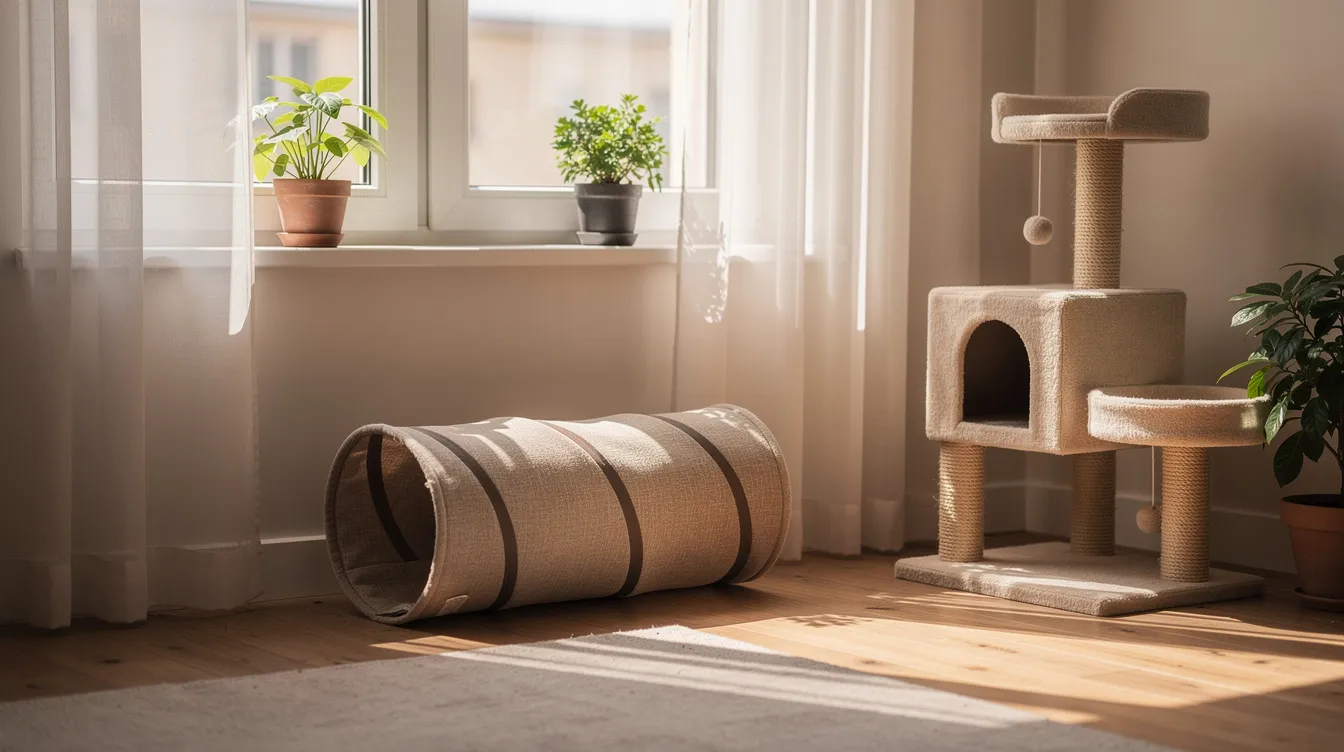
Storage between sessions: Fold and slide the tunnel under the couch after evening play. Hang it on a wall hook or behind a door using a fabric loop or bag. Vertical enrichment like shelves or window perches complements a horizontal tunnel nicely-pair them to build a full playground without making the apartment feel crowded.
Cat Tunnel vs Other Apartment-Friendly Toys
A tunnel is powerful, but it's one piece of a broader enrichment toolkit. Here's how it stacks up:
|
Toy Type |
Floor Space |
Storage |
Exercise |
Mental Stimulation |
|---|---|---|---|---|
|
Cat Tunnel |
⭐⭐⭐⭐⭐ |
⭐⭐⭐⭐⭐ |
⭐⭐⭐⭐ |
⭐⭐⭐⭐ |
|
Cat Tree |
⭐⭐ |
⭐ |
⭐⭐⭐⭐⭐ |
⭐⭐⭐ |
|
Puzzle / Feeder |
⭐⭐⭐⭐⭐ |
⭐⭐⭐⭐⭐ |
⭐⭐ |
⭐⭐⭐⭐⭐ |
|
Wand Toy |
⭐⭐⭐⭐⭐ |
⭐⭐⭐⭐⭐ |
⭐⭐⭐⭐ |
⭐⭐⭐ |
A cat tree gives vertical space and long-term lounging but can't be folded or moved easily. Puzzle toys and lick feeders require almost zero floor space and focus on feeding routines rather than cardio. Wand toys are fantastic for interactive play but rely on a human being present-tunnels support solo cat play too, so your cat can still explore while you're at work, even when you’re using strategies for keeping your cat entertained while you’re away.
The smartest apartment setup mixes one foldable tunnel, one vertical element (even a simple shelf), and one mental-stimulation toy. That covers chasing, climbing, and problem-solving without overflowing a small home. For more ideas, check out our guide on how to entertain a cat when you're not home.
Common Mistakes Apartment Owners Make With Cat Tunnels
A solid tunnel can feel like a total dud if you buy or use it wrong. Here are the mistakes we see most often:
Buying way too big. A 5-segment tunnel maze designed for a house with a playroom will overwhelm a studio and end up permanently wedged in a closet. Match the tunnel's length and shape to your actual floor plan.
Leaving it out 24/7. In a cramped space, a tunnel left out permanently becomes visual clutter for you and background furniture for your cat. Novelty drops, curiosity fades, and the tunnel stops being fun. Rotate it-bring it out for play sessions, then store it.
Bad placement. Tunnels running through high-traffic walkways, shoved against the litter box, or wedged where a cat can't exit comfortably will get ignored. Place them along natural cat traffic routes-near walls, windows, or behind furniture.
Not joining the play. Just dropping a tunnel and expecting magic doesn't work for most cats. Use wand toys to lure your cat through. Use treats to create a trail into the tunnel. Keep initial play sessions short, around 5–10 minutes, especially when introducing a new tunnel, or build a consistent daily routine like the one in our guide to banishing indoor cat boredom with a daily tunnel routine. Start introducing tunnels in a quiet room to help your cat build positive associations.
Skipping the intro for nervous cats. If your cat seems interested but hesitant, give it time. Toss a ball inside. Drag a string through. Don't force the moment.
FAQ: Cat Tunnels in Small Apartments
These are the questions apartment cat parents ask right before clicking "add to cart."
Is a cat tunnel worth it in a small apartment? Absolutely. A foldable tunnel delivers enrichment per square inch that's hard to beat. It supports hiding, stalking, chasing, and sleep-all in a piece that folds flat for storage. The cost-to-benefit ratio is strong for any pet parent short on space.
Where should I put a cat tunnel in an apartment? Near a window, along a hallway, behind a sofa, or between a scratching post and a resting spot. Avoid placing it right next to the litter box or blocking doorways.
Can two cats share one tunnel? They can, especially with multi-opening tunnels that let both cats navigate freely. Watch for signs of tension-if one cat is guarding an entrance, consider adding a second tunnel or switching to a design with more exits.
How do I store a foldable cat tunnel? Under the bed, behind a bookshelf, hanging in a closet, or tossed in a basket with other toys. Most collapsible tunnels flatten to under two inches thick.
Are crinkle tunnels too noisy for apartments? They can be. If walls are thin, a soft-fabric or partial-crinkle design is better for late-night play. Save the full crinkle experience for daytime.
How much space does a cat tunnel need? A 3-way tunnel with clearance fits comfortably in about 6–8 feet of floor length. Measure your room before you search and buy.
Can kittens and senior cats use foldable tunnels? Kittens love them-add familiar scents to help timid kittens adjust, and supervise early play sessions to ensure safety. For dogs or cats with mobility issues or senior cats, look for wider openings and shorter tunnels that don't require crouching. Diameter and fabric matter more than length here.
Conclusion: A Tunnel That Works With Your Small Space, Not Against It
For indoor cats in apartments, a foldable, well-placed cat tunnel is one of the easiest ways to add running, hiding, and mental stimulation without permanently sacrificing your living room. It's compact enrichment that actually delivers.
Stick to the core criteria: collapsible, quiet, multi-opening, washable, and sized for both your floor plan and your cat's body. Think in sessions rather than permanent obstacles-bring out the tunnel when your cat is awake and playful, then save your floor space when you need it.
Cidero & Co.'s Rainbow Starfish Tunnel, apartment-focused enrichment collection, and broader cat enrichment blog were built around exactly these principles. If you're looking for design-forward, cat-tested options that won't take over your apartment, they're worth a look.
Your cat deserves to explore, pounce, and feel secure-even in 500 square feet.


