

What’s Really Inside Your Cat’s Kicker Toy? (Safety & Fabrics)
What's Really Inside a Cat Kicker Toy?
If you've ever picked up a cat kicker toy and wondered what's actually inside it, you're not alone. Most cat owners grab kicker toys off the shelf, squeeze them once, and toss them to their cats without a second thought about the fabrics or fillings involved.
This guide is all about what goes into these long, kickable plushes-the materials that affect how a toy feels, how long it lasts, and whether it holds up to everyday indoor play. Kicker toys promote independent play for indoor cats and help them fulfill their natural predatory instincts, so getting the materials right matters more than you might think.
At Cidero & Co., we design enrichment toys for indoor cats, including our Jumbo Goldfish Kicker Plush for Cats. This article is a transparent materials overview-not a sales pitch. We'll break down outer fabrics, inner fillings, what rayon actually is, how to choose safe toys, and answer common questions that come up when you see terms like "beibei velvet" or "recycled PET" on a product page.
This pairs well with broader topics like cat enrichment and how to choose the best cat kicker toy, which you can explore elsewhere on our site.
The Two Main Parts of Every Cat Kicker Toy
Almost every cat kicker toy breaks down into two components: the outer fabric shell and the inner filling. Some also include extras like catnip pouches or crinkle sheets, but those two layers are the foundation.
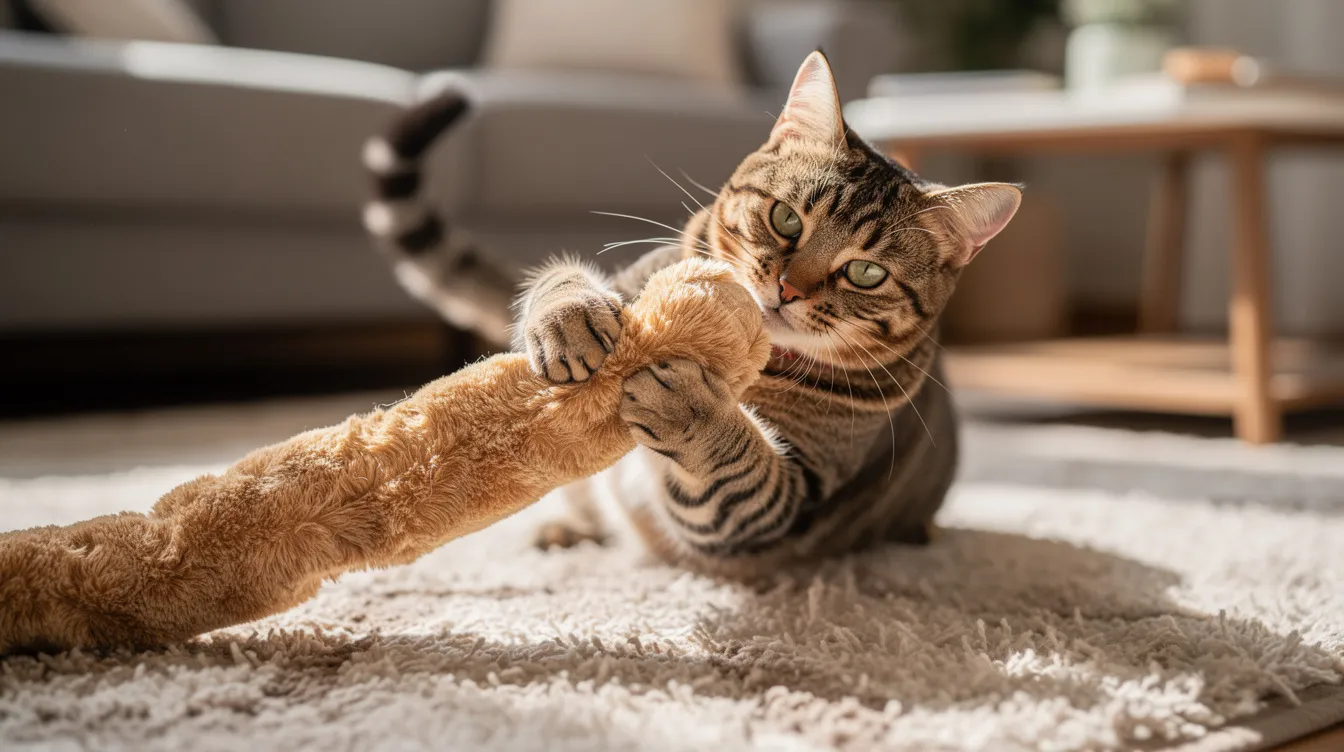
The outer fabric is the material your cat bites, bunny kicks, and rubs against. It determines texture, appearance, and how well the toy stands up to claws. Cat kicker toys imitate the physical wrestling behavior cats display on prey, so this outer layer takes a beating. Common options include beibei velvet, polyester plush, cotton, fleece, microfiber, and occasionally denim or canvas for cats that play rough.
The inner filling is the soft (sometimes crinkly or scented) stuffing that gives the toy its shape and feel. This can range from standard polyester fiberfill to cotton batting, wool, recycled PET stuffing, or aroma elements like catnip and silvervine.
Understanding both layers helps you match toys to your cat's play style. Most cats prefer kicker toys that are long and thin-shaped so they can grab with front paws and kick with back legs. A gentle cuddler needs something different from a power kicker, and your own priorities (natural fibers vs. easy washing) matter too. If you're curious about the instinct behind all that kicking, that's a whole topic on its own—and our detailed breakdown of why cats bunny kick toys connects this behavior to natural hunting patterns and safe enrichment at home.
Common Fabrics Used in Cat Kicker Toys
The outer fabric determines how the toy feels in your cat's paws and mouth, how easily claws snag on the surface, and how well cat hair and dust brush off after a play session.
Here's a quick comparison of the most common fabrics you'll find in cat toys:
|
Material |
Softness |
Durability |
Easy to Wash |
Common Uses |
|---|---|---|---|---|
|
Rayon blends |
⭐⭐⭐⭐ |
⭐⭐ |
⭐⭐⭐ |
Soft plush fabrics |
|
Cotton |
⭐⭐⭐ |
⭐⭐⭐ |
⭐⭐⭐⭐ |
Natural fabric toys |
|
Beibei Velvet |
⭐⭐⭐⭐⭐ |
⭐⭐⭐ |
⭐⭐⭐ |
Plush kicker toys |
|
Fleece |
⭐⭐⭐⭐ |
⭐⭐⭐ |
⭐⭐⭐⭐ |
DIY & plush toys |
|
Polyester Plush |
⭐⭐⭐⭐ |
⭐⭐⭐⭐ |
⭐⭐⭐⭐ |
Most commercial toys |
|
Canvas / Denim |
⭐⭐ |
⭐⭐⭐⭐⭐ |
⭐⭐⭐ |
Heavy-duty kickers |
- Rayon blends feel soft and drapey—often blended with polyester for cat toys. They offer good softness but moderate durability if the weave isn't tight.
- Cotton is a natural fiber that's breathable and easy to wash. Natural materials like cotton and canvas are durable for cat toys and appeal to cat owners who prefer keeping things simple.
- Beibei velvet is a very soft, short-pile synthetic velvet that feels luxurious. Many cats that like to cuddle or "nurse" on fabric tend to gravitate toward it. It's best suited for indoor play rather than rough outdoor use.
- Fleece is warm, cozy, and slightly stretchy—popular for DIY toys and blankets. It pills over time but stays soft and is easy to machine wash.
- Polyester plush and microfiber are the workhorses of commercial cat toys. Synthetic fabrics like polyester are easy to clean and stain-resistant, and when tightly woven, they hold up well against claws. Tightly woven fabrics resist claw damage better than loose weaves—this is true across almost every fabric type.
- Heavier fabrics like denim or canvas sometimes appear in kicker toys aimed at aggressive play, trading softness for more resistance to biting and scratching.
One thing worth remembering: "durable" doesn't mean indestructible. No fabric can fully resist determined claws and teeth over months of play.
What Is Rayon and Why Is It Used in Cat Toys?
Rayon is a semi-synthetic fiber made from regenerated cellulose-usually wood pulp. Think of it as sitting somewhere between natural and synthetic: the raw material comes from nature, but the manufacturing process is chemical.
In simple terms, wood pulp gets dissolved into a thick solution, pushed through tiny holes to form fibers, then solidified and spun into yarn. The result feels smoother than most cotton but doesn't have that plasticky quality some synthetics carry. It drapes nicely, takes on rich colors, and feels genuinely soft against skin-or paws.
Manufacturers use rayon and rayon blends in cat toys for a few practical reasons:
- Very soft hand-feel that humans like to touch (and cats like to nuzzle)
- Good drape for plush shapes like tails, fins, and ears
- Rich color saturation for printed patterns
- Relatively low cost when blended with polyester or spandex
When you see "rayon plush" on a cat kicker label, it usually means a blend-rayon mixed with polyester or other fibers to balance softness, strength, and a tiny bit of stretch. This is common in many plush cat toys and even some pet blankets.
On safety: when used as an outer shell with secure stitching, rayon fabrics are generally considered acceptable for pet toys. The material itself isn't the concern. The bigger risks come from loose threads, poorly sewn seams, and small attachments that could come off-regardless of whether the fabric is rayon, cotton, or polyester.
That said, if a cat chews aggressively and manages to swallow long strands of any fabric, that can become a problem. String ingestion is one of the more common veterinary emergencies for cats. The rule of thumb: retire a toy once the outer fabric frays or tears enough to expose stuffing or release long fibers.
At Cidero & Co., any rayon or rayon-blend fabrics in our products are chosen for softness and comfort in indoor play, paired with careful construction to keep everything where it belongs.
Common Fillings Inside Cat Kicker Toys
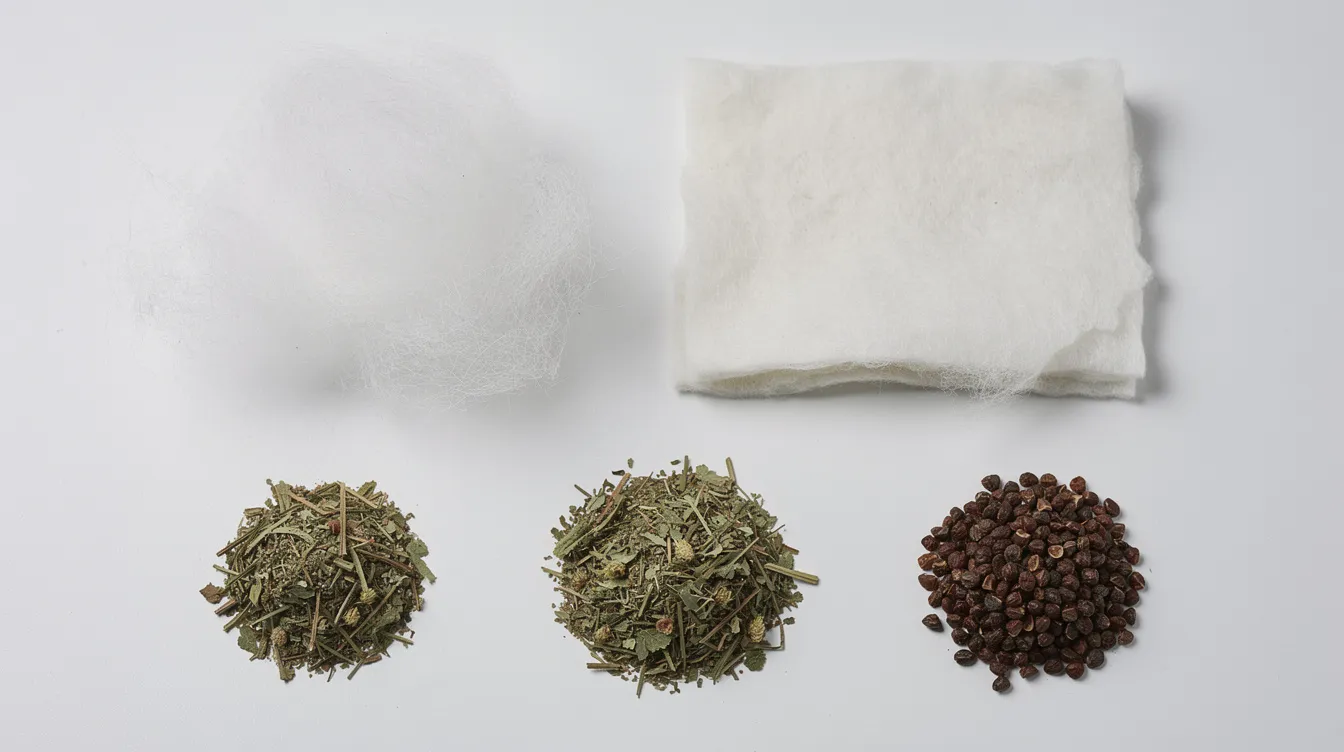
The inside of a cat kicker can be simple—just fiberfill—or layered with fiberfill plus catnip plus crinkle sheets. Each filling changes how the toy feels, sounds, and smells to your cat.
Here's how the most common options compare:
|
Filling |
Comfort |
Washable |
Durable |
Safety Notes |
|---|---|---|---|---|
|
Polyester fiberfill |
Soft, springy |
Yes |
High |
Keep inside toy; discard if exposed |
|
Cotton batting |
Dense, huggable |
Yes (may clump) |
Moderate |
Dry thoroughly to prevent mildew |
|
Wool |
Springy, warm |
Spot-clean best |
Moderate |
May felt over time |
|
Recycled PET |
Similar to fiberfill |
Yes |
High |
Needs secure seams |
|
Buckwheat hulls |
Weighted, satisfying |
No (spot-clean) |
Moderate |
Mold risk if damp |
|
Rice / beans |
Heavy, thumpy |
No |
Low |
Choking risk if seams fail |
|
Catnip |
Scent enrichment |
Loses potency |
N/A |
Pet-safe; genetic response |
|
Silvervine |
Scent enrichment |
Loses potency |
N/A |
Alternative for catnip-indifferent cats |
- Polyester fiberfill is the most common stuffed toy filling—lightweight, cloud-like, and doesn't absorb much moisture. It holds shape well and is safe in normal use, though it should stay inside the toy and not be accessible for chewing.
- Cotton batting feels slightly denser, which some cats like for hugging and wrestling. It may clump after repeated washing, so thorough drying matters.
- Wool is naturally springy and sometimes found in handmade or artisanal kicker toys. It can felt over time, becoming firmer with wear and washing.
- Recycled PET stuffing—made from recycled plastic bottles—feels similar to regular fiberfill and gives eco-conscious cat owners an option that repurposes existing plastic.
- Buckwheat hulls, rice, or beans add weight and a satisfying thump when kicked, but they shouldn't go in toys likely to get soaked or chewed open, since moisture creates mold risk.
Most popular kicker toys contain catnip or silvervine. Many kicker toys are filled with catnip or silvervine for engagement, and some even have refillable pouches for catnip so you can refresh the scent over time. Catnip toys are made with pet-safe materials, and the response to catnip is genetic—not all cats react to it, which is where silvervine becomes a useful alternative.
Kicker toys can also have features like crinkly material or tails. Crinkle sheets (thin mylar or plastic) make a rustling sound that many cats find irresistible, and engagement features like crinkly material enhance playtime significantly. Cats enjoy kicker toys with crinkly material and engaging features, but these elements should always be fully enclosed so cats can't access hard or sharp pieces.
Which Materials Are Generally Considered Safe? (And What Matters More)
For most modern cat toys, safety depends less on whether the fabric is cotton vs. polyester and more on how the toy is built. Stitching quality, size, and whether small parts can come loose-these are the things that actually matter day to day.
When used appropriately and kept intact, commonly used materials-rayon blends, polyester plush, cotton, fleece, standard fiberfill, and natural fillings like wool or buckwheat-are generally considered acceptable for cat kicker toys. Cat kicker toys provide mental stimulation through textured surfaces and catnip, and catnip toys promote mental stimulation and reduce boredom, so the enrichment value of these materials is real.
What to focus on instead of fabric name:
- Secure stitching: Look for double stitched seams, no loose threads, and no easily removable eyes, buttons, ribbons, or glued-on decorations that could be swallowed
- Intact construction: Loose stuffing becomes a concern only if the toy gets ripped open-swallowing wads of fiberfill or long fabric strips can pose serious risks
- Regular inspection: No fabric is completely indestructible, so checking toys for holes and wear is part of the routine
- Machine washability: Soft toys should be machine washable for safety, since regular cleaning removes bacteria and keeps things hygienic
Kicker toys should be durable and safe for cats, and they act as an appropriate outlet for cats' pent-up energy and aggression. Regular play with kicker toys can contribute to maintaining a healthy weight for cats, and cat kicker toys help protect hands and furniture from scratching-putting a kicker in front of your cat is much better than having them grab your arm during play.
A few practical safety habits: rotate toys to reduce wear, discard toys that are leaking stuffing or have long frayed edges, and supervise initial play with any new kicker. For a deeper dive into safety principles, check out our dedicated guide to cat kicker toy safety checks.
Inside Our Jumbo Goldfish Kicker Plush
Kicker toys can be designed to resemble animals or objects, and our Jumbo Goldfish kicker plush is a concrete example of how material choices come together in one specific toy.
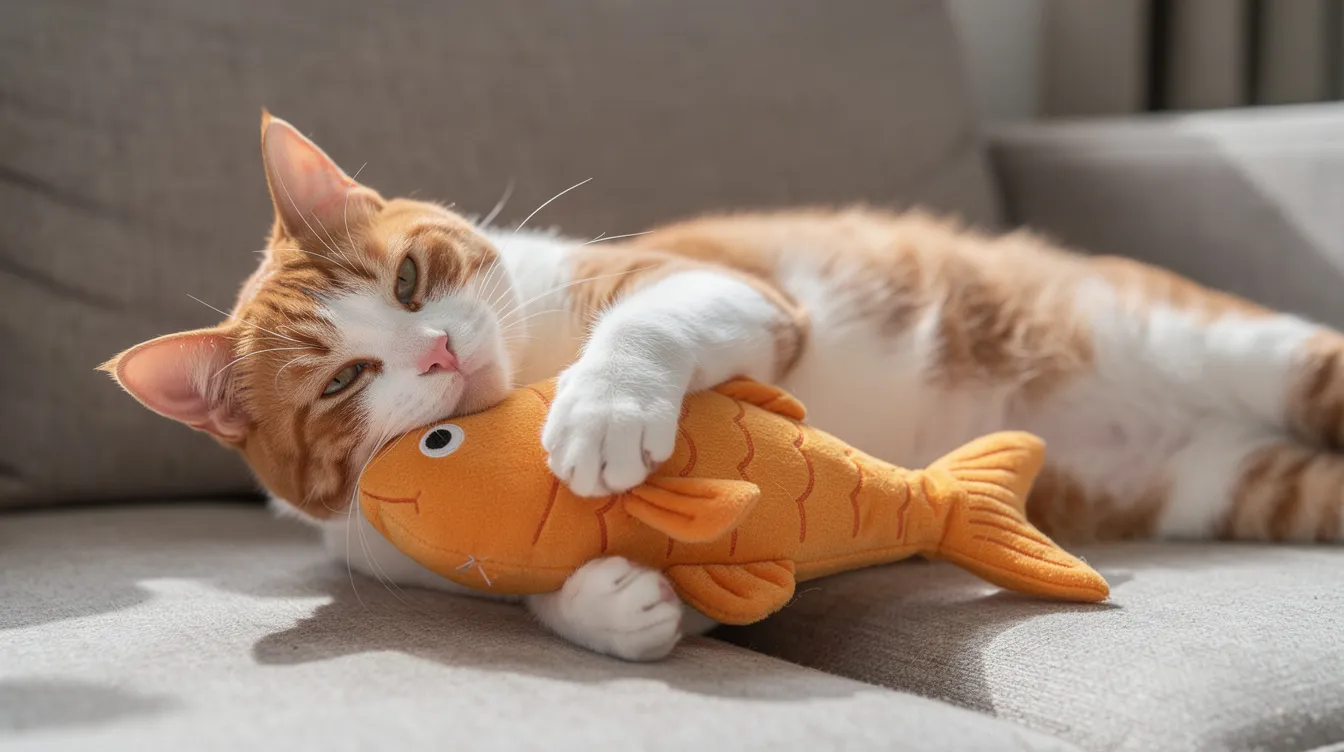
Outer fabric: Soft beibei velvet in a warm goldfish-inspired color palette. We chose this because many cats loved nuzzling and bunny kicking this texture during our prototype testing. Beibei velvet is a smooth synthetic plush with a short pile that feels velvety against paws and faces-it's designed for indoor use, prioritizing comfort and sensory enjoyment.
Inner filling: Cotton filling for a slightly weighty, squishy feel that makes the goldfish easy to grab, hug, and kick without feeling overly stiff or bouncy.
The idea behind this combination was to create a cat kicker that feels more like a soft body pillow for cats-something they can curl around on the couch, wrestle with, and nap beside. It's a cute, cuddly enrichment toy rather than a rigid chew toy designed for a dog.
We don't label this toy as "indestructible." It's intentionally designed for everyday indoor enrichment and comfort, with the expectation that active cats and kittens may eventually wear it out. That's normal. If you're curious about materials in other Cidero & Co. toys-interactive lamps, tunnels, plushes-individual product pages list fabrics and fillings so you can match toys to your cat's preferences.

How to Choose a Safe and Enjoyable Cat Kicker Toy
The best cat kicker toy is one your specific cat actually plays with, made from materials that fit their play style and your comfort level.
Size matters. Kicker toys should be at least 10 inches long for adult cats. Most kicker toys typically range from 7 to 15 inches long, though some stretch up to 19.5 inches. Kicker toys should allow cats to hold with front paws while kicking with back legs-that's the whole point. Across 21 different cat kickers tested for various recommendations, the consistent finding is that longer, thinner shapes work best for full-body engagement.
Construction quality. Prioritize strong, even stitching, no glued-on decorations, and tags that are either securely sewn or removed before play. A durable kicker toy with solid seams will outlast a pretty one with weak construction every time. Durability depends on tightly woven fabric materials more than anything else. Durable kicker toys are often made from tightly woven fabrics.
Match to your cat's habits:
- Heavy chewers → tighter weaves, slightly sturdy fabrics
- Cuddlers → softer beibei velvet or fleece (even if it shows wear sooner)
- Easily bored cats → toys with catnip inside, silvervine, or crinkle sounds
- Calmer pets → plain, softly stuffed kickers without a lot of noise
Interactive play helps engage cats' hunting instincts, so consider adding a kicker to your interactive play sessions. Products like kitty kick stix are handmade and filled with organic catnip-worth looking into if you want something artisanal. For households with multiple cats, you might want to explore toys that work across different play styles and learn more about how kicker toys curb unwanted cat behavior and how to pick the right one.
Simple safety habits: supervise initial play, check the toy weekly for damage, and retire toys once filling or long fabric strings begin to escape.
DIY Cat Kicker Toys: Fabrics & Fillings to Use (and Skip)
Many cat owners like making DIY kicker toys from scrap fabric at home-partly to save money, partly because it's fun to repurpose materials you already have.
Good fabrics for DIY kicking toys:
- Tightly woven cotton from old pillowcases
- Denim from worn jeans (for a sturdier option)
- Fleece throws or blankets
- Leftover upholstery-grade microfiber
Simple fillings that work well:
- Polyester fiberfill from craft stores
- Clean cotton batting
- A mix of fiberfill with dried catnip or silvervine (a tiny bit of fresh catnip goes a long way)
You can add a small amount of rice or buckwheat hulls to give the toy more weight and a satisfying thump when kicked, but keep those fillings completely sealed. Discard the toy if it ever becomes damp or starts to smell off.
Materials to skip:
- Very loose knits that unravel into long threads
- Fragile fabrics like silk or real fur
- String, elastic bands, ribbons, or beads that can detach
- Anything with buttons or small hard pieces your cat could eat
A quick construction tip: make the toy at least as long as your cat's body from chest to haunches. Use needles and sturdy thread, double-stitch the seams, and pull on them firmly before offering it. If you're putting together a handmade kicker, test it like your cat would-grab it, twist it, tug the ends.
If you prefer the look of store-bought toys but enjoy the DIY process, consider mixing both approaches: pair homemade kickers with a few design-forward options for a small, curated rotation your cat can cycle through.
How Material Choices Affect Your Cat's Play Style
Different cats gravitate toward different textures, weights, and sounds. The material in a kicker can subtly encourage certain types of play-chasing, kicking, or cuddling.
Very soft plushes like beibei velvet or fleece often become "comfort toys" that cats carry around, lick, or sleep with. Many cats tend to associate the scent and texture of these toys with their home and favorite humans, which is why you might find your cat dragging the same stuffed kicker to your sofa every night.
Slightly rougher or more structured fabrics-like cotton canvas or denim-may encourage more vigorous wrestling and bunny kicking because they give claws a tiny bit more grip without tearing immediately. If your cat's idea of fun is full-contact wrestling, a sturdy fabric is worth the trade-off in softness.
Weight plays a role too. Lightweight fiberfill-only kickers are easy to throw and chase, while toys with denser fillings stay put better for stationary kicking sessions on the floor or couch. Cats love that resistance-it mimics the hunt and the feeling of pinning down prey with their legs.
The catnip scent in many kickers makes a difference. Many cats become noticeably more active for about 10–15 minutes after exposure to fresh catnip or silvervine, though not all cats respond the same way. If your cat ignores standard catnip toys, silvervine is worth trying-it stimulates a different group of cats entirely.
Rotating toys weekly keeps cats mentally engaged. Watch which toys your cat returns to most, and use that as your guide for future purchases or DIY projects.
Caring for Cat Kicker Toys: Washing, Drying, and Replacing
Even ideal cat toys eventually collect fur, saliva, and dust. Basic care extends both hygiene and enjoyment.
Washing:
- Check the product tag first-many polyester plush and cotton toys can be machine-washed on a gentle cycle in a mesh laundry bag
- Toys with loose catnip or buckwheat hulls should usually be spot-cleaned only
- Cold or warm water preserves prints and textures better than hot washes
Drying:
- Air-dry softer fabrics like beibei velvet to preserve their texture
- Cotton-filled toys may clump slightly after washing-reshape by hand while damp
- Dry thoroughly to prevent mildew, especially in thicker kicker toys
Refreshing the scent:
The catnip scent fades over time with wear and washing. Instead of overwashing, try storing a clean, dry toy in a sealed bag with loose catnip for a day or two. This refreshes interest without degrading the fabric. You can also simply rotate toys so each one feels "new" again when reintroduced.
When to replace:
- Visible rips exposing stuffing
- Long threads your cat starts to chew or eat
- Hard inserts poking through fabric
- The toy has lost its shape entirely and your cat has lost interest
At Cidero & Co., toys like the Jumbo Goldfish kicker plush are designed with indoor cleaning in mind. Product pages include care notes so you can maintain both texture and appearance for as long as possible.
Connecting Materials to Cat Enrichment at Home
Understanding fabrics and fillings isn't just technical-it helps you build a more enriching daily environment for indoor cats, especially in limited space.
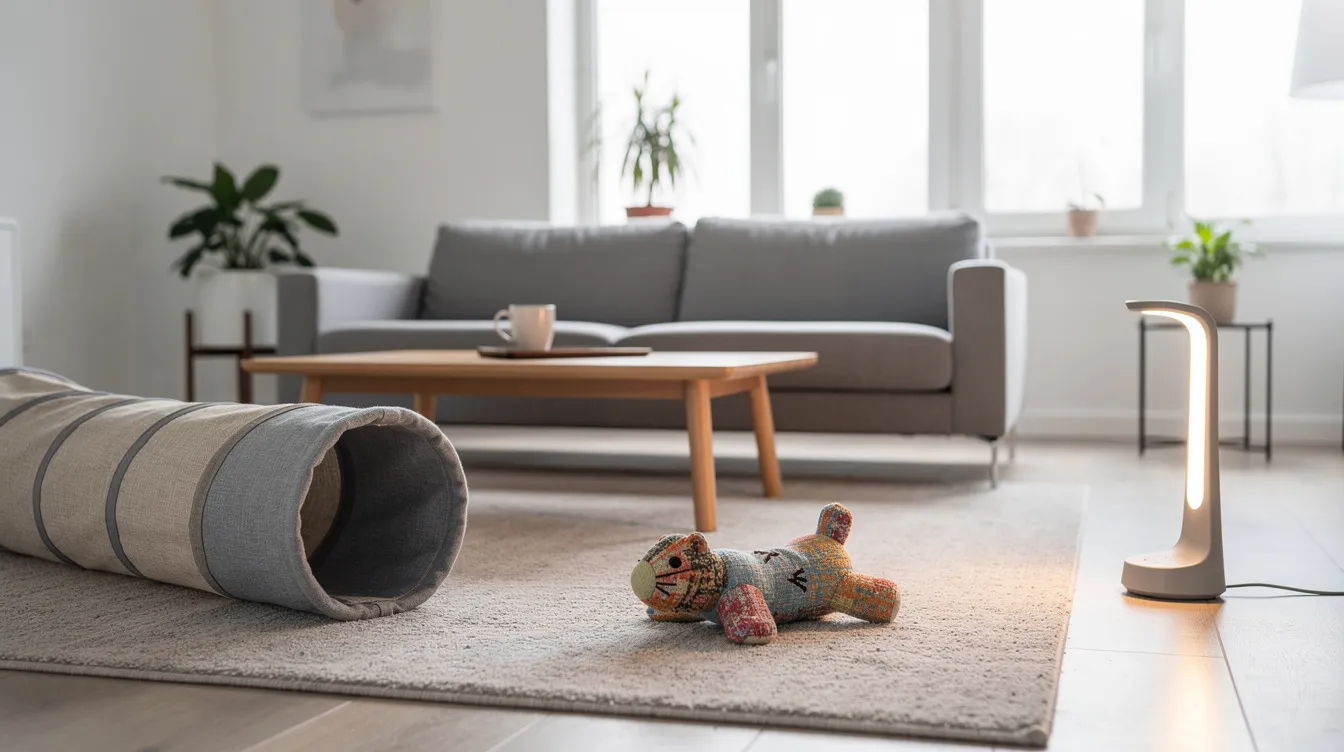
A small rotation of different toys-soft beibei velvet kickers, interactive toys for mental stimulation, tunnels for ambush play-gives cats varied sensory experiences throughout the week. Touch, sound, movement, smell: each material contributes something different.
Indoor cats rely on toys to express natural behaviors like pouncing, grabbing, and bunny kicking. A well-chosen cat kicker essentially functions as a safe "prey" object they can kick and bite without damaging furniture or your hands. That's real mental stimulation built into a simple toy.
Some materials pair especially well with specific enrichment tools: smooth plush for cuddle-ready kickers, easy-clean plastics for slow feeders, and slightly textured fabrics for tunnels where claws might graze the surface.
Think of materials as part of the overall design of your cat's environment. Select a mix that's attractive enough to leave out in the living room (nobody wants to hide ugly toys behind the couch) and sturdy enough for daily use. When enrichment becomes part of your decor, it's more likely to stay accessible-and your cat is more likely to actually use it. If you're looking for ways to keep cats entertained while you're away at work, a good toy rotation is one of the simplest starting points.
Frequently Asked Questions About Cat Kicker Toy Materials
What is rayon in cat toys?
Rayon is a semi-synthetic fiber made from wood pulp that's chemically processed into soft, silk-like threads. It's used in plush cat toys because it's very soft, takes on vibrant colors, and costs less than natural silk. You'll usually find it blended with polyester rather than used on its own.
Is rayon safe for cats?
When securely sewn into a toy's outer shell, rayon is generally considered acceptable. The bigger concern isn't the fiber itself-it's damaged toys with loose threads or exposed stuffing. Retire any toy that starts to rip, regardless of what it's made from.
Is polyester filling safe in cat kicker toys?
Standard polyester fiberfill is the most commonly used filling in commercial cat toys and is generally fine when kept inside the toy. If stuffing starts escaping through holes, remove the toy immediately-cats shouldn't chew or eat loose filling.
Is cotton better than polyester?
"Better" depends on your priorities. Cotton is natural and breathable, while polyester is more resilient to washing and tends to hold its shape longer. Many quality cat toys blend the two. Neither is inherently safer than the other.
What is beibei velvet?
Beibei velvet is a very soft, synthetic velvet-like fabric with a short pile. It's popular in plush cat toys for its gentle, cozy texture. It's not as tough as canvas or denim, but it's beloved by cats that like to cuddle and nuzzle their toys.
What's the best filling for cat toys?
There's no universal best. Lightweight polyester fiberfill is great for tossing and chasing. Denser cotton or mixed fillings work well for hugging and kicking. Catnip or silvervine add scent-based enrichment but don't replace structural stuffing-they're extras, not the main filling.
Can I wash a cotton-filled cat toy?
Yes, but use a gentle cycle with cold or warm water and dry thoroughly. Cotton filling may clump slightly after washing, so reshape the toy by hand while it's still damp. Make sure it's completely dry before giving it back to avoid mildew.
What should I do if stuffing comes out of a toy?
Remove the toy immediately. If the damage is minor, you can restuff it, trim loose threads, and sew it shut securely. If the rip is extensive or the toy is generally falling apart, it's time to purchase a replacement. Don't let cats chew on exposed filling or loose fabric strands.
Picking Materials That Work for You and Your Cat
Understanding fabrics like rayon, cotton, beibei velvet, and fleece-and fillings like fiberfill, cotton, catnip, and recycled PET-helps you choose cat kicker toys that fit your cat's play style and your own comfort with different materials.
No single fabric or filling is perfect for every cat. Safe construction, appropriate size, and regular inspection matter most, especially for strong kickers who tend to really sell the whole predator performance. Whether your cat prefers to cuddle a soft goldfish or wrestle a sturdy denim kicker into submission, the right materials make everyday play more fun and satisfying.
Try experimenting with a small mix of textures and fillings-perhaps a soft cuddle-ready kicker plus a sturdier, more textured option-and watch which toys your cats gravitate toward over a few weeks. You might be surprised.
Explore Cidero & Co.'s safety guides, behavior articles about why cats bunny kick, and product pages to keep building an enriching, comfortable environment tailored to your indoor cats.
Choosing thoughtful materials is one of the easiest ways to turn everyday playtime into a safe, satisfying routine-for both cats and their humans.


