

Why Won't My Cat Use the Tunnel? 7 Tricks to Fix It Fast
You finally bought a cat tunnel. Maybe a cute 3-way style, maybe one with crinkly material and a dangling ball toy hanging from the top. You set it up, stepped back, grabbed your phone to film the magic… and your cat walked right past it. If you're asking yourself why won't my cat use the tunnel, you're far from alone. This is one of the most common reactions cat parents report after a tunnel purchase, and it almost never means your kitty dislikes the toy.
Cats are cautious about new objects-especially large ones that smell unfamiliar and make noise when touched. That reaction isn't a toy fail. It's just a cat being a cat.
In this article, we'll cover:
- The common reasons cats avoid tunnels (location, noise, smell, size, confidence)
- Simple fixes you can try today with treats, a wand toy, or your cat's own bed
- When it's just a matter of patience vs. when to swap to a different style
At Cidero & Co., we design instinct-driven enrichment for indoor cats, including our Rainbow Starfish Cat Tunnel-so tunnel trouble is something we think about a lot.
Is It Normal for Cats to Ignore a New Tunnel?
If your cat has ignored the new tunnel for a day or two, there's usually nothing to worry about. Cats can take time to adjust to new items in their environment. A sudden tunnel in the middle of your house can feel suspicious, and most cats need a beat before they commit.
Some indoor cats will only investigate at night when the house is calm and the humans are out of the way. Others sniff and walk away for days. A few will bat at the holes or peek through one end but refuse to step inside.
All of this is normal. Tunnels are beneficial for play and hiding, and cats may avoid tunnels due to fear or discomfort initially-but that discomfort fades with time. Tunnels can also reduce stress and anxiety in cats once your pet finally claims the space as their own.
One important exception: if your cat used to love a tunnel and suddenly stops-especially alongside changes in food intake, grooming, or litter box habits-call your vet. That's a different kind of avoidance entirely.
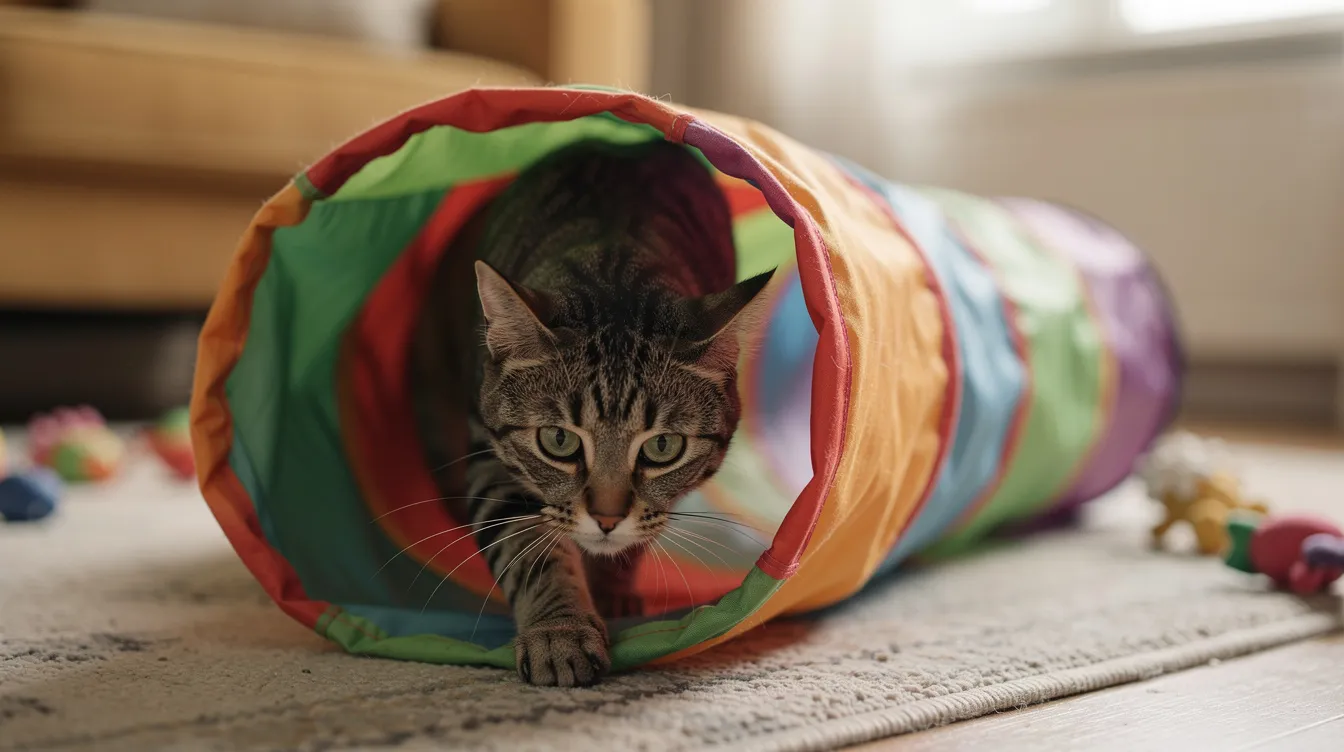
1. The Tunnel Is in the Wrong Location
Cats prefer paths that let them stay close to walls, furniture, and edges. A tunnel dropped in the middle of too much space often gets completely ignored because the cat feels exposed.
Better locations to try:
- Along a wall your cat already uses as a walking path
- Beside the sofa, under a coffee table, or next to a bookcase
- Near a favorite window perch or radiator
- Close to (but not blocking) essentials like the litter box area, food, or water
- Where it can connect two "destinations"-like a bed to a scratching post to a window
Cats often prefer tunnels positioned along their typical routes, and they also prefer tunnels in quiet areas away from high traffic. Placing a tunnel directly in front of the litter box or food dish can turn it into a guarded bottleneck, which gets stressful fast-especially in a house with multiple cats. If you're managing multi-cat dynamics or choosing among the best cat tunnels for multiple cats, keep resource access clear.
Place tunnels in familiar areas to ease introduction, and experiment slowly. Move it a meter or two every few days rather than shuffling locations daily so it becomes part of your cat's mental map.
2. Your Cat Doesn't Feel Safe Inside
From your cat's perspective, a long narrow tube with one end open is a dead end. Some tunnels can feel too dark or closed off to cats, and that's enough to keep even a curious kitty away.
Signs your cat feels unsafe: they sniff only at the entrance, stretch one paw in and pull back, or only approach when other cats aren't around.
Design features that help:
- Multiple exits: three-way tunnels provide more space for cats to explore, and multiple entrances prevent cats from feeling trapped. Tunnels should have at least two entrances for shy cats.
- Peek holes or mesh windows so your cat can see out-cat tunnels provide a safe space for nervous cats to observe their surroundings.
- Enough room to turn: most cat tunnels are 9-10 inches in diameter, but tunnels should be big enough for a cat to move comfortably. For a typical 10-12 lb indoor cat, look for 10-11 inches; larger cats like Maine Coons need 13-14 inches. Tunnels that are too cramped can deter larger cats.
- Sturdy frame: an unstable tunnel can frighten a cat. Soft but sturdy construction that won't collapse mid-exploration is essential.
Cat tunnels provide a safe space for shy cats, and the right shape makes all the difference. If you're working with a nervous kitty, you can follow specific tips on how to get a shy cat to use a tunnel. The Rainbow Starfish Cat Tunnel was designed as a multi-entry tunnel with several access points and peek windows-giving cats an escape route no matter which direction they're facing.
If your current tunnel is very narrow, single-entry, or collapses when touched, it may simply be the wrong design for your particular cat.
3. The Tunnel Smells Strange
Cats "see" the world through scent. A brand-new tunnel straight out of a plastic bag often carries factory, dye, or warehouse odors that scream "not mine." Some cats dislike the material or texture of tunnels for exactly this reason-it doesn't smell like territory yet.
Smells that might put a cat off:
- Chemical or plastic smell from polyester lining or nylon
- Strong laundry detergent or fabric softener if the tunnel was washed before use
- Lingering scents from other pets if it was stored near dog gear or bought second-hand
Simple fixes:
- Leave the tunnel fully open in a spare room for 24–48 hours to air out
- Skip perfumed cleaners-wipe with a damp cloth and mild, unscented soap if needed
- Place it beside a favorite cat bed or blanket so familiar smells migrate naturally
- Rub a small towel or old T-shirt your cat has slept on along the inside and entrances
Using familiar scents inside a tunnel can encourage exploration. It may take a couple of days for the tunnel to stop smelling like "factory" and start smelling like "home." Choosing low-odor, pet-safe materials-like the fabrics we use at Cidero & Co.-can help long-term.
4. The Crinkle Noise Is Scaring Your Cat
Noisy tunnels are a love-it-or-hate-it thing. Some cats absolutely love the crinkle. Others bolt at the first rustle. Cats may avoid noisy tunnels made of crinkly materials, and inside an enclosed tube, that noise sounds much louder than it does to humans.
Typical fear reactions:
- Your cat makes a dash the moment the tunnel moves
- The cat freezes when another pet charges through and creates noise
- Your kitty only touches the ball toy at the edge but won't step on the crinkly fabric
A gentle desensitization routine can help:
- Sit on the floor and gently press the tunnel so it crinkles softly while your cat is a few feet away
- Toss a high-value treat near (not in) the tunnel right after each small noise
- Over a few short sessions, work up to crinkling more and rewarding calm curiosity
Quiet tunnels are better for shy or anxious cats, and quiet tunnels are also better for timid cats to explore at their own pace. If your cat still startles after several attempts, switching to a quieter tunnel with padded, soft fabric is perfectly reasonable.
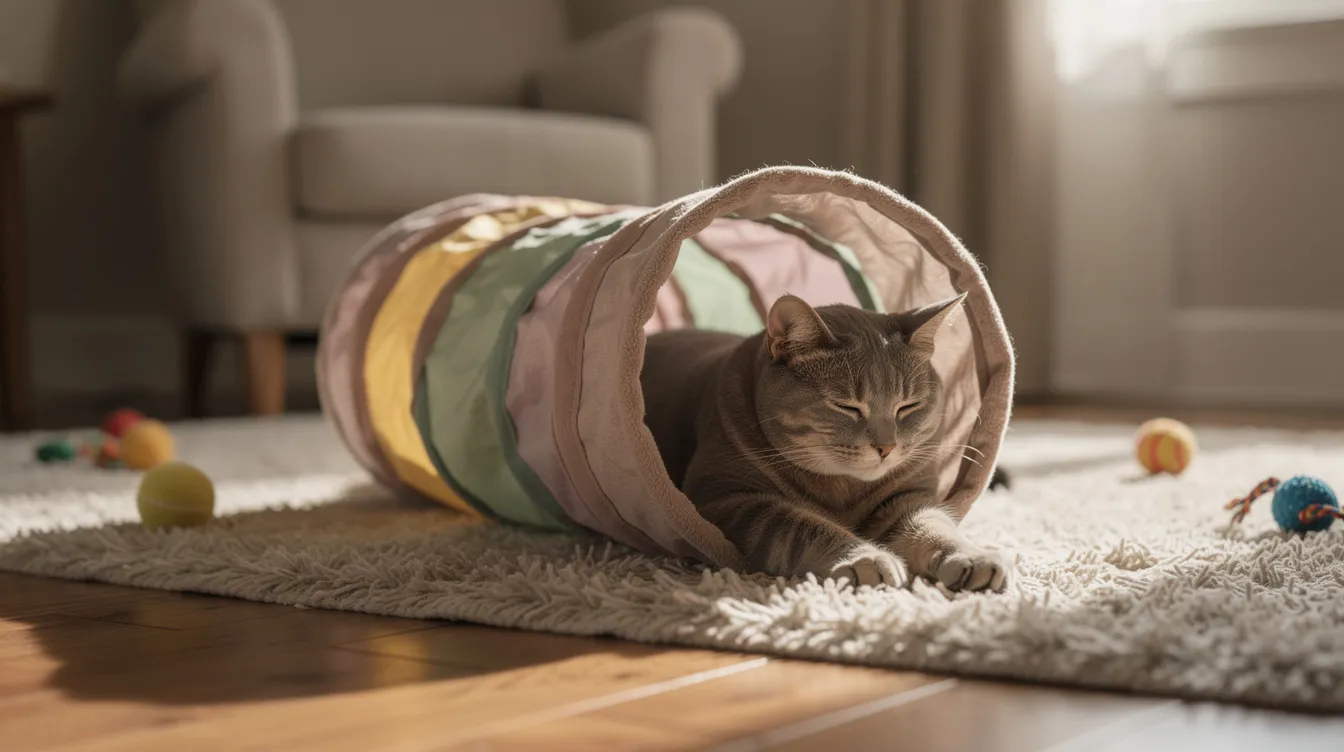
5. Your Cat Doesn't Understand It's a Toy Yet
Many cat parents unpack a tunnel, unfold it, and walk away. To the cat, it just looks like a weird piece of furniture-not a game. Lack of treats or toys inside a tunnel may reduce a cat's interest significantly. Cat tunnels provide mental stimulation and other benefits for curious cats, but only when there's something worth investigating.
Tunnels satisfy natural hunting instincts in cats, so you need to give the tunnel a job: a designated space where "prey" disappears and reappears.
A simple 5-minute playtime routine:
- Minutes 1–2: Drag a wand toy back and forth just outside the tunnel to wake up hunting instincts. Playing with a wand toy can entice cats to use tunnels quickly.
- Minutes 3–4: Slowly snake the wand toy into the tunnel and back out, letting your cat catch it near the entrance. Try different toys to see what clicks-a favorite toy or chase accessory can make all the difference.
- Minute 5: Toss a small toy or a couple of treats through the tunnel so your cat sees things travel from one end to the other.
Use laser pointers carefully-always end by switching to a physical toy or treat so the cat gets to "catch" something. Creating positive associations with the tunnel can encourage usage. Repeat these micro-sessions once or twice a day for a few days, and many cats suddenly dash through the tunnel once they realize it's part of the fun.
6. Your Cat's Personality (and Age) Matters
There's no single "normal" way cats play with tunnels. What works for a bold kitten won't work for an anxious adult.
- Confident cats often charge through a new tunnel immediately the same day it arrives
- Shy cats may circle for a week before stepping inside-cat tunnels help shy cats feel secure and safe once they do commit
- Kittens usually adapt fastest but can be overwhelmed by rough play in narrow tunnels
- Senior cats or heavier adult cats may avoid narrow, wobbly tunnels that are uncomfortable for stiff joints
Not all cats enjoy crawling through enclosed spaces, and that's okay. A cautious cat might prefer using the tunnel as a quiet hideout or nap spot rather than a zoomie track. Tunnels can help reduce stress in anxious cats when used as a safe hide rather than an action toy, and it’s especially important to choose the best cat tunnel for kittens and senior cats so the design matches their bodies and comfort levels.
Match the tunnel to your cat's body and habits:
- Wider, soft-lined tunnels for older or larger cats
- Sturdy, multi-entrance tunnels for energetic, rough-and-tumble play
- Quieter, stable tunnels for nervous personalities and smaller cats
7. Your Cat Just Needs More Time
Here's the myth: "If my cat doesn't use it today, they'll never use it." That's simply not true. Most cats need time to explore and get accustomed to a new tunnel. Many cats take several days. Some take a week. A few take multiple weeks before confidently dashing through.
Introduce tunnels gradually to avoid overwhelming shy cats. Then watch for small signs of progress:
- A first sniff at the entrance
- One paw or head placed inside
- Using it as a partial hide while watching a wand toy
- Sneaking through at 2am-you might hear the rustle or catch it on a pet camera
Let your cat explore on their own terms. Leave the tunnel open, avoid moving it constantly, and don't pressure your pet. Forcing or rushing almost always slows things down.
How to Encourage Your Cat to Explore the Tunnel: A Simple Checklist
Here's a quick checklist you can screenshot and start using today:
- Put the tunnel beside a favorite sleeping area or near a window your cat already loves
- Leave 3–5 treats just inside the entrance once or twice a day
- Toss a soft ball toy gently through the tunnel and let your cat chase
- Use a wand toy to create peek-a-boo play around the tunnel edges
- Don't pick up and place your cat inside-let your cat choose entry
- Use treats to encourage hesitant cats to explore tunnels at their own pace
- Rotate the tunnel's position occasionally-every 1–2 weeks, not daily. Moving a tunnel can sometimes renew a cat's interest.
Try to connect the tunnel to resources like a scratching post, cat tree, or a path toward the litter box without blocking access. Combine tunnel time with other enrichment-interactive lamps, chase toys, or a slow feeder nearby so the area feels like an activity zone, especially if you want to keep your cat entertained while you're away.
Short, consistent sessions of 5–10 minutes are more effective than one long, intense tunnel daily playtime once a week. For more ideas to rotate into those short sessions, explore our cat enrichment blog with tunnel and play tips.
What Makes a Cat Tunnel More Appealing?
Not all cat tunnels are equal. Small design choices make the difference between "ignored" and "daily zoomie track." A well-designed tunnel supports environmental enrichment for indoor cats when it checks the right boxes, and the best cat tunnels for indoor cats that get bored fast usually share the same core features.
Features that matter in the best cat tunnel:
|
Feature |
Why It Matters |
|---|---|
|
Multiple entrances/exits |
Prevents feeling trapped; gives security |
|
Peek holes or mesh windows |
Lets cats observe without committing |
|
Perfect size to turn around (10-11" for most tunnels) |
Comfort for adult cats |
|
Sturdy, flexible frame |
Won't collapse during rough play |
|
Soft, quiet fabric |
No plastic bag sounds every time paws touch it |
|
Foldable design |
Easy storage in apartments with limited room |
|
Pet-safe dyes, no harsh odors |
Cats won't avoid it on day one |
|
No loose dangling toys left unattended |
Prevents tangling hazards |
Durable tunnels resist scratching from active cats, and most cat tunnels on pet supplies shelves skip several of these features. If you live in a smaller home, it can help to focus on the best foldable cat tunnel for indoor cats. The Rainbow Starfish Cat Tunnel was designed with this full list in mind: multi-entrance layout, quiet but engaging fabric, easy storage, and a foldable structure sized for indoor cats who need both security and stimulation.
If your current tunnel is missing several of these, a product upgrade may be easier than trying to "fix" the cat.
FAQs: Common Worries About Cats and Tunnels
Why won't my cat go inside the tunnel?
Usually a mix of location, noise, smell, and not feeling safe. Start by moving it to a quieter spot, airing it out, and playing around it with different toys.
How long does it take for cats to like a tunnel?
Anywhere from a few days to a few weeks. Recently rehomed or shy cats can take longer. Patience is your best tool.
Should I force my cat into the tunnel?
No. Forcing, blocking exits, or using the tunnel to catch your cat for medicine or nail trims will create negative associations that are hard to undo.
Do older cats like tunnels?
Many senior cats enjoy soft, low-noise tunnels for napping and slow exploration, as long as the openings are wide and the rims aren't high.
Are crinkle tunnels scary for cats?
Some cats love crinkle. More sound-sensitive cats prefer quieter fabrics. If your cat consistently startles, swap to a quieter model-there are plenty of other tunnels without crinkly material.
Where should I place a cat tunnel?
Along walls, near safe resting spots, and never directly blocking the litter box, food, or narrow doorways. Cats prefer locations where they already feel comfortable.
Your Cat Isn't Broken-The Setup Just Needs Tweaks
A cat ignoring a new tunnel is almost always about environment, design, or timing-not a "bad cat" or a wasted purchase. Move it to a spot where your cat feels safe, give it time to pick up familiar scents, use a wand toy and treats to show it's part of play, and skip the rough play or forcing.
Even a single paw inside the tunnel or a late-night dash counts as real progress.
If you're looking for a tunnel designed around how cats actually think and move at home, explore the Rainbow Starfish Cat Tunnel and our full collection of indoor cat enrichment toys, especially if you’re deciding between a cat tunnel vs cat bed and which your cat will use most. For a deeper dive into tunnel types and how to choose, check out our Ultimate Guide to Cat Tunnels.


