

Indestructible Cat Kicker Toy: Does One Actually Exist?
You know the story. You're a dedicated cat mom or dad who finally finds a kicker toy your indoor cat goes wild for. They grab it, bite it, and bunny kick it with pure hunting intensity. Three days later, there's stuffing on the floor and a deflated husk under the couch. You search for an "indestructible cat kicker toy" because you're tired of the cycle. Here's the honest truth: for plush toys, "indestructible" is more of a marketing promise than a physical reality. No fabric toy can survive indefinitely against sharp claws and teeth backed by real bite force.
So the better question is this: what specific construction features make a durable cat kicker toy more likely to survive repeated biting, grabbing, wrestling, and bunny kicking? That's what this guide covers. We'll break down the framework of durability-construction × materials × intended use × care-so you can stop wasting money on toys that fall apart and start choosing ones worth the purchase.
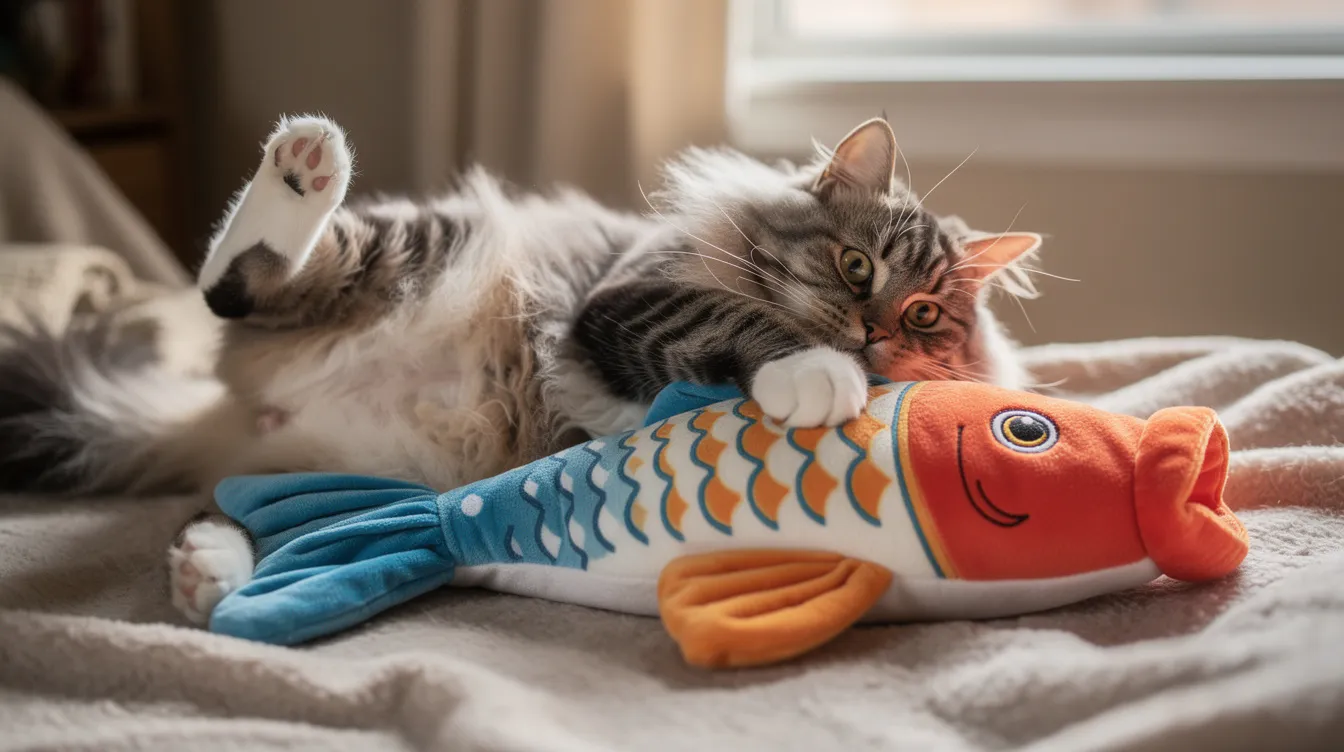
Are Any Cat Kicker Toys Actually Indestructible?
No plush cat kicker toy is literally indestructible. Not premium ones, not canvas ones, not the tough-looking ones with bold "INDESTRUCTIBLE" labels. A domestic cat's canine teeth can generate roughly 56 to 73 newtons of bite force, and their rear carnassial teeth can reach 73 to 118 newtons. When you pair that with razor-sharp claws and the repetitive shear stress of daily bunny kicking, every fabric eventually gives.
What "indestructible" usually means in the cat toy world is "exceptionally durable under normal play." That's a meaningful difference. A well-built kicker won't suddenly explode at the seams during a single play session. It wears gradually, and when it does fail, it fails more predictably-giving you time to spot damage and replace it before loose filling becomes a safety issue. The realistic goal isn't invincibility. It's finding a kicker that lasts significantly longer and stays safer throughout its life.
What Does "Durable" Actually Mean for a Cat Kicker Toy?
In practical terms, a durable kicker keeps its shape, holds its seams closed, and retains its key features after months of daily grabbing, biting, carrying, and full-body bunny kicking. If you're not sure what a cat kicker toy is or how cats use them, the short version: it's a long plush toy cats wrap their front paws around and kick with their hind legs, mimicking prey capture.
Durability is relative to each cat's play style. An aggressive chewer can destroy toys that a mellow kitty would cuddle for a year. It depends on stitching quality, seam construction, fabric strength, filling density, and how the toy is used and cared for.
Why Do Cat Kicker Toys Rip So Easily?
If you've ever been surprised by how fast cat toy seams rip open, you're not alone. Most mass-market kicker toys are built to hit a low price point, which often means thinner fabric, weaker seams, and filler that shifts around inside; when cats are bored, they often focus more rough play on one toy. Here's where things actually break down.
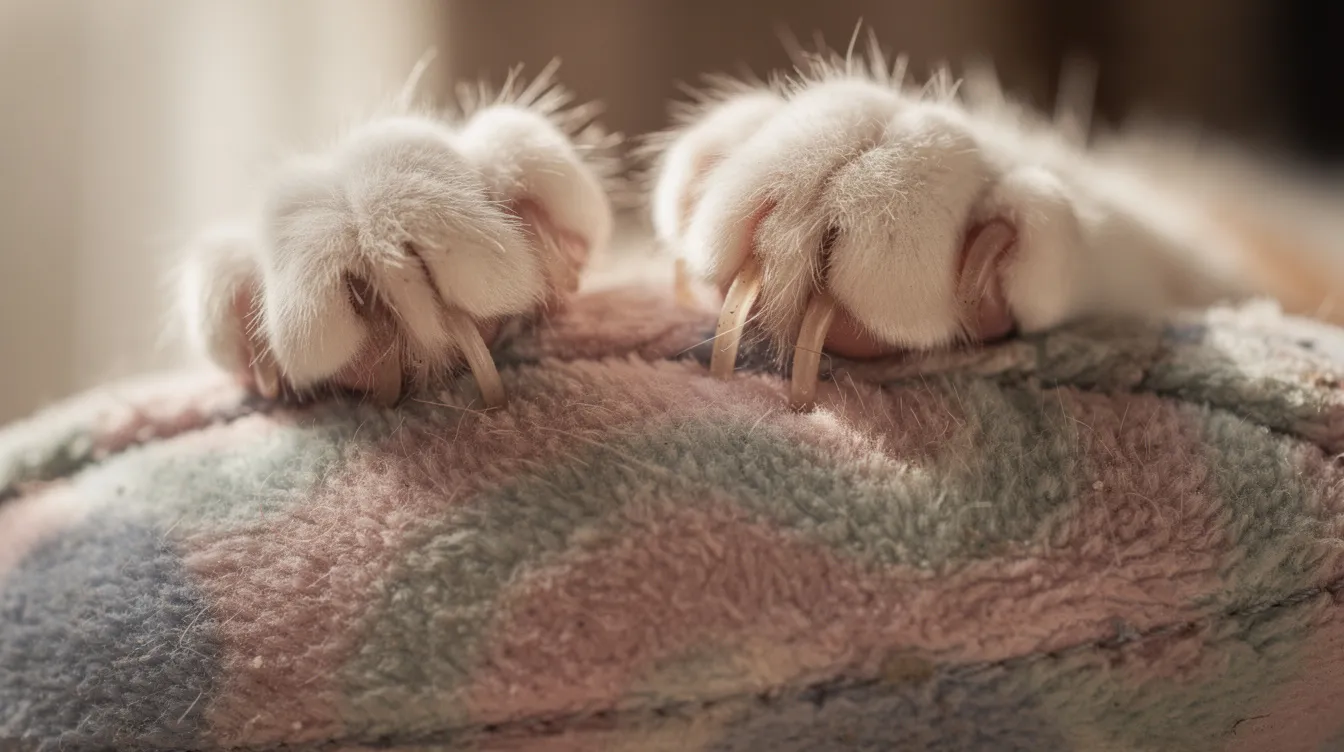
Weak Seams
When a cat grips one end and kicks the other, tension runs the full length of the toy and concentrates along the main seams. Weak seams look like this to a shopper: visible gaps between the stitching, uneven edges, or seams that feel loose when you gently bend the toy. End seams on short, stubby kickers face the most stress because all that kicking force lands on a small folded area.
Poor Stitching
Common low-quality stitching problems include long, loose stitches, inconsistent spacing, and a single line of stitching where there should be two. The word "reinforced" on packaging sounds great but means little without specifics. Double-stitched seams enhance the durability of kicker toys far more than a single row of long stitches in thick thread. Cheap stitching is typically the first thing to give way, even when the fabric itself looks decent.
Thin or Fragile Fabric
Thin polyester, low-density fleece, and loosely woven materials fuzz up fast under claws and teeth. Felt does not hold up well to aggressive play at all-it pills, thins, and tears easily. You can do a simple feel test: stretch the fabric between two fingers. If light shines through or the weave opens up, that toy won't last long against a determined cat. Fabric texture also affects whether a cat keeps biting and chewing the same spot.
Loose or Poorly Secured Filling
Once a seam starts to open, loosely packed polyester fiberfill or paper crinkle material works its way out, widening the tear. Uneven filling creates thin spots where claws can pinch fabric and start early holes. The safety concern is real: exposed stuffed filling can tempt cats to chew and eat fibers, which may lead to a vet visit for gastrointestinal issues.
High-Stress Attachment Points
Kicker toys can have interactive components like tails and bells, and engagement features can include crinkly material and tails. But ears, fins, ribbons, and embroidered facial features all become weak points. Cats love to grab and tug these parts, focusing stress on a tiny seam area. For rough players, simpler shapes with fewer dangling parts tend to be more durable than complex novelty designs, including decorative add-ons like stars that can create extra failure points.
5 Things to Look for in a Durable Cat Kicker Toy
This is the section that matters most if you're searching for an indestructible cat kicker toy but willing to be realistic. Kicker toys are rated on durability during testing by manufacturers, but you can do your own quick evaluation with these five construction checks. You don't need to be a textile engineer-simple visual and tactile inspections go a long way.
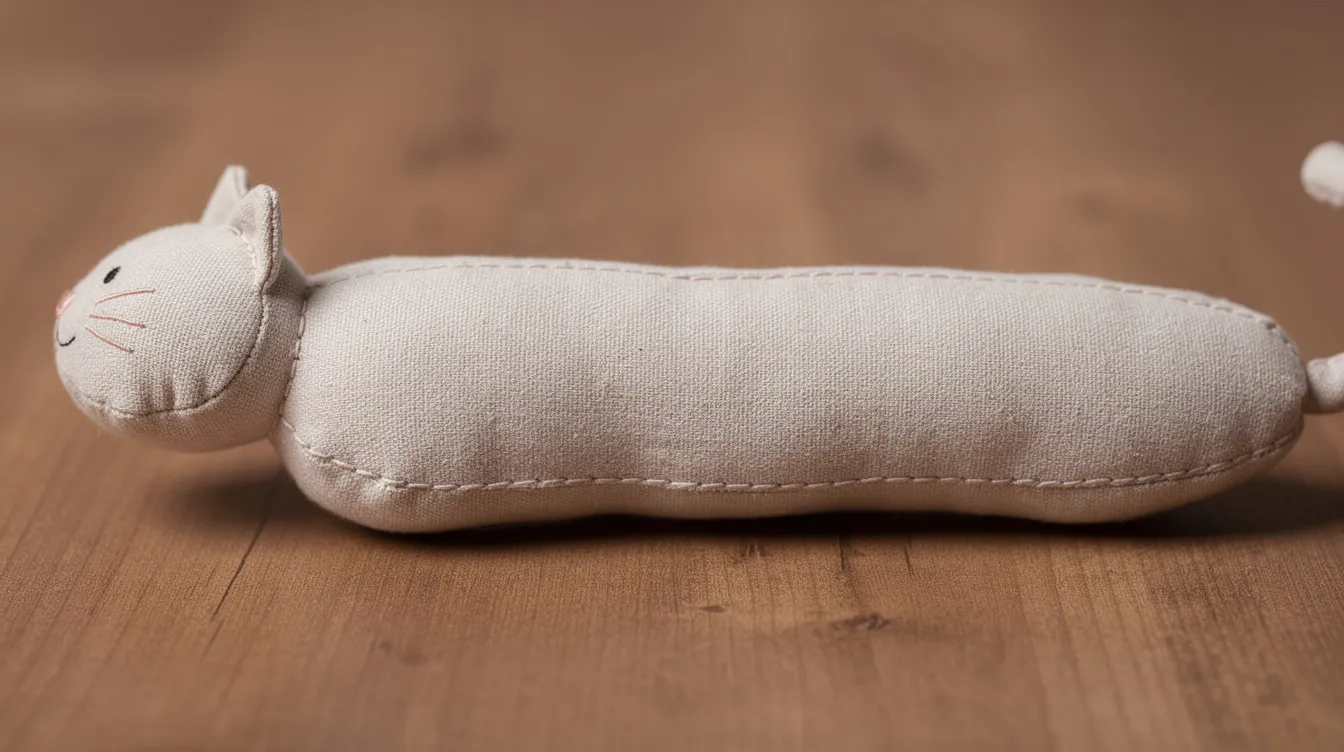
1. Dense, Consistent Stitching
Short, even stitches distribute stress more evenly along a seam, making it harder for a single claw snag to start a rip. Look for: no large gaps between stitches, no long loops of thread, and a tidy, uniform stitch pattern around the entire perimeter. Quick inspection tip-gently tug both sides of a seam between your fingers. If you can see daylight or gaps, that stitching may fail quickly under play.
2. Strong Seam Construction
Not all seams are equal. Overlock (serged) seams wrap thread around the fabric edge and resist fraying, while enclosed seams like French seams hide raw edges entirely inside. French seams are more labor-intensive but tend to resist fraying and splitting better over time. No single seam type is automatically best for every toy, but multiple layers of stitching and enclosed raw edges generally hold up longer. Check end seams in particular-those are the spots most likely to burst when a cat grips and kicks hard.
3. Durable Fabric
Durability is linked to tightly woven fabric materials. Denier measures fiber weight-higher denier typically means thicker, more abrasion-resistant yarn. Durable cat toys are typically made from heavy-duty materials like ballistic nylon or canvas. Toys made from tough canvas or denim are more durable than thin plush or single-layer felt. If the fabric feels substantial and doesn't stretch thin when pulled, it will usually handle wrestling-style play longer.
4. Securely Packed Filling
A good kicker has enough filling to hold its shape while staying soft enough for a cat to bite and grab. Kickers with catnip or silvervine are popular among cats, and many kicker toys are filled with catnip or silvervine to boost interest. Some kicker toys even come with refillable catnip or silvervine pouches, which adds long-term value and can create a similar effect without replacing the whole toy. Avoid lumpy toys with obvious empty pockets or toys so overstuffed they feel rigid and might split. Consistent filling distributes pressure more evenly when a cat kicks, reducing isolated stress on any single seam. Some designs also use puncture-resistant linings that prevent claws and teeth from piercing through cat toys to reach the inner filling.
5. Reinforcement at High-Stress Areas
High-stress zones that benefit from reinforcement include both ends of the kicker, corners, handles or loops, and seams around refill openings. Visible reinforcement looks like an extra line of stitching, a small fabric patch inside an opening, or a folded-over hem where cats tend to grab. Even with reinforcement, inspect these spots regularly if your cat plays aggressively.
What Makes a Kicker Toy Durable for Aggressive Chewers?
Cat owners use "aggressive chewer" to describe cats that bite, rake, and kick the same toy session after session with real intensity. Think of a 12-pound Bengal that treats every kicker like live prey-they'll chew the same corner, kick the same seam, and go wild until something gives. For these cats, construction details matter far more than gimmicks like squeaker sounds or flashy prints.
Regular play with durable cat toys promotes physical exercise and mental enrichment, so finding tough cat toys for aggressive chewers is worth the effort. That said, some extremely destructive cats may need a mix of plush kickers and non-plush options like rubber chew toys to satisfy their chewing drive safely. Engaging with cat toys can help stimulate natural hunting and chewing behaviors and reduce boredom, which can help cats that struggle with repetitive toy damage over time—and safety checks for cat kicker toys should always factor into your buying decisions.
How Long Should a Good Cat Kicker Toy Last?
There's no universal lifespan for a cat kicker toy because every cat's play style, size, and schedule is different. Key factors that affect longevity include frequency of play sessions, whether multiple toys are rotated, claw sharpness, bite strength, and material quality.
A realistic range: some indoor cats may keep a well-made kicker for 6 to 18 months, while very determined chewers might wear one out in a few weeks. Kittens enjoy shorter kicker toys under 10 inches long and tend to be gentler, so those toys may last longer despite lighter construction. Rather than focusing only on the sticker price, think about what each toy costs per month of active use—especially when you compare the best cat kicker toys for indoor cats side by side.
Is a $40 Kicker Toy Really Better Than a $10 One?
Imagine you buy a $9 kicker four times in a year because each one lasts about two to three months. That's $27 to $36 spent. Now consider a single $39.99 toy that lasts the full year. Here's how that breaks down:
|
Toy type |
Price |
Approximate lifespan |
Estimated cost/month |
|---|---|---|---|
|
Budget kicker |
$9 |
2 months |
$4.50 |
|
Budget kicker |
$9 |
3 months |
$3.00 |
|
Premium kicker |
$39.99 |
12 months |
$3.33 |
|
Premium kicker |
$39.99 |
18 months |
$2.22 |
Some premium models are sold individually rather than in multipacks, so compare value by expected lifespan, not just the shelf tag.
Of course, lifespans vary dramatically by cat and toy. A determined chewer may destroy either option much faster. Price alone doesn't guarantee durability-you still need to inspect seams, fabric, and construction before deciding a higher price tag is worth it. But cost per month is a smarter comparison than sticker price for any cat parent stuck in the replacement cycle. Cat toys should always be made from safe, non-toxic materials regardless of the price range.
What About the Jumbo Goldfish Kicker Plush from Cidero & Co.?
Let's be transparent: the Jumbo Goldfish Kicker Plush is not indestructible. No plush kicker is. It's designed specifically for full-body wrestling-style play-the kind where your cat wraps around a toy and kicks with everything they've got. Cidero & Co. focuses on thoughtfully designed indoor cat toys and enrichment, not just novelty plush. Kicker toys typically range from 6 to 19.5 inches long, and standard kicker toys should be around 7 to 10 inches, but the Jumbo Goldfish Kicker Plush for cats goes larger for cats that prefer a bigger target.

Built for Full-Body Kicker Play
At approximately 50 cm in length, the Jumbo Goldfish lets most adult indoor cats wrap their front paws around the body while kicking with their back legs. The soft plush construction and stylized goldfish shape can be grabbed from multiple angles, making it appealing for cats that treat kickers like prey to be hugged and wrestled. Kicker toys should be lightweight for easy kicking, and a larger surface area means cats can engage their whole body rather than just bat at a small target.
Why a Larger Kicker Can Help
A longer toy distributes wear across a bigger surface area, reducing the chance that all biting and kicking concentrates on one small seam. Larger plush toys encourage full-body engagement, which helps indoor cats burn energy, and a bigger shape can also give them a better place to rest their paws and reset between wrestling bursts, which may help reduce boredom-driven destructive behavior. Interactive toys like kickers can also strengthen the bond between pets and owners during supervised play, especially when you understand why kicker toys stop bad cat behavior and how to pick the right one. Size alone doesn't make anything indestructible, but it can influence where and how the toy wears over time.
Set the Right Expectation
No plush kicker-including the Jumbo Goldfish-should be considered truly indestructible for all cats. Inspect it regularly, especially around the ends and high-stress seams, and retire it when stuffing or loose threads become visible. Most cats prefer kicker toys filled with catnip or silvervine, and most cats love catnip or silvervine in their toys. Silvervine is a species of kiwifruit that affects cats similarly to catnip, and silvervine often excites cats that ignore catnip entirely. Catnip and silvervine are commonly sewn into kicker toys, so check whether your cat's preferred stimulant is included-it can make the difference between a toy they love and one they lose interest in. Some kicker toys feature crinkly fabric for added engagement as well. This honesty is part of how we approach product design at Cidero & Co.
How to Make Your Cat Kicker Toy Last Longer
Rotate your toys so one kicker isn't the sole target for every play session. If you have other cats sharing the same toys, rotation matters even more. Keep a small stock of favorites in a drawer and swap them every few days-cats often get excited again when a "new" toy reappears, especially when those toys are sized and shaped to match why cats like kicker toys in the first place.
Supervise the most intense play sessions, especially with cats that chew aggressively. If you notice your cat targeting one seam repeatedly, redirect with other toys or a wand to spread out the wear, and switch formats if your cat seems bored with one toy and keeps overworking the same spot. Understanding why cats bunny kick can help you predict where stress lands.
Follow manufacturer washing instructions. Repeated aggressive washing can degrade thread and fabric strength-stick to spot cleaning, air drying, and avoiding harsh detergents. A washable kicker is great, but even washable toys have limits, especially depending on what's really inside your cat's kicker toy. Store unused toys somewhere clean and dry, away from areas where they collect dust or get stepped on.
How to Tell When a Kicker Toy Needs to Be Replaced
Even the best quality cat kicker toy reaches the end of its safe life. Don't wait until filling is scattered across the room. Replace a kicker when you see:
- Major seam separation or splitting
- Stuffing or crinkle material poking through holes
- Holes bigger than a coin anywhere on the body
- Detached parts like fins, ears, or ribbon
- Long loose threads your cat could pull or swallow
- Significant fabric thinning or face damage
Once filling is exposed, cats may ingest fibers or small plastic components, which can pose real health risks. Durable doesn't mean permanent. The Chubby Kicker toy, for example, shows no signs of wear after extensive use-but even toys like that should be checked regularly. When in doubt, hide it and replace it.
How Does a Durable Kicker Compare With Other Tough Cat Toys?
A durable cat kicker toy is one piece of a larger enrichment toolkit. It doesn't replace toys designed for chewing, chasing, or problem-solving, and it works best when you intentionally choose one that supports better behavior and play patterns—like those described in guides to using kicker toys to stop bad behavior. Here's a quick comparison:
|
Toy type |
Main strength |
Common weakness |
|---|---|---|
|
Plush kicker |
Wrestling and bunny kicking |
Fabric can eventually tear |
|
Rubber chew toy |
Chewing and bite resistance |
Less suitable for hugging/kicking |
|
Interactive wand toy |
Chasing and training |
String and wand components wear |
|
Hard plastic puzzle toy |
Mental stimulation and problem-solving |
No soft wrestling experience |
The "best" tough toy depends on how your cat prefers to play. Some cats prefer to grab and kick; others prefer to chase or hunt. Building a range of enrichment options-tunnels, interactive lamps, feeders, kickers, and different toy styles-helps match different play preferences, keeps your cat's life richer, and reduces wear on any one kicker; cat tunnel toys for chase and ambush play are especially helpful for high-energy cats.
Frequently Asked Questions About Durable Cat Kicker Toys
What is the most indestructible cat kicker toy? No plush toy is truly indestructible. Look for dense stitching, enclosed seams, heavy fabric like canvas or denim, and secure filling. Construction quality matters far more than any brand label.
Is there a kicker toy that won't rip? No brand can guarantee zero damage. Tightly woven fabrics and double-stitched seams significantly reduce the chance of early ripping, but every plush toy will eventually show wear.
What is the best quality cat kicker toy? Evaluate build quality, size relative to your cat, material choices, and your cat's play style. A great kicker for one cat might not suit another. Price alone isn't a reliable indicator-many kicker toys are filled with catnip or silvervine to boost play, and that matters too.
What toys are best for aggressive chewers? Mix durable plush kickers with chew-specific options like rubber or silicone toys designed for teeth. Some cats need a dog-level chew toy alongside their plush toys to satisfy both their hunting and chewing drives. Some cats may growled or guard a high-value toy during excited play, so supervised rotation can help—and broader indoor cat enrichment ideas can give those chewers healthier outlets.
Why do cat toy seams rip? Claw shear, bite force, and repeated kicking create tension that concentrates along seam lines. Low stitch density, thin thread, and single-row stitching make seams the weakest link in most budget toys.
How often should I replace a cat kicker toy? Don't follow a fixed schedule. Inspect the toy's condition regularly-especially after intense play-and replace it when you see significant damage. Review dates or customer feedback posted by buyers can be useful, but direct inspection of seams still matters more. Supervision during play helps you catch problems early.
Conclusion: Stop Chasing "Indestructible" and Start Choosing Better
Instead of searching for a mythical indestructible cat kicker toy, focus on what actually extends a toy's useful life: strong seams, dense stitching, durable fabric, secure filling, reinforcement at stress points, and consistent care habits. Durability always depends on construction × materials × intended use × care, shaped by each cat's unique play style and energy level.
The Jumbo Goldfish Kicker Plush from Cidero & Co. is one thoughtful option for cats that love large, full-body kicker play-with honest expectations about wear and tear built into how we talk about it. Explore our full collection of thoughtfully designed cat enrichment toys and find what keeps your cat engaged, active, and happy without the endless replacement cycle.


