

Is Your Kitten Too Young for Kicker Toys? Safe Sizing & Catnip Guide
Why Your Kitten Ignores Their New Kicker Toy
Your kitten just grabbed your hand with their front paws, sank their tiny teeth in, and delivered a flurry of bunny kicks to your arm. It hurt - not a lot, but enough to make you think, "Okay, we need a toy for this." So you bought a cat kicker toy, placed it next to them, and they walked right past it to attack your wrist again.
Sound familiar? Take a breath. Bunny kicking is completely normal kitten behavior. It's how kittens practice the grab-bite-kick sequence they'd use on prey in the wild, and it means your kitten is healthy, playful, and full of energy. A kicker toy can absolutely help redirect that energy away from your hands - but getting the right size, texture, and expectations matters more than just tossing any stuffed animal on the floor and hoping for the best.
Here's something most new kitten owners don't realize: many young kittens don't respond to catnip yet. So if your kitten sniffed that catnip-filled kicker and walked away looking bored, the toy probably isn't a dud. Your kitten may just be too young. This article covers when kittens can start using kicker toys, what size to choose at each age, why catnip might not be working, how to stop the hand-biting habit, and how Cidero & Co. designs kicker and plush toys specifically for indoor cats. Ready to explore the Cat Kicker Toy Collection? Let's get into it.
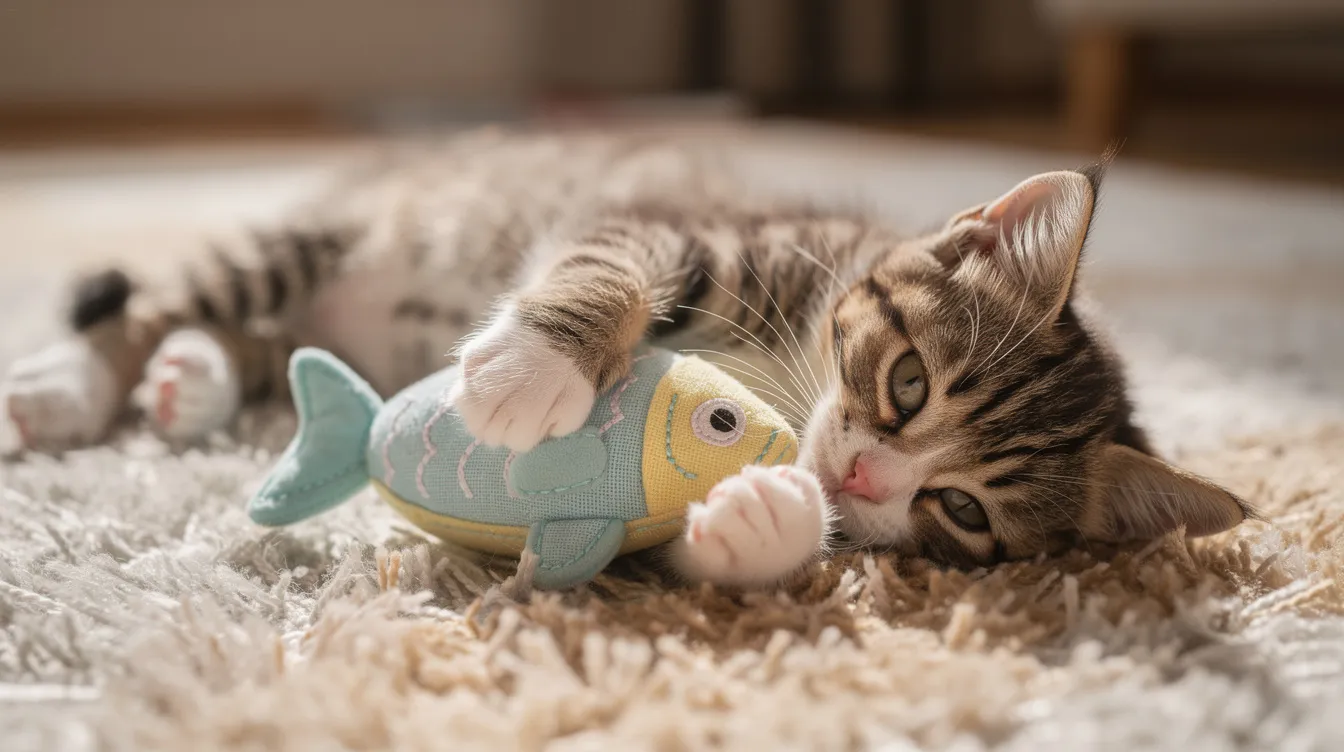
Can Kittens Use Kicker Toys?
Yes. Most kittens can play with appropriately sized kicker toys, as long as the toy is safe for their body and they're supervised during active play.
Think about what kittens naturally do during rough play: stalk, pounce, grab with their paws, bite, and deliver rapid bunny kicks with their hind legs. That's exactly what a kicker toy is built for. Kicker toys provide physical exercise through bunny kicks and allow kittens to safely practice their natural instincts - the same sequence they'd use chasing prey in the wild. They also help develop coordination and balance in kittens who are still figuring out how their legs work.
A kicker toy isn't a developmental requirement. Your kitten won't fall behind without one. But for high-energy kittens that love wrestling, it's a helpful enrichment tool. Kicker toys support independent play by allowing solo interaction, which is especially valuable for indoor-only cats in a small apartment environment. They can reduce stress and boredom when you're away during the day, and they fit naturally into a broader plan for keeping indoor cats entertained and mentally engaged.
For very small kittens around 8–10 weeks, softer, shorter plush toys and lightweight interactive toys may be easier to manage than a full-length kicker. Start gentle, and scale up as they grow, using kicker toys strategically to redirect rough play and prevent bad cat behavior.
When Can Kittens Start Using Kicker Toys?
Most kittens can start exploring small, soft kicker toys from around 8–10 weeks old, as long as the toy is light enough to grab and play is supervised.
There's no single magic age. Readiness depends on physical size, coordination, chewing intensity, and the construction of the specific toy. Object play begins around 6–8 weeks and becomes more coordinated through 12 weeks, so most kittens are physically capable of grabbing and wrestling a small kicker by 2–3 months.
Under 8 weeks, kittens are still developing basic motor skills - gentle play with very soft objects is plenty. By 3–4 months, jaws and legs are stronger, and kittens tend to wrestle harder. At 4–6 months, kicking intensity ramps up and durability matters more. By 6 months, most kittens can handle medium and larger kicker toys comfortably. If a toy feels too big or heavy right now, think of it as a "grow into" option rather than something to return; many of the best cat kicker toys for indoor cats are designed with that long-term use in mind, and you can compare options in a dedicated guide to the best cat kicker toys that drive indoor cats wild.
What Size Kicker Toy Should a Kitten Use?
Choosing the right size and texture is essential for engaging kittens with a kicker toy. The basic rule: when your kitten lies on their side, they should be able to hug most of the kicker's length with their front paws and still reach the end with their back feet for bunny kicks.
Kicker toys typically range from 6 to 19.5 inches long, and kicker toys should be at least 7 inches long to give enough surface for a proper kick. Kicker toys can come in various animal shapes, like fish or cacti - what matters most is that the proportions match your kitten's current size. Smaller and lighter for tiny kittens. Medium length for 4–6 month-olds. Jumbo kickers as grow-into options for older cats and bigger breeds.
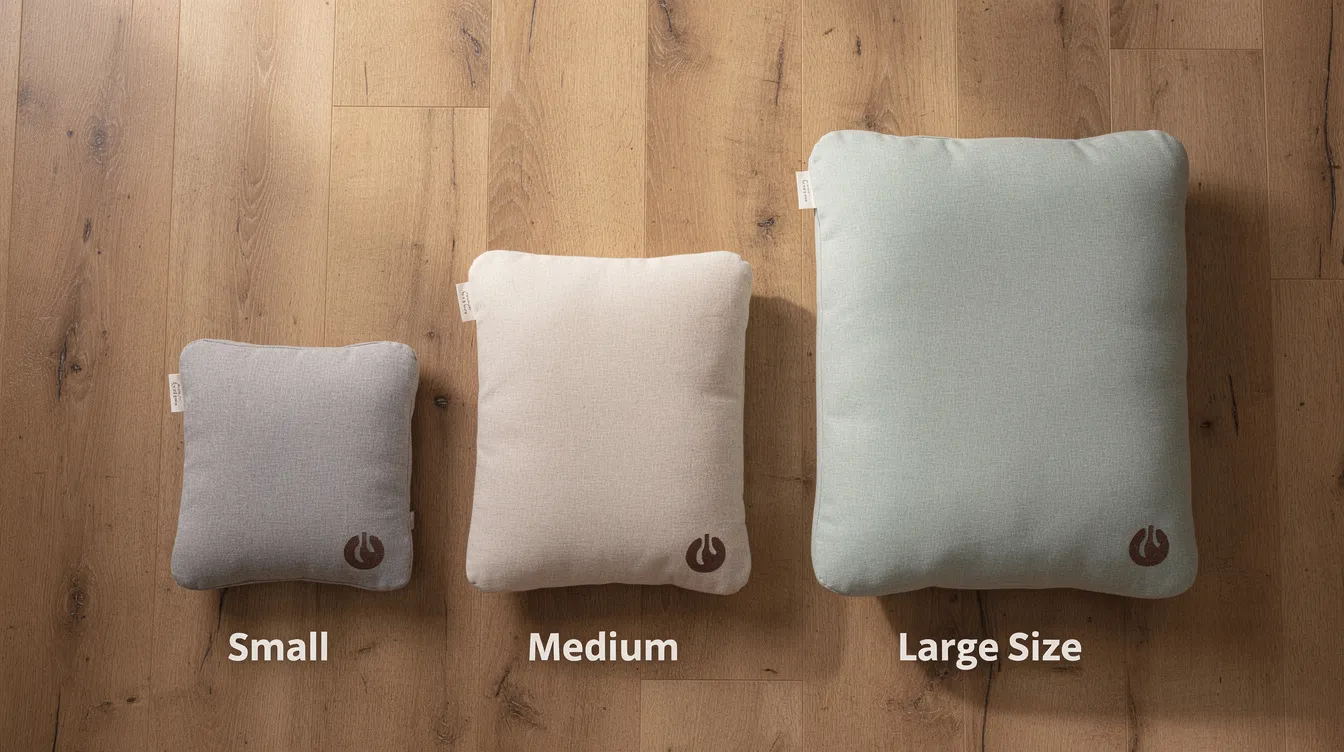
Very Young Kittens (Up to ~3 Months)
If your kitten just came home from the shelter at 8–12 weeks, look for short, lightweight plush toys around 6–8 inches long with very soft exteriors and no stiff or crunchy parts. At this stage, kittens are still learning coordination. Simple textures work better than complex toys with bells and ribbons. Many kicker toys also help relieve teething discomfort for kittens at this age, since their baby teeth are actively coming in, and understanding why cats like kicker toys in the first place can help you pick features they’ll actually use. Avoid oversized kickers that could knock a tiny kitten over or frustrate them - watch whether your kitten can confidently grab and roll with the toy before leaving it in their rotation.
Around 3–4 Months
By 3–4 months, many kittens become noticeably more athletic. Their jaws are stronger, and full-body wrestling becomes a favorite activity. Small to medium kickers - about 8–12 inches - are a good compromise between kitten-sized and something they'll still enjoy as they grow. Kicker toys often feature crinkly fabric and engaging textures, and this age is a good time to introduce a bit of variety. Engagement features like crinkly material can add interest without overwhelming them. Drag the toy slowly across the floor, let the kitten pounce and hold it, rather than expecting them to self-initiate play immediately.
Around 4–6 Months
These are the "teenager" weeks. Energy is high, biting is more intense, and play sessions get wild. Medium kickers work well, and for larger-bodied kittens, experiment with toys in the 12–16 inch range. Durable kicker toys are often made from tightly woven fabrics, and durability is linked to tightly woven fabric materials - this matters now because toys wear out faster under aggressive bunny kicking; it’s worth learning what’s really inside your cat’s kicker toy and reviewing a detailed guide to safety-focused kicker toy fabrics and fillings so you know how those materials will hold up. Some kittens develop clear preferences at this stage: she's all about long, skinny kickers, or he prefers rounder plush toys he can both hug and pillow against. Pay attention to what your kitten gravitates toward.
6+ Months: Growing Into Jumbo Kicker Toys
By around 6 months, many kittens are close to their adult body length and can start comfortably using larger kicker toys. A jumbo kicker makes sense when your kitten already loves wrestling, can tackle medium toys easily, and enjoys full-body bunny kicks rather than just batting.
This is where Cidero & Co.'s Jumbo Goldfish Kicker Plush fits in. At approximately 50 cm, it's a "grow into it" toy - something a 6-month-old can begin using with supervision and will fully dominate as they approach their first birthday. It's built with extra-soft plush and secure internal stuffing so it's comfortable to bite, grab, and bunny kick under heavy use. But jumbo doesn't mean mandatory. If your kitten prefers smaller toys, keep a mix of sizes in stock and rotate regularly.

Why Does My Kitten Bunny Kick and Bite?
Kitten bunny kicking and biting is a blend of natural hunting play and communication - not a sign that your kitten is mean or that something is wrong. Kicker toys provide a safe outlet for natural predatory behaviors like this, as long as you follow a few key safety checks before you buy.
The sequence goes: stalk, pounce, grab, bite, and kick with the hind legs. Bunny kicking mimics capturing prey in the wild. Kicking engages the hind legs, core muscles, and upper body all at once. Kittens learn and practice this on toys, on their littermates, and - if not redirected - on your hands and arm.
There's an important difference between playful bunny kicking (loose body, ears neutral, no growling) and defensive behavior (stiff body, pinned ears, tail lashing). Bunny kicking also serves as a defensive maneuver for cats when they feel threatened. And cats may bunny kick due to overstimulation during play or petting - touching a kitten's belly can trigger a sudden grab-and-kick as a "that's enough" warning. Watch for early signs: tail twitching, skin rippling, ears tilting back. When you see those cues, switch to a toy before the bunny kick lands on your skin. For a deeper look at why cats bunny kick, we've covered the instinct in detail.
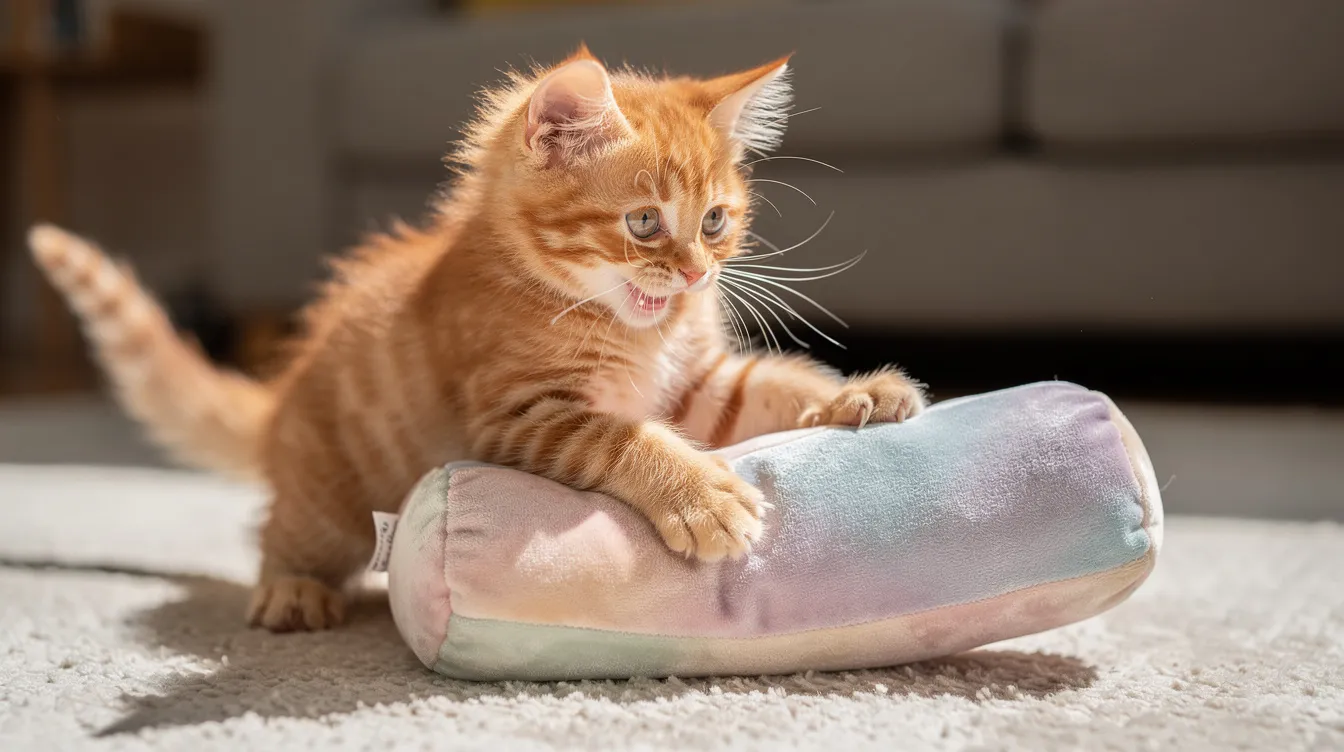
Can a Kicker Toy Help Stop a Kitten From Biting Hands?
It can help - a lot. Here's the redirect strategy: when your kitten bites or bunny kicks your hands, calmly freeze. Don't yank away (that makes you look more like prey). Gently disengage, then immediately offer a cat kicker or soft plush as the new target. Redirect bunny kicking by offering appropriate toys every single time.
When your kitten grabs and kicks the toy instead, reward that with calm praise or a few small treats. The thought behind this is simple - you're teaching the kitten that toys are for wrestling, hands are not. Avoid rough play that treats your fingers like prey, and make sure other people in the household do the same.
A kicker toy is a tool, not a guaranteed cure. Monitor for signs of aggression during bunny kicking play, especially in multi-cat households where toys have to work for more than one cat. When you understand why kicker toys stop bad cat behavior and how to pick the right one, it’s easier to choose toys that channel rough energy without escalating tension.
Why Doesn't My Kitten Like Their Catnip Kicker?
Your kitten ignoring a catnip toy is completely normal. Sensitivity to catnip is genetic - around 60–70% of adult cats respond, and many young kittens don't respond at all until they're older. Many kicker toys are filled with catnip or silvervine, but the attractant isn't the only reason to purchase one.
A well-made kicker toy that's soft and the right size will still give your kitten plenty of grabbing and bunny kicking fun, even without a catnip buzz. Don't overdo catnip exposure with very young kittens - gentle, occasional test sessions are enough. And don't judge a kicker's quality by whether catnip triggers zoomies. If you're not sure what a cat kicker toy is or why it works without attractants, our in-depth guide on what a cat kicker toy is and whether your cat actually needs one is worth a quick read.
What Happens as Kittens Get Older?
Many cats' sensitivity to catnip emerges or intensifies as they move toward adolescence and adulthood. Some kittens begin responding around 3–6 months, while others don't show a strong reaction until closer to a year old. A kitten ignoring catnip at 3 months might turn into a cat that flips, rolls, and bunny kicks like wild at 10 months.
Other cats simply sniff and walk away - and that's fine. Judge a kicker by how confidently your kitten plays with it, not solely by whether the catnip gets attention.
What About Silvervine for Kittens?
Silvervine is another plant-based cat attractant sometimes sold in or alongside kicker toys, often marketed as "stronger" than catnip. It's true that silvervine can elicit responses in some cats that don't react to catnip, but it's not automatically better or necessary for every animal.
Not every cat responds to silvervine either, and response varies just as much as with catnip. Some kicker toys have refillable pouches for catnip or silvervine, which can be a flexible option as your kitten matures. Long-term studies on silvervine have shown no markers of liver or kidney damage, stress, or addiction - but that doesn't mean you should drench every toy in it. Owners should follow age and usage recommendations and avoid offering loose plant material to very young kittens.
The most important thing to remember: a kicker toy does not need catnip or silvervine to be effective. Many cats enjoy bunny kicking plain plush toys simply because the shape and texture feel satisfying.
How to Choose a Safe Kicker Toy for a Kitten
Before adding a kicker to your cart, walk through these criteria. If you're looking for a deeper guide to choosing a safe kicker toy, we have a full breakdown - but here are the essentials for kitten owners.
1. Appropriate Size and Weight
A good kitten kicker is long enough for bunny kicks but not so big that the kitten struggles to move or hold it. Test at home: if your kitten can roll onto their side, hug the kicker, and deliver rapid kicks without losing control, the size is right. Choose lighter toys for small or timid kittens, and slightly heavier, more substantial toys as they gain confidence.
2. Soft, Comfortable Exterior
Soft, non-scratchy fabrics feel good against a kitten's face, paws, and belly during kicking and cuddling. Rough or stiff fabrics can make some kittens hesitant to grab and aren't ideal for extended chewing. Cidero & Co. prioritizes soft-touch materials across its plush and kicker designs for exactly this reason, because the brand focuses on enrichment toys that go beyond ordinary cat products.
3. Secure Construction and No Loose Parts
Double stitching, reinforced seams, and fully enclosed stuffing help keep kittens safe when they chew and kick with enthusiasm. Kicker toys should be safe and not have small choking hazards - avoid toys with glued-on eyes, long strings, feathers, or beads that can be chewed off and swallowed. Cornell's Feline Health Center specifically cautions against detachable small parts for young cats.
4. Easy to Inspect and Replace
Make a habit of checking toys weekly for tears, exposed stuffing, or broken components. Inspect toys regularly for wear and tear to ensure safety. Retire damaged kicker toys promptly - a kitten chewing on loose fabric or swallowing filling can end in a vet visit. Cidero & Co. designs toys so seams and stress points are easy for owners to examine quickly between play sessions, and you can see specific examples in our current lineup of cat toys and accessories.
Should Kittens Be Supervised With Kicker Toys?
Yes - especially when the toy is new or contains catnip, silvervine, or electronic components. Supervision doesn't mean hovering every second. It means being present during active play, periodically checking the toy for wear, and stopping the session if something looks off.
Simple practices: inspect before play, remove toys showing significant damage, and avoid long unattended sessions with toys that have strings or internal mechanisms. As you learn your kitten's play style and the toy proves durable, you can relax supervision somewhat - but still rotate and inspect regularly. Catnip and silvervine are common fillings in kicker toys, and those especially warrant a quick check before each session.
Catnip Kicker vs. Plain Kicker: Which Is Better for a Kitten?
For a young kitten under about 4 months, a plain kicker is often the smarter starting point. Here's why:
A catnip kicker can be exciting for cats that respond to catnip, but it may do nothing for very young kittens or non-responders. A plain kicker relies on shape, texture, and your interaction to be interesting - and that's usually enough. Most popular kicker toys and popular kicker toys in the kitten category succeed on feel and size, not just what's inside.
Practical advice: start with a comfortable plain or lightly scented kicker for a 2–4 month-old kitten. If your older kitten clearly responds to catnip, a filled kicker adds extra excitement. The most important thing is that the kitten feels safe grabbing, biting, and bunny kicking the toy. Plant attractants are optional extras.
How to Introduce a Kicker Toy to a Kitten
Don't panic if your kitten ignores the toy on day one. Here's a low-pressure approach.
Place the kicker near an existing play area or one of their favorite hiding spots. Let them sniff and investigate without forcing any touch or interaction. Next, gently animate the toy - drag it slowly across the floor like slow-moving prey. Avoid sudden big movements that could spook a shy kitten. When the kitten pounces, stop moving. Let them grab, bite, and kick, offering calm praise while they do.
Keep early sessions short. End on a positive note, then put the toy away. Reintroduce it the next day - this rotation trick keeps it feeling fresh. If they still show no attention, try wand toys or other toys for a few days, then bring the kicker back. Patience pays off.
Is a Jumbo Kicker Toy Too Big for a Kitten?
For very small kittens, honestly - yes, a jumbo kicker is often too big as a primary toy. If the kitten can't get their front paws around any part of it or looks overwhelmed, supplement with smaller toys while they grow.
The sweet spot for jumbo toys: older kittens around 6+ months that already love full-body wrestling. A kitten at that stage can enjoy dramatic, full-length bunny kicks against a toy that fights back slightly. Cidero & Co.'s Jumbo Goldfish Kicker Plush is designed as a long-term purchase - a cute 50 cm kicker that may initially be dragged and cuddled, then fully wrestled as the kitten matures into an adult cat. It's among the most popular kicker toys for older cats who enjoy dogs-level roughhousing with their plush.
Pair a jumbo kicker with at least one smaller plush or kicker so even your tiniest family member has something they can confidently dominate from day one. For ideas on keeping bored indoor cats entertained with a mix of enrichment, we have a full guide.
Kicker Toy Checklist for New Kitten Owners
Before you buy, run through these questions:
- Is this toy an appropriate length and weight for my kitten's current size?
- Can my kitten comfortably grab and bunny kick it without being overwhelmed?
- Are the seams tight and the stuffing fully enclosed?
- Are there any loose ribbons, eyes, or bells that could be chewed off and swallowed?
- Will I supervise active play and retire the toy when it becomes damaged?
- Does my kitten actually enjoy wrestling-style play, or do they prefer chasing and batting? Would a scratch post or interactive toys serve them better right now?
- Do I have a mix of plush toys, cat toys, and other toys to keep them mentally stimulated?
- Does the toy need catnip - or will my kitten enjoy it without it?
Your goal isn't perfection. It's to offer safe, fun outlets for natural bunny kicking and hunting behavior as your kitten grows. That's enough.
Frequently Asked Questions About Kicker Toys for Kittens
What age can kittens use kicker toys? Most kittens can begin exploring small, lightweight kicker toys from around 8–10 weeks old, provided the toy is appropriately sized and play is supervised. There's no hard cutoff - it depends more on the kitten's size and coordination than a specific number of weeks.
What is the best kicker toy for a kitten? Look for something soft, well-constructed, and proportional to your kitten's body. Cidero & Co.'s kitten-friendly plush designs prioritize safe materials and secure stitching. The best toy is one your kitten can confidently grab, bite, and kick.
Do kittens like catnip? Many young kittens don't react much to catnip, and that's normal. Sensitivity is genetic and often develops later. Don't assume a catnip toy is a dud just because a young kitten walks past it.
Can a 3-month-old kitten use a kicker toy? Yes. At 3 months, most kittens are coordinated enough for a small, light kicker toy in the 6–10 inch range with soft fabric and secure seams.
Why does my kitten bunny kick and bite? It's natural play-hunting behavior. Kittens practice the stalk-pounce-grab-kick sequence through play. Redirect that energy onto a kicker toy rather than allowing them to kick your hands.
Is silvervine safe for kittens? Research suggests silvervine is safe in moderation, but owners should follow product guidance and use plant attractants sparingly with very young cats. Not every kitten will respond to it.
Should I let my kitten kick my hand? No. Allowing hand-kicking teaches the kitten that hands are prey, which can turn into a painful habit as they grow into older cats with stronger jaws and claws. Use a kicker or plush toy instead.
Helping Your Kitten Grow Into Their Perfect Kicker Toy
A kitten ignoring a kicker toy doesn't mean they'll never love it. They may be too young for the catnip, the object might be slightly too large, or they simply need a gentler introduction. Cats play in their own time, and kittens learn through repetition and curiosity - not pressure.
Match the kicker toy to your kitten's current size and confidence. Don't rely solely on catnip. Supervise play, inspect regularly, and rotate toys as they grow. That's the whole formula. It doesn't need to be hard.
Explore Cidero & Co.'s Cat Kicker Toy Collection to find the right fit - from small, soft plush toys for brand-new kittens to the Jumbo Goldfish Kicker Plush as a grow-with-them option your cat will burn energy on for years to come.


